

Методом эмиссионной спектроскопии измерены функции распределения молекул по низким вращательным уровням молекулы водорода в триплетном состоянии 3 d u и определены величины вращательной и поступательной температур основного и возбужденного триплетного состояний молекулы водорода.
Method of emission spectroscopy [1—3] was used for study of rotational distributions of hydrogen molecules in ECR discharge at pressure 0.01 Torr. The experiments were performed at the facility with the dipolar plasma sources (Fig. 1) in CRPMN LPSC (Grenoble, France) [4—7]. Discharge chamber is a metal cylinder made of stainless steel with a diameter of 100 mm. Walls are insulated from the plasma by glass cylinder. Microwave power (200—1200 W at a frequency of 2.45 GHz) is divided into four parts, each of which is applied to the four dipolar plasma sources. Sources were cooled by the flowing water or liquid nitrogen vapor. Spectral studies of STP performed in two areas of the camera (3 and 4 in Fig. 1) using the spectrometer Horiba Jobin–Yvon HR1000 with spectral resolution 0.01 nm. Spectra were calibrated using the tungsten band lamp [8]. Method of relative intensities [1—3, 8, 9] was used for determination of rotational distribution function (RDF) of molecules in the state 3 d u. In visible part of spectrum the most intensive spectrum of hydrogen molecules emission was observed in the range = 601—627 nm. Spectral composition is similar to that observed in in RF discharge [10—13] and enriched by lines of singlet and triplet transitions as compares with the DC positive column [1]. Emission lines of Q-branches (Q(1), Q(2), Q(3), Q(4) и Q(5)) of sequences with v = 0—2 Fulcher - system 3 3 H2 d u, vd a g, va were choose for study the RDF of hydrogen molecules. It was shown that the RDF (J = 1—5) of hydrogen molecules in the state 3 d u coincides with the Boltzmann law and rotational temperatures 3 Trot d u for levels vd = 0—2 lies in the range 325—205 К depending on the place of determination (decreased with increasing the distance from the dipolar plasma source. Figure 2 shows the example of the RDF. Temperatures 3 Trot d u = 205—325 К are in the range of 3 Trot d u, known for gas discharge plasma in different discharges [1, 11, 12, 14—16, 20, 21]. Hierarchy of characteristic times for different hydrogen plasma processes (time of rotational relaxation R, residence time D and lifetime of excited state 3 e d u ) was determined: 3 D R e d u . This inequality shows that it is impossible correctly relate the rotational temperature 1 Trot X g and translational Tg temperature in the conditions of experiments. But it is possible to estimate the upper levels of the translational temperature in different parts of the discharge: 650 and 420 К in region 3 and 4, correspondingly. Temperature decreases with increasing the distance from the ECR plasma source. This result is indirect evidence that the above temperatures correlate with the real gas temperature.
Предпросмотр статьи



Идентификаторы и классификаторы
- SCI
- Физика
- eLIBRARY ID
- 23330593
Эмиссионная спектроскопия в области длин волн 601—627 нм использована для измерения ФРВУ (J = 1—5) молекулы водорода в состоянии в водородной плазме, полученной с помощью диполярного источника при давлении 0,01 Торр. Установлено, что ФРВУ (J = 1—5) молекулы водорода в состоянии является больцмановской. Значения вращательной температуры лежат в диапазоне 325—205 К. Оценки поступательной температуры показали, что она зависит от пространственных координат, уменьшается при удалении от источника плазмы и лежит в диапазоне 650—420 К. Полученные результаты важны и будут использоваться при анализе колебательных спектров молекулы водорода в разрядной камере с диполярными источниками плазмы.
Если у вас возникли вопросы или появились предложения по содержанию статьи, пожалуйста, направляйте их в рамках данной темы.
Список литературы
1. Очкин В. Н. Спектроскопия низкотемпературной плазмы. — М.: Физматлит., 2006.
2. Шахатов В. А., Лебедев Ю. А. // Успехи прикладной физики. 2014. Т. 2. № 6. C. 571.
3. Шахатов В. А., Лебедев Ю. А. // Успехи прикладной физики. 2015. Т. 3. № 1. C. 21.
4. Lacoste A., Lagarde T., Bechu S., et al. // Plasma Sources Sci. Technol. 2002. V. 11. P. 1.
5. Svarnas P., Annaratone B. M., Bechu S., et al. // Plasma Sources Sci. Technol. 2009. V. 18. P. 045010.
6. Lacoste A., Bechu S., Maulat O., et al. / Plasma Sources Sci. Technol. 2009. V. 18. P. 015017.
7. Bechu S., Soum-Glaude A., Bes A., et al. // Physics of Plasmas. 2013. V. 20. P. 101601.
8. Dieker G. H. The Hydrogen Molecule Wavelength Tables. — N. Y.: Wiley, 1972.
9. Суржиков С. Т. Оптические свойства газов и плазмы. — М.: Изд-во МГТУ им. Н. Э. Баумана, 2004.
10. Iordanova S. // Journal of Physics: Conference Series. 2008. V. 113. P. 012005.
11. Xiao B., Kado S., Kajita S., et al. // Plasma Phys. Control. Fusion. 2004. V. 46. P. 653.
12. Tsankov T. V., Toko K, Czarnetzki U. // Physics of Plasmas. 2012. V. 19. P. 123503.
13. Автаева С. В. Барьерный разряд. Исследование и применение. — Бишкек: Издательство КРСУ, 2009.
14. Ginsburg N., Dieke G. H. // Phys. Rev. 1941. V. 59. P. 632.
15. Лавров Б. П. Электронно-вращательные спектры двухатомных молекул и диагностика неравновесный плазмы // Химия плазмы. Вып. 11. Сб. ст. / Под ред. Смирнова Б. М. — М.: Атомиздат, 1984.
16. Shikama T., Kado S., Kuwahara Y., et al. // Plasma and Fusion Research. 2007. V. 2. P. S1045.
17. Fujii K., Shikama T., Goto M., et al. // Phys. Plasmas. 2013. V. 20. P. 012514.
18. Gritsinin S. I., Kossyi I. A., Malykh N. I., et al. // J. Phys. D: Appl. Phys. 1998. V. 31. P. 2942.
19. Tomasini L., Rousseau A., Gousset G., et al. // J. Phys. D: Appl. Phys. 1996. V. 29. P. 1006.
20. Akatsuka H., Shimizu Y., Nezu A., et al. // Proc. 8th International
Conference on Reactive Plasma / 31th Symposium Plasma Processing (ICRP-8/SPP-31). Tokyo: Japan Society of Applied Physics, 2014. P. 5P–AM–S02–P01.
21. Лебедев Ю. А., Мокеев М. В. // Физика плазмы. 2003. T. 29. C. 251.
22. Физико-химические процессы в газовой динамике. Компьютеризованный справочник в 3-х томах. Том 1: Динамика физико-химических процессов в газе и плазме / Под ред. Черного Г. Г., Лосева С. А. — М.: Изд. Моск. ун-та, 1995.
23. Fantz U., Wunderlich D. Franck — Condon Factors, Transition Probabilities and Radiative Lifetimes for Hydrogen Molecules and their Isotopomeres. INDC (NDS)-457 Report. Austria. Vienna: IAEA, 2004. http://www-amdis.iaea.org
1. V. N. Ochkin, Spectroscopy of Low-Temperature Plasma (Fizmatlit, Moscow, 2006) [in Russian].
2. V. A. Shakhatov and Yu. A. Lebedev, Uspekhi Prikladnoi Fisiki 2, 571 (2014).
3. V. A. Shakhatov and Yu. A. Lebedev, Uspekhi Prikladnoi Fisiki 3, 21 (2015).
4. A. Lacoste, T. Lagarde, S. Bechu, et al., Plasma Sources Sci. Technol. 11, 1 (2002).
5. P, Svarnas, B. M. Annaratone, S. Bechu, et al., Plasma Sources Sci. Technol. 18, 045010 (2009).
6. A. Lacoste, S. Bechu, O. Maulat, et al., Plasma Sources Sci. Technol. 18, 015017 (2009).
7. S. Bechu, A. Soum-Glaude, A. Bes, et al., Physics of Plasmas 20, 101601 (2013).
8. G. H. Dieker, The Hydrogen Molecule Wavelength Tables. ( N.Y.: Wiley, 1972).
9. S. T. Surzhikov, Optical Properties of Gases and Plasma. (Moscow: Publ. Co. N.E.Bauman MGTU, 2004) [in Russian].
10. S. Iordanova, Journal of Physics: Conference Series 113, 012005 (2008).
11. B. Xiao, S. Kado, S. Kajita, et al., Plasma Phys. Control. Fusion 46, 653 (2004).
12. T. V. Tsankov, K. Toko, and U. Czarnetzki, Physics of Plasmas 19, 123503 (2012).
13. S. V. Avtaeva, Barrier Discharge. Investigation and Application (KRSU, Bishkek, 2009) [in Russian].
14. N. Ginsburg and G. H. Dieke, Phys. Rev. 59, 632 (1941).
15. B. P. Lavrov. Electron-Rotational Spectra of Diatomic Molecules and Plasma Diagnostics in Book: Chemistry of Plasma. No. 11. Ed. by B. M. Smirnov (Мoscow. Atomizdat, 1984).
16. T. Shikama, S. Kado, Y. Kuwahara, et al., Plasma and Fusion Research. 2, S1045 (2007).
17. K. Fujii, T. Shikama, M. Goto, et al., Phys. Plasmas 20, 012514 (2013).
18. Gritsinin S.I., Kossyi I.A., Malykh N.I., et al., J. Phys. D: Appl. Phys. 31, 2942 (1998).
19. L. Tomasini, A. Rousseau, G. Gousset, et al., J. Phys. D: Appl. Phys. 29, 1006 (1996).
20. H. Akatsuka, Y. Shimizu, A. Nezu, et al., in Proc. 8-th International Conference on Reactive Plasma / 31th Symposium Plasma Processing (ICRP-8/SPP-31) (Tokyo: Japan Society of Applied Physics, 2014). P. 5P–AM–S02–P01.
21. Yu. A. Lebedev and M. V. Mokeev, Plasma Physics Reports 29, 226 (2003).
22. Physical-Chemical Processes in Gas Dynamics. Computerized Handbook. V.1: in Book: Dynamics of Physical-Chemical Processes in Gases and Plasma. Ed. by G.G Chierniy and S.А. Losev (Мoscow, Publ. Co. Moscow Univ., 1995) [in Russian].
23. U. Fantz and D. Franck Wunderlich, Condon Factors, Transition Probabilities and Radiative Lifetimes for Hydrogen Molecules and Their Isotopomeres. (INDC (NDS)-457 Report. Austria. Vienna: IAEA), 2004. http://www-amdis.iaea.org
Выпуск
С О Д Е Р Ж А Н И Е
ОБЩАЯ ФИЗИКА
Якубович Б. И. О спектрах случайных импульсных процессов 5
Морозов А. Н., Скрипкин А. В. Диффузионные токи в p–n-переходах 8
Ащеулов А. А., Даналакий О. Г., Романюк И. С. Метод определения эффективности термоэлектрических материалов 12
Микитаев М. А., Козлов Г. В., Микитаев А. К. Влияние взаимодиффузии макромолекулярных клубков на свойства смесей полиэтилентерефталат/полибутилентерефталат 16
ФИЗИКА ПЛАЗМЫ И ПЛАЗМЕННЫЕ МЕТОДЫ
Кузенов В. В., Фролко П. А. Схемы стандартного и комбинированного энергетического воздействия на мишень в концепции магнитно-инерциального термоядерного синтеза 21
Карбушев Д. Н., Хвесюк В. И., Чирков А. Ю. О механизме возбуждения турбулентных флуктуаций неустойчивой дрейфовой волной в сдвиговом течении плазмы в магнитном поле 28
Кузенов В. В., Шумаев В. В. Описание термодинамических свойств плазмы в приближениях Саха и Томаса–Ферми 32
Кузенов В. В., Рыжков С. В. Отдельные элементы физико-математической модели геликонного разряда 37
Bechu S., Lacoste A., Лебедев Ю. А., Шахатов В. А. Вращательное распределение молекул водорода в состоянии в разряде с электронно-циклотронным резонансом 45
Балмашнов А. А., Бутко Н. Б., Калашников А. В., Калашников В. В., Степина С. П., Умнов А. М. Энергетическая и газовая эффективности формирования ЭЦР-плазмы в коаксиальном резонаторе со спиральной волноводной структурой 50
Балмашнов А. А., Калашников А. В., Калашников В. В., Степина С. П., Умнов А. М. Влияние пульсирующего электрического поля на ЭЦР-нагрев в источнике рентгеновского излучения CERA-RX(C) 54
Тазмеев Х. К., Тимеркаев Б. А., Тазмеев Г. Х., Сарваров Ф. С., Арсланов И. М. О причинах возникновения высокочастотных пульсаций тока в электрических разрядах с прямым контактом с жидкими электролитами 58
Курбанисмаилов В. С., Омаров О. А., Рагимханов Г. Б., Абакарова Х. М., Али Рафид А. А. Сильноточный диффузный разряд в аргоне 63
Андреев В. В., Василеска И., Корнеева М. А. Изучение поведения температуры электронов аргоновой плазмы импульсно-периодического микроволнового резонансного разряда 69
ЭЛЕКТРОННЫЕ, ИОННЫЕ И ЛАЗЕРНЫЕ ПУЧКИ
Смыгачева A. C., Корчуганов В. Н., Тарасов Ю. Ф., Вернов А. В. ВЧ-кикер системы подавления продольных колебаний пучка для источника синхротронного излучения 74
ФОТОЭЛЕКТРОНИКА
Зверев Г. М., Землянов М. М., Короннов А. А. Действие мощного импульса лазерного излучения на германиевый лавинный фотодиод 79
Андреев Д. С., Хакуашев П. Е., Чинарева И. В., Тришенков М. А. Исследование влияния глубины диффузии на параметры матричных фотодиодов на основе InGaAs/InP 84
Яковлева Н. И. Анализ времени жизни неосновных носителей заряда в гетероэпитаксиальных структурах для ИК-области спектра 88
Сурнина М. А., Сизов А. Л., Акчурин Р. Х., Багаев Т. А. Влияние температуры осаждения индия на морфологию наноразмерных гетероструктур InAs/GaAs, полученных капельным методом в условиях МОС-гидридной эпитаксии 97
ФИЗИЧЕСКАЯ АППАРАТУРА И ЕЁ ЭЛЕМЕНТЫ
Фишкова Т. Я. Спектрограф заряженных частиц с линейным законом распределения потенциала на дискретном плоском электроде 101
Губайдуллин Р. Н., Колесова А. А., Лобачев А. В., Полесский А. В. Определение требований к качеству оптических поверхностей входных окон охлаждаемых фотоприемных устройств второго поколения ИК-диапазона спектра 104
ИНФОРМАЦИЯ
Правила для авторов журнала 109
C O N T E N T S
GENERAL PHYSICS
B. I. Yakubovich Spectra of stochastic pulse processes 5
A. N. Morozov and A. V. Skripkin Diffusion current flow through the p–n-junction 11
A. A. Ashcheulov, O. G. Danalaky, and І. S. Romanyuk The method of determining the effectiveness of thermoelectric materials 14
M. A. Mikitaev, G. V. Kozlov, and A. K. Mikitaev The influence of macromolecular coils interdiffusion on properties of blends poly(ethylene terephthalate)/poly(butylene terephthalate) 18
PLASMA PHYSICS AND PLASMA METHODS
V. V. Kuzenov and P. A. Frolko Standard and combined effects in the concept of magneto-inertial fusion 21
D. N. Karbushev, V. I. Khvesyuk, and A. Yu. Chirkov Excitation of turbulent fluctuations by unstable drift wave in a non-uniform plasma flow 28
V. V. Kuzenov and V. V. Shumaev Description of the thermodynamic properties of plasma in Saha and Thomas–Fermi models 32
V. V. Kuzenov and S. V. Ryzhkov Individual elements of the physical and mathematical model for a helicon discharge 37
S. Bechu, A. Lacoste, Yu. A. Lebedev, and V. A. Shakhatov Rotational distribution of hydrogen molecules in the state in the discharge with electron cyclotron resonance 45
A. A. Balmashnov, N. B. Butko, A. V. Kalashnikov, V. V. Kalashnikov, S. P. Stepina, and A. M. Umnov Power and gas formation efficiency ECR plasma in the coaxial resonator with a helical waveguide structure 50
A. A. Balmashnov, A. V. Kalashnikov, V. V. Kalashnikov, S. P. Stepina, and A. M. Umnov Effect of pulsating electric field on the ECR heating in CERA-RX(C) 54
Kh. K Tazmeev, B. A. Timerkaev, G. Kh. Tazmeev, F. S. Sarvarov, and I. M. Arslanov About reasons for emergence of high-frequency current pulsation in electric discharges with direct contact to the liquid electrolyte 58
V. S. Kurbanismailov, O. A. Omarov, G. B. Ragimkhanov, Kh. M. Abakarova, and A. A. Ali Rafid High-current diffuse discharge 63
V. V. Andreev, I. Vasileska, and M. A. Korneeva Light spectroscopy and probe measurements of electron temperature in Ar plas-mas of pulse-periodic microwave discharge 69
ELECTRON, ION, AND LASER BEAMS
A. S. Smygacheva, V. N. Korchuganov, Yu. F. Tarasov, and A. V. Vernov The RF kicker cavity of the longitudinal feedback system for a SR source 74
PHOTOELECTRONICS
G. M. Zverev, М. М. Zemlyanov, and А. А. Koronnov Influence of high-power monopulse laser irradiation on the germanium avalanche photodiode 79
D. S. Andreev, P. E. Khakuashev, I. V. Chinareva, and M. A. Trishenkov Diffusion depth effects on array InGaAs/InP photodiode characteristics study 84
N. I. Iakovleva Analysis of minority carrier lifetime in the IR heterostructures 88
M. A. Surnina, A. L. Sizov, R. H. Akchurin, I. V. Yarodskaya, and T. A. Bagaev Influence of In deposition temperature on mor-phology of nanoscale heterostructures InAs/GaAs grown by droplet MOCVD epitaxy 97
PHYSICAL APPARATUS AND ITS ELEMENTS
T. Ya. Fishkova Charged-particle spectrograph with a linear of potential distribution on the discrete plane electrode 101
R. N. Gubaidullin, A. A. Kolesova, A. V. Lobachyov, and A. V. Polesskiy Quality requirements to the windows’ optical surfaces of the second-generation of the cooled infrared photodetectors 104
INFORMATION
Rules for authors 109
Другие статьи выпуска
Приведены результаты расчета требований к качеству поверхностей входных окон фотоприемных устройств второго поколения средневолнового и дальневолнового инфракрасного (ИК) диапазонов спектра. Для расчета требований был проведен аналитический обзор представленных в России ИК-объективов и фотоприемных устройств. На основе данного обзора были сформулированы требования к современным оптическим системам средневолнового и дальневолнового ИК-диапазонов спектра и проведен их синтез. Расчет требований к качеству изготовления входных окон был проведен на основе анализа допусков синтезированных оптических систем.
Проведено компьютерное моделирование электростатического спектрографа, предложенного автором ранее, в режимах с вынесенным за пределы поля источником заряженных частиц. При линейном возрастании потенциала на дискретном электроде диапазон одновременно регистрируемых энергий Emax/Emin= 50. При этом разрешение по энергии лежит в пределах 0,2—0,6 %.
Исследовано влияние температуры разложения триметила индия на геометрию и морфологию массива квантовых точек InAs, выращиваемых капельным методом на поверхности подложки GaAs в условиях МОС-гидридной эпитаксии. Подтверждены теоретические расчеты по степени разложения триметила индия при температуре ниже 300 оС.
Рассматривается концепция моделирования времени жизни в полупроводниковых структурах InGaAs и CdHgTe. Представлены параметры и коэффициенты, необходимые для расчета времени жизни в гетероэпитаксиальных структурах. Построены аналитические зависимости времени жизни неосновных носителей заряда в полупроводниковых структурах CdHgTe и InGaAs различного состава в широком диапазоне температур.
В статье исследуется повышенная взаимосвязь между элементами фоточувствительной матрицы. Установлена причина этого явления: смыкание элементов матрицы из-за боковой диффузии. Выбраны оптимальные величины параметров, а именно, глубина диффузии примеси менее 2,5 мкм и расстояние между p+-областями соседних элементов матрицы 1 мкм, что обеспечило минимальный уровень взаимосвязи без потерь в обнаружительной способности.
Определено значение плотности мощности лазерного излучения, превышение над которым приводит к разрушению поверхности чувствительной площадки германиевого лавинного фотодиода. Исследован характер увеличения темнового тока от мощности лазерного воздействия для фотодиодов с различной глубиной залегания p–n-перехода. Показана повышенная стойкость к лазерному излучению фотодиодов с глубоким p–n-переходом.
В НИЦ «Курчатовский институт» работает специализированный источник синхротронного излучения — накопитель электронов «Сибирь-2». Для улучшения потребительских качеств установки на накопитель установлена система подавления когерентных колебаний электронного пучка. Неотъемлемыми частями этой системы являются устройства, воздействующие на пучок посредством электромагнитных полей. Основные моменты разработки одного из таких устройств, называемого ВЧ-кикером, и результаты измерений готового изделия представлены в данной статье.
В работе представлена конструкция и результаты испытания импульсно-периодического резонансного плазменного источника с рабочей частотой 2,45 ГГц на основе магнитной ловушки пробочного типа с постоянными магнитами. Исследовались изменения параметров разряда и температуры электронов аргоновой плазмы в широком диапазоне изменения давления рабочего газа от 1·10-4 до 4·10-3 Торр и падающей мощности СВЧ до 600 Вт. Температура электронов в разряде определялась методом относительных интенсивностей (ЭОС) и двойным зондом в указанном диапазоне изменений падающей мощности и давления. Полученные методом ЭОС зависимости в пределах экспериментальных погрешностей находятся в хорошем количественном и качественном согласии с результатами, полученными методом двойного зонда.

На основе экспериментальных данных и теоретических оценок изучено развитие объемного разряда в Ar атмосферного давления при больших перенапряжениях и удельных энерговкладах. При перенапряжениях более 75 % формируется сильноточный диффузный разряд с удельной мощностью ~107 Вт/см3, плотностью тока ~103—104 А/см2, концентрацией электронов ~1017 см-3 и температурой ~1 эВ. Основным механизмом ионизации является ступенчатая ионизация, а каналом гибели электронов — диссоциативная рекомбинация.
Экспериментально исследованы электрические разряды атмосферного давления между жидким электролитным и металлическим электродами в различных вариантах полярности их подключения к источнику питания. Получены и проанализированы спектры сигналов тока в мегагерцовом диапазоне изменения частоты. Выявлено, что возникновению высокочастотных пульсаций тока сопутствуют явления распыления и эрозии электродов.
Методом частиц в ячейке проведено 3D-моделирование плазмы для конфигурации полей, реализуемых в ЭЦР-источнике (2,45 ГГц) рентгеновского излучения CERA-RX(C). Получены зависимости энергетических спектров электронов, высаживаемых на электрод-мишень, от амплитуды и частоты пульсаций электрического поля, лежащей в мегагерцовом диапазоне. Проведено сравнение с результатом натурного эксперимента.
Представлены результаты экспериментального исследования параметров ЭЦР-плазмы, формируемой в коаксиальном резонаторе со спиральной волноводной структурой. Определены зависимости газовой и энергетической эффективности формирования ионного потока от массового расхода рабочего газа (Ar) и СВЧ-мощности (2,45 ГГц), вводимой в резонатор.
Построена приближенная математическая модель физических процессов в геликонном разряде. Эта модель позволяет найти математические связи между вкладываемой мощностью, параметрами плазмы и электромагнитными полями, возбуждаемыми в цилиндрически симметричном геликоном разряде. На группе экспериментальных и расчетных данных произведена первоначальная верификация отдельных результатов численных расчетов, выполненных с использованием разработанной приближенной математической модели.
В работе выполнено сравнение зависимостей давления P, удельной внутренней энергии E, удельной энтропии S и степени ионизации Z от температуры T для плазмы смеси углекислого газа и ксенона, полученных на основе моделей ионизационного равновесия Саха и Томаса–Ферми в области их совместной применимости: 104 < Т < 106 К, 10-7 < ρ < 10-1 г/см3.
Эволюция начальных возмущений представляет самостоятельный интерес при описании турбулентного состояния. Для замагниченной плазмы при определенных условиях возможно проследить эволюцию отдельного малого возмущения, нарастающего в результате неустойчивости дрейфового типа вплоть до перехода в нелинейный режим. Такая возможность основана на экспериментально установленной связи спектров пульсаций с предсказаниями линейной теории дрейфовых неустойчивостей. Предложенная модель базируется на рассмотрении дрейфовой волны конечной амплитуды в условиях воздействия сдвигового течения. Выполненные теоретические оценки амплитуды возмущений находятся в разумном согласии с экспериментально наблюдаемыми значениями.
Выполнены оценки основных теплофизических параметров плазмы, которая возникает на месте термоядерной мишени при её обжатии и нагреве высокоскоростными импульсными плазменными струями (плазменным лайнером) или излучением многоканального лазера (лазерным драйвером). Обсуждаются инновационные схемы — “стандартный” вариант и “комбинированная” схема для магнитно-инерциального термоядерного синтеза (МИТС).
На примере смесей полиэтилентерефталат/полибутилентерефталат показано сильное влияние топологии расплава, характеризуемой индексом связности, на их свойства. Качественное изменение топологии при нулевом индексе связности снижает прочность на сдвиг аутогезионного соединения компонент на три порядка. Обнаружена зависимость совместимости компонент от структуры расплава.
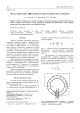
Метод основан на определении потерь электрической мощности при возникновении вихревых токов в образце, помещенном в зазор сердечника катушки индуктивности, через которую протекают симметричный и асимметричный токи.
Рассматривается полупроводниковый p–n-переход, через который течет флуктуирующий ток неосновных носителей. Показано, что уравнение, связывающее концентрацию дырок вблизи перехода и плотность тока, имеет вид интегрального стохастического уравнения, а изменение плотности тока, обусловленное тепловой диффузией дырок, носит характер немарковского случайного процесса. Найдены статистические характеристики таких изменений для случая модели постоянной напряженности электрического поля вблизи перехода.
Проанализированы стохастические импульсные процессы. Вычислены выражения общего вида для спектров случайных импульсных процессов. Полученные результаты могут быть широко использованы в физике и технике.
Статистика статьи
Статистика просмотров за 2026 год.
Издательство
- Издательство
- АО "НПО "ОРИОН"
- Регион
- Россия, Москва
- Почтовый адрес
- 111538, г Москва, р-н Вешняки, ул Косинская, д 9
- Юр. адрес
- 111538, г Москва, р-н Вешняки, ул Косинская, д 9
- ФИО
- Старцев Вадим Валерьевич (ГЕНЕРАЛЬНЫЙ ДИРЕКТОР)
- E-mail адрес
- orion@orion-ir.ru
- Контактный телефон
- +7 (499) 3749400