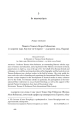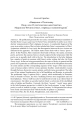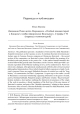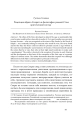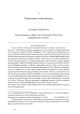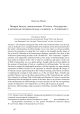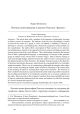
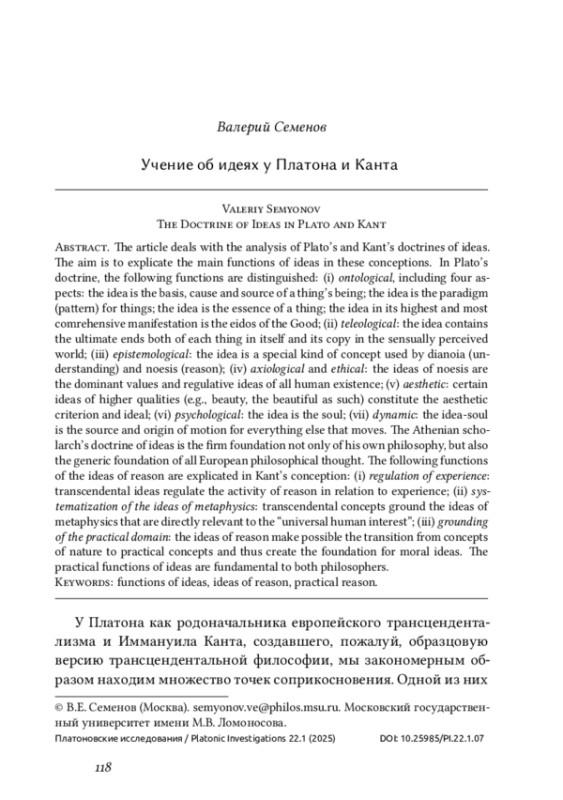
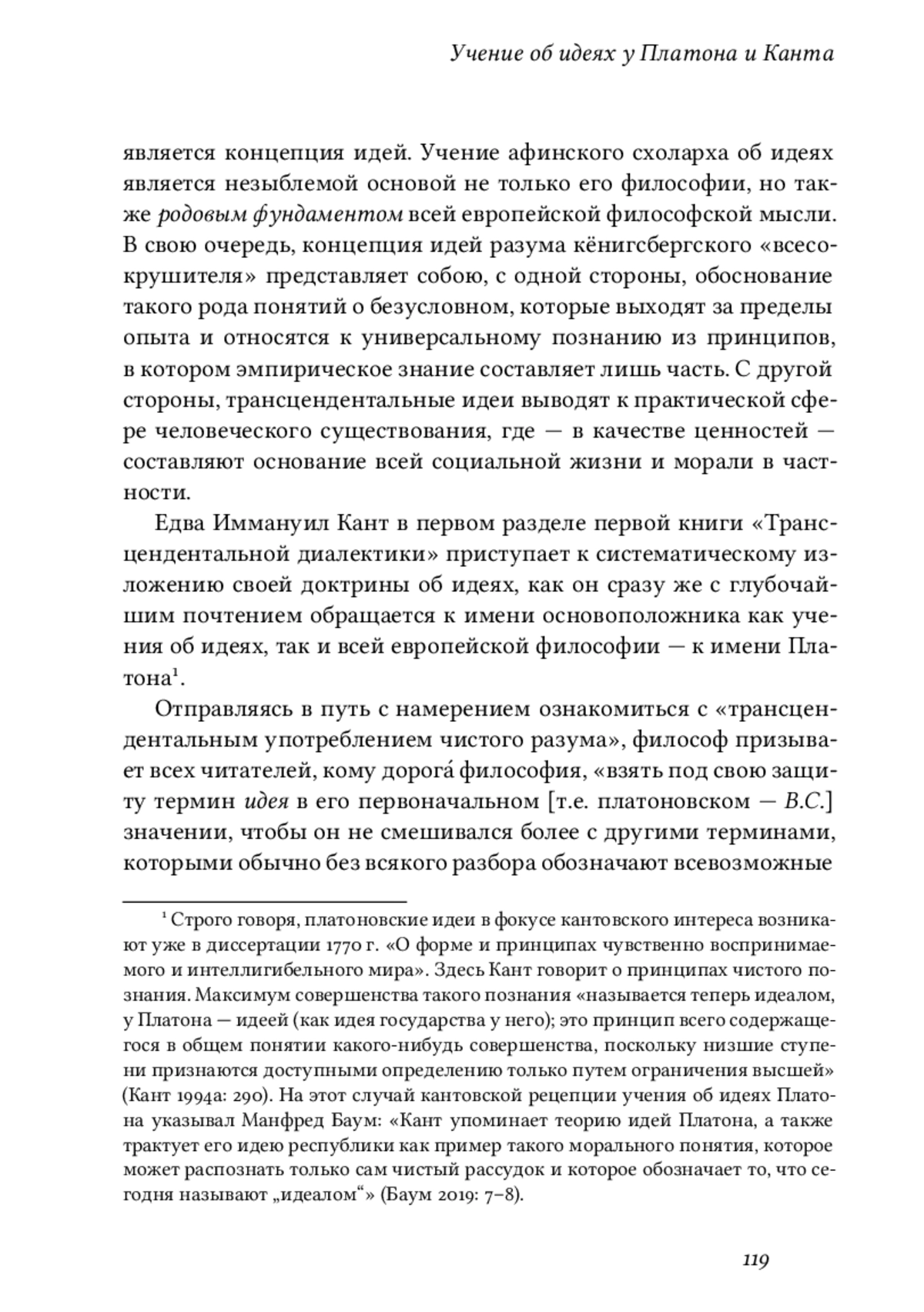
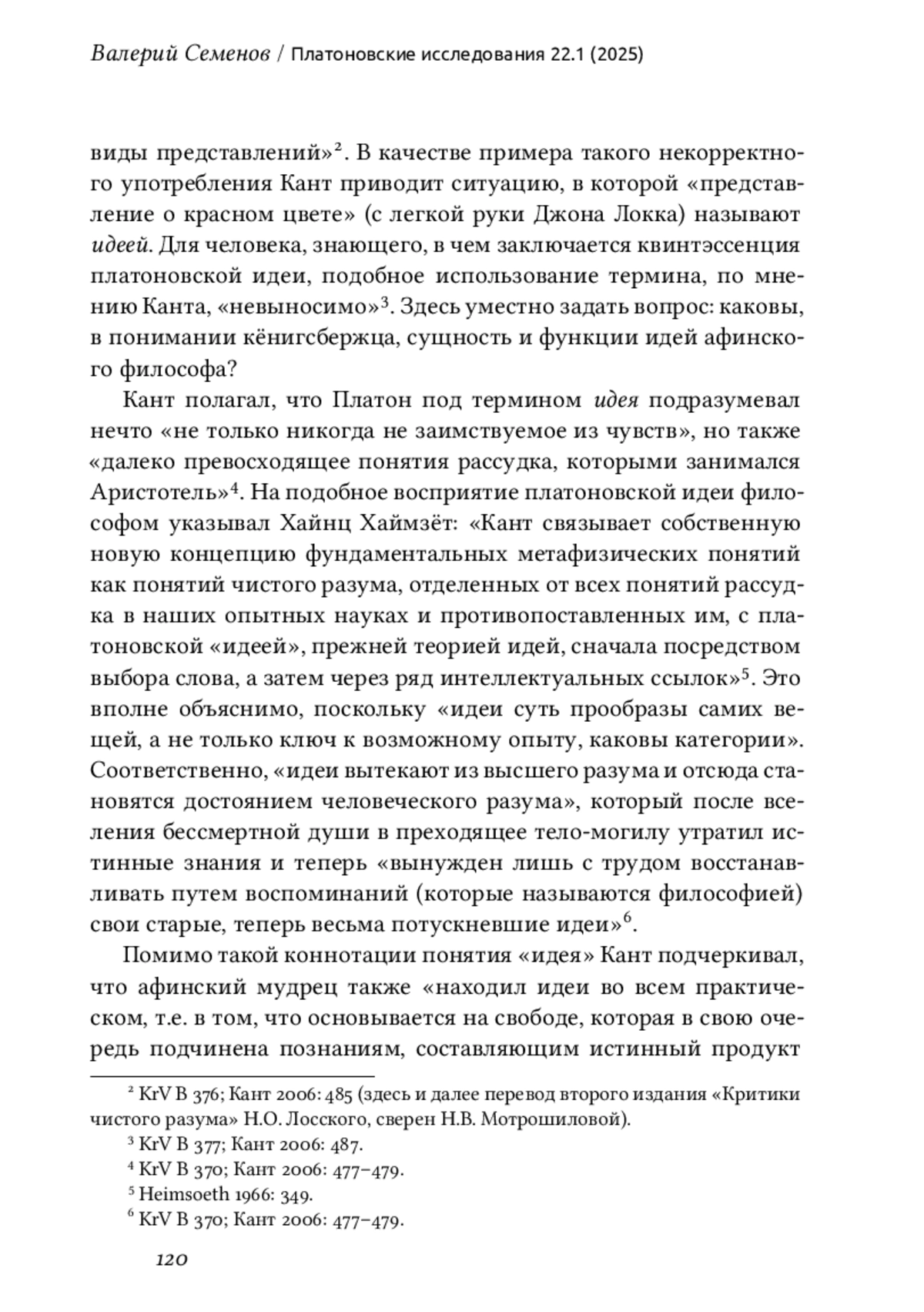
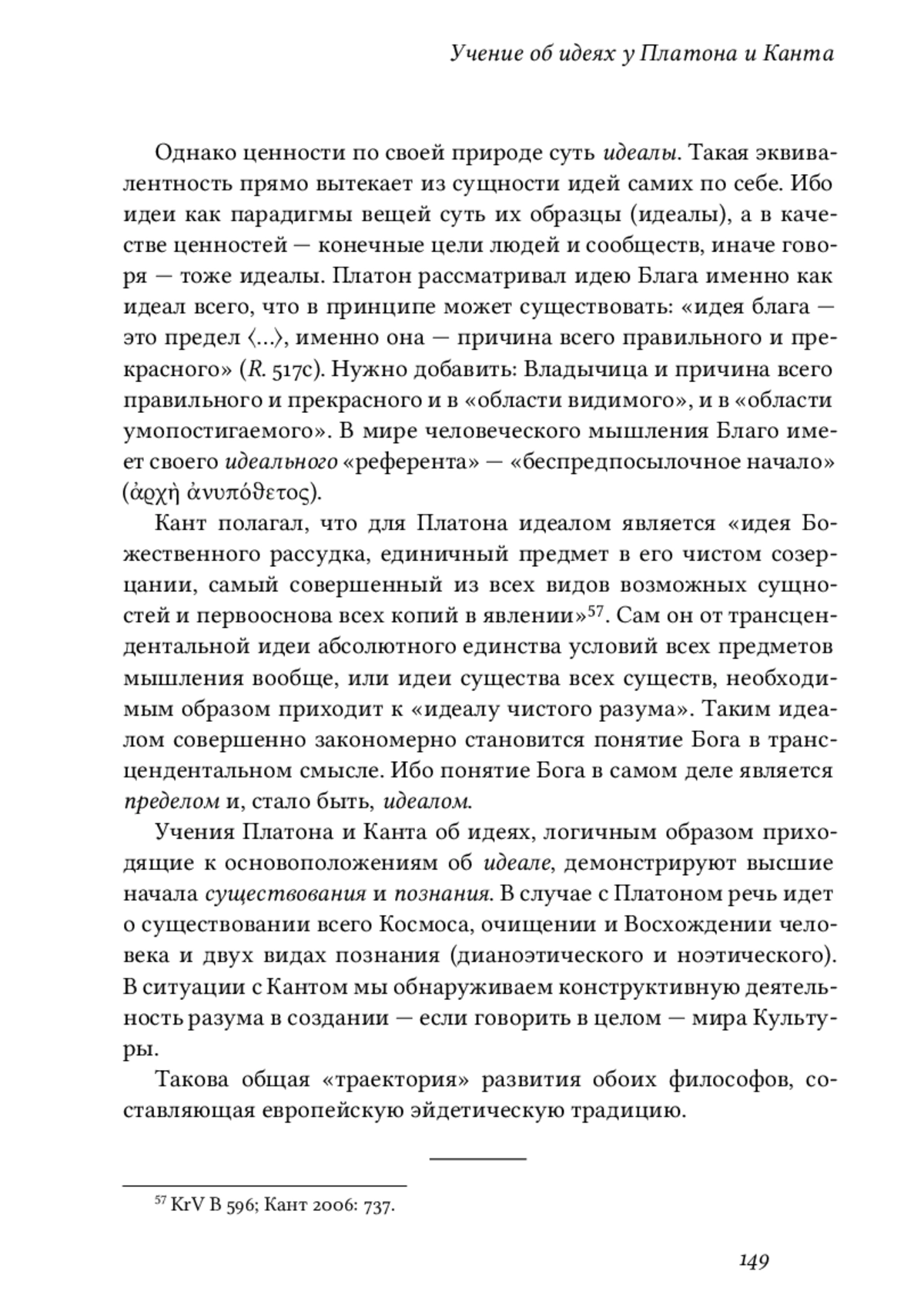
Статья посвящена анализу учений Платона и Канта об идеях. Ставится цель эксплицировать основные функции идей в этих концепциях. В учении Платона присутствуют следующие функции: (i) онтологическая, включающая четыре аспекта: идея есть основа, причина и источник бытия вещи; идея есть парадигма (образец) для вещей; идея есть сущность вещи; идея в высшем и совокупном проявлении - эйдос Блага; (ii) телеологическая: в идее содержатся конечные цели каждой вещи самой по себе и ее копии в чувственно воспринимаемом мире; (iii) эпистемологическая: идея - особого рода понятие, используемое дианойей (рассудком) и ноэсисом (разумом); (iv) аксиологическая и этическая: идеи ноэсиса являются господствующими ценностями и регулятивными идеями всего человеческого существования; (v) эстетическая: некоторые идеи высших качеств (например, красота, прекрасное как таковое) представляют собою эстетический критерий и идеал; (vi) психологическая: идея есть душа; (vii) динамическая: идея-душа является источником и началом движения для всего остального, что движется. Учение афинского схоларха об идеях является незыблемой основой не только его философии, но также родовым фундаментом всей европейской философской мысли. В концепции Канта эксплицированы следующие функции идей разума: (i) регулирование опыта: трансцендентальные идеи регулируют деятельность разума в отношении опыта; (ii) систематизация идей метафизики: трансцендентальные понятия обосновывают идеи метафизики, имеющие непосредственное отношение к «общечеловеческим интересам»; (iii) обоснование практической области: идеи разума делают возможным переход от понятий о природе к практическим понятиям и таким образом создают фундамент для моральных идей. Практические функции идей являются базовыми для обоих философов.
吀栀e article deals with the analysis of Plato’s and Kant’s doctrines of ideas. 吀栀e aim is to explicate the main functions of ideas in these conceptions. In Plato’s doctrine, the following functions are distinguished: (i) ontological, including four aspects: the idea is the basis, cause and source of a thing’s being; the idea is the paradigm (pa琀琀ern) for things; the idea is the essence of a thing; the idea in its highest and most comrehensive manifestation is the eidos of the Good; (ii) teleological: the idea contains the ultimate ends both of each thing in itself and its copy in the sensually perceived world; (iii) epistemological: the idea is a special kind of concept used by dianoia (understanding) and noesis (reason); (iv) axiological and ethical: the ideas of noesis are the dominant values and regulative ideas of all human existence; (v) aesthetic: certain ideas of higher qualities (e. g., beauty, the beautiful as such) constitute the aesthetic criterion and ideal; (vi) psychological: the idea is the soul; (vii) dynamic: the idea-soul is the source and origin of motion for everything else that moves. 吀栀e Athenian scholarch’s doctrine of ideas is the 昀椀rm foundation not only of his own philosophy, but also the generic foundation of all European philosophical thought. 吀栀e following functions of the ideas of reason are explicated in Kant’s conception: (i) regulation of experience: transcendental ideas regulate the activity of reason in relation to experience; (ii) systematization of the ideas of metaphysics: transcendental concepts ground the ideas of metaphysics that are directly relevant to the “universal human interest”; (iii) grounding of the practical domain: the ideas of reason make possible the transition from concepts of nature to practical concepts and thus create the foundation for moral ideas. 吀栀e practical functions of ideas are fundamental to both philosophers.
Предпросмотр статьи
Идентификаторы и классификаторы
- SCI
- Философия
Если у вас возникли вопросы или появились предложения по содержанию статьи, пожалуйста, направляйте их в рамках данной темы.