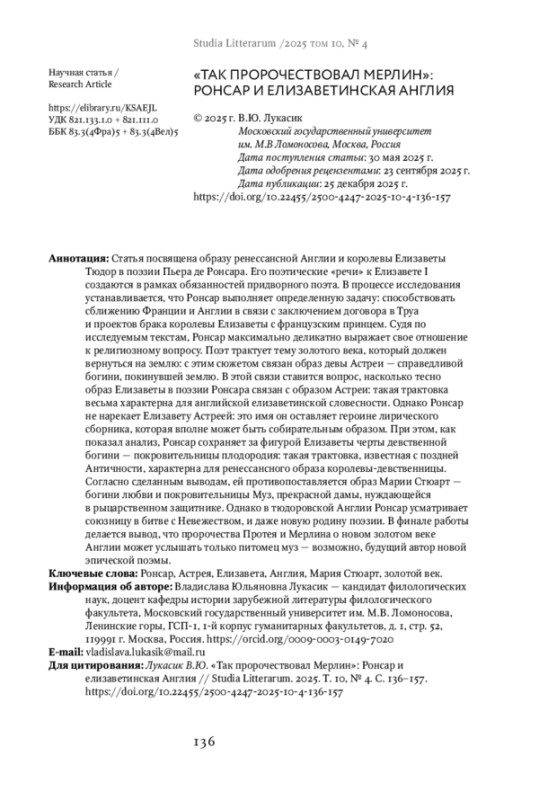
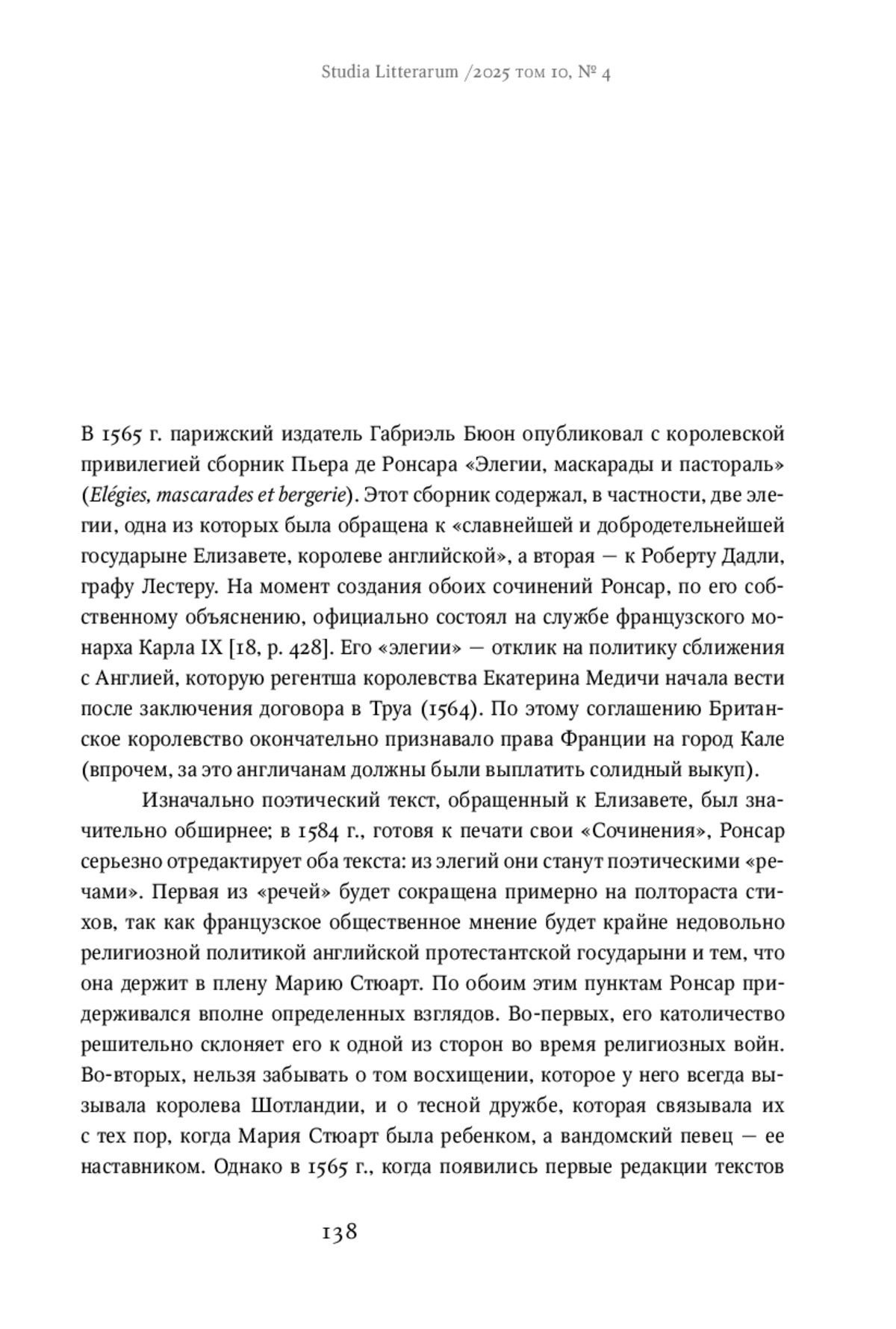
Статья посвящена образу ренессансной Англии и королевы Елизаветы Тюдор в поэзии Пьера де Ронсара. Его поэтические «речи» к Елизавете I создаются в рамках обязанностей придворного поэта. В процессе исследования устанавливается, что Ронсар выполняет определенную задачу: способствовать сближению Франции и Англии в связи с заключением договора в Труа и проектов брака королевы Елизаветы с французским принцем. Судя по исследуемым текстам, Ронсар максимально деликатно выражает свое отношение к религиозному вопросу. Поэт трактует тему золотого века, который должен вернуться на землю: с этим сюжетом связан образ девы Астреи — справедливой богини, покинувшей землю. В этой связи ставится вопрос, насколько тесно образ Елизаветы в поэзии Ронсара связан с образом Астреи: такая трактовка весьма характерна для английской елизаветинской словесности. Однако Ронсар не нарекает Елизавету Астреей: это имя он оставляет героине лирического сборника, которая вполне может быть собирательным образом. При этом, как показал анализ, Ронсар сохраняет за фигурой Елизаветы черты девственной богини — покровительницы плодородия: такая трактовка, известная с поздней Античности, характерна для ренессансного образа королевы-девственницы. Согласно сделанным выводам, ей противопоставляется образ Марии Стюарт — богини любви и покровительницы Муз, прекрасной дамы, нуждающейся в рыцарственном защитнике. Однако в тюдоровской Англии Ронсар усматривает союзницу в битве с Невежеством, и даже новую родину поэзии. В финале работы делается вывод, что пророчества Протея и Мерлина о новом золотом веке Англии может услышать только питомец муз — возможно, будущий автор новой эпической поэмы.
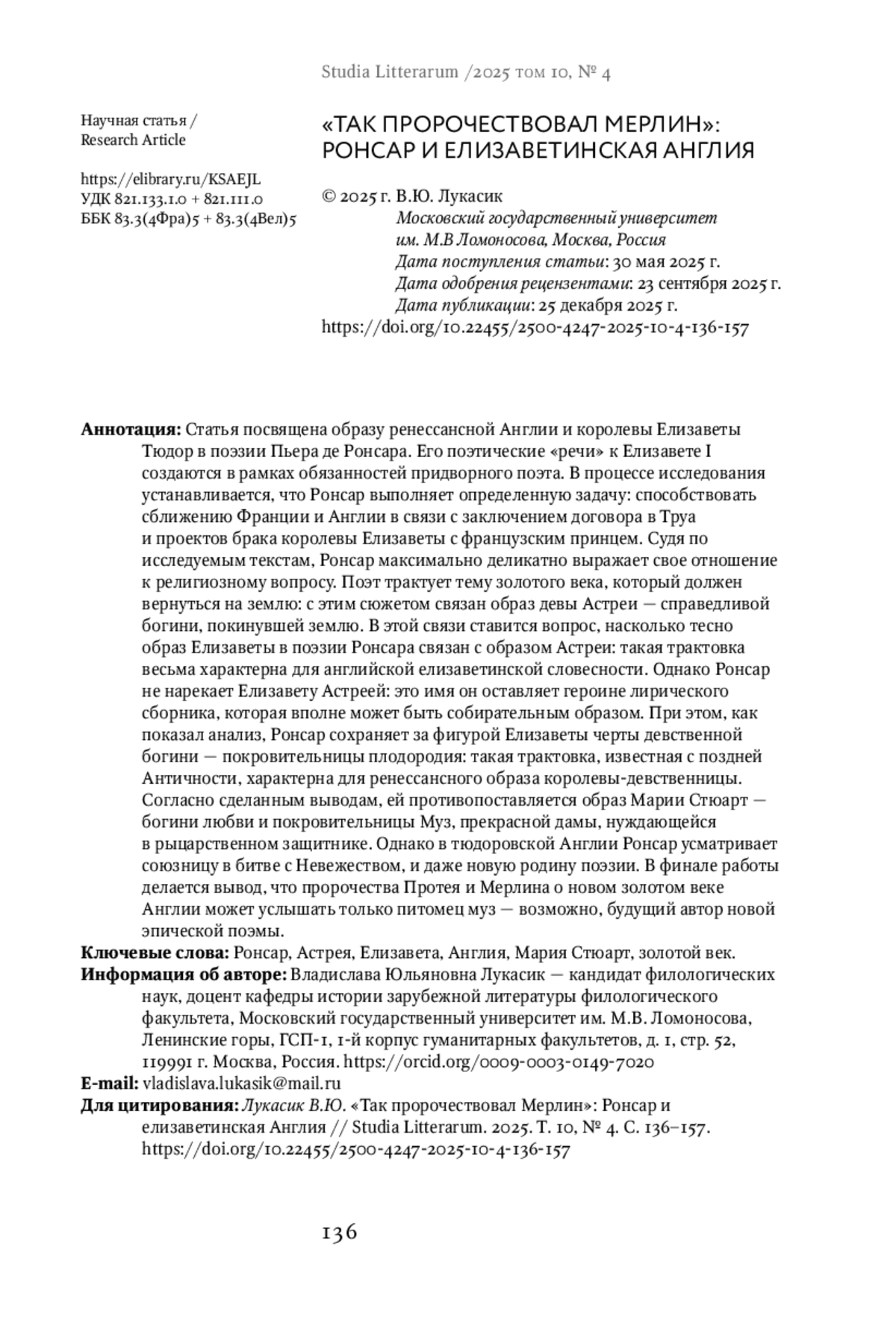
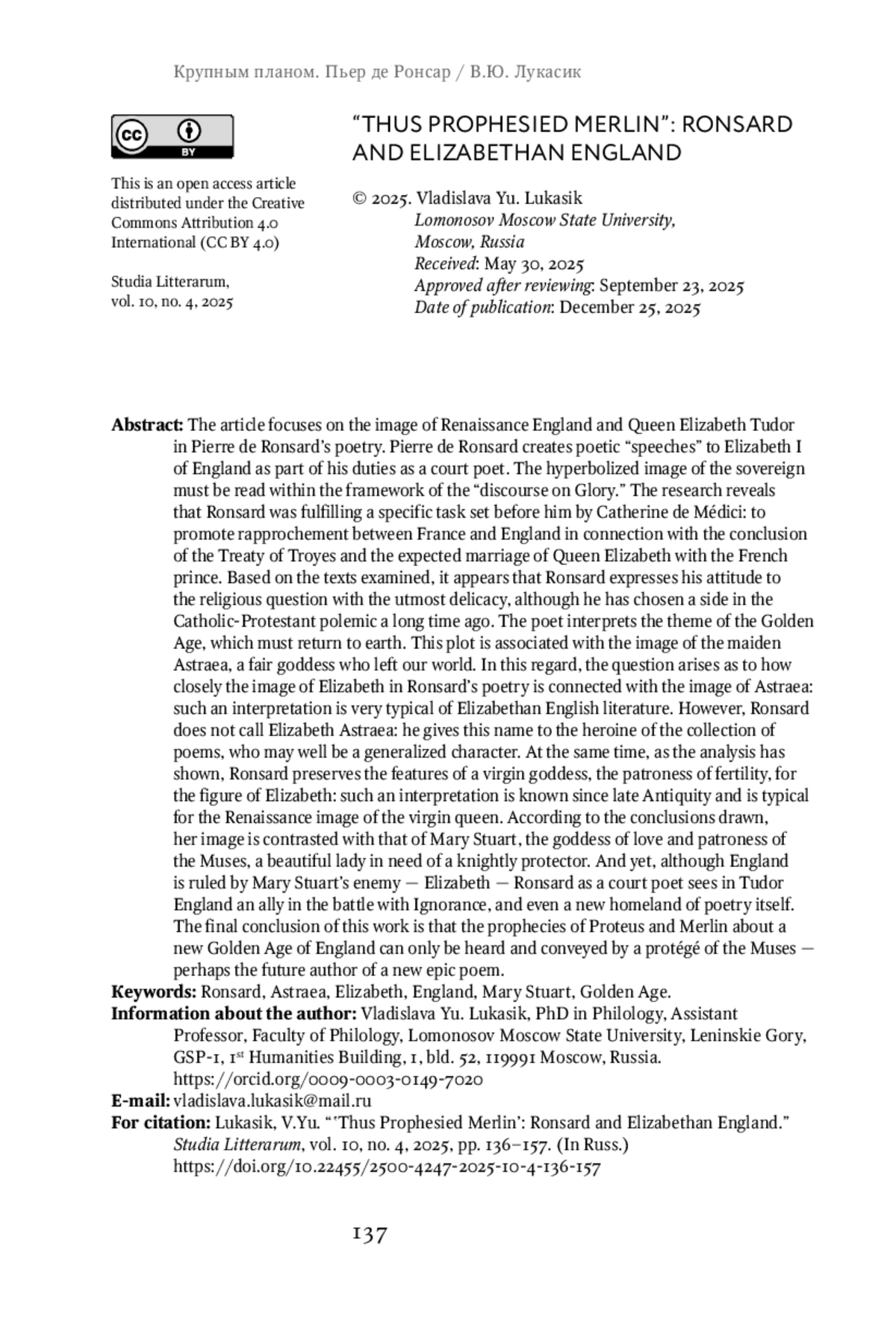
The article focuses on the image of Renaissance England and Queen Elizabeth Tudor in Pierre de Ronsard’s poetry. Pierre de Ronsard creates poetic “speeches” to Elizabeth I of England as part of his duties as a court poet. The hyperbolized image of the sovereign must be read within the framework of the “discourse on Glory.” The research reveals that Ronsard was fulfilling a specific task set before him by Catherine de Médici: to promote rapprochement between France and England in connection with the conclusion of the Treaty of Troyes and the expected marriage of Queen Elizabeth with the French prince. Based on the texts examined, it appears that Ronsard expresses his attitude to the religious question with the utmost delicacy, although he has chosen a side in the Catholic-Protestant polemic a long time ago. The poet interprets the theme of the Golden Age, which must return to earth. This plot is associated with the image of the maiden Astraea, a fair goddess who left our world. In this regard, the question arises as to how closely the image of Elizabeth in Ronsard’s poetry is connected with the image of Astraea: such an interpretation is very typical of Elizabethan English literature. However, Ronsard does not call Elizabeth Astraea: he gives this name to the heroine of the collection of poems, who may well be a generalized character. At the same time, as the analysis has shown, Ronsard preserves the features of a virgin goddess, the patroness of fertility, for the figure of Elizabeth: such an interpretation is known since late Antiquity and is typical for the Renaissance image of the virgin queen. According to the conclusions drawn, her image is contrasted with that of Mary Stuart, the goddess of love and patroness of the Muses, a beautiful lady in need of a knightly protector. And yet, although England is ruled by Mary Stuart’s enemy - Elizabeth - Ronsard as a court poet sees in Tudor England an ally in the battle with Ignorance, and even a new homeland of poetry itself. The final conclusion of this work is that the prophecies of Proteus and Merlin about a new Golden Age of England can only be heard and conveyed by a protégé of the Muses - perhaps the future author of a new epic poem.
Предпросмотр статьи
Идентификаторы и классификаторы
- SCI
- Литература
Если у вас возникли вопросы или появились предложения по содержанию статьи, пожалуйста, направляйте их в рамках данной темы.