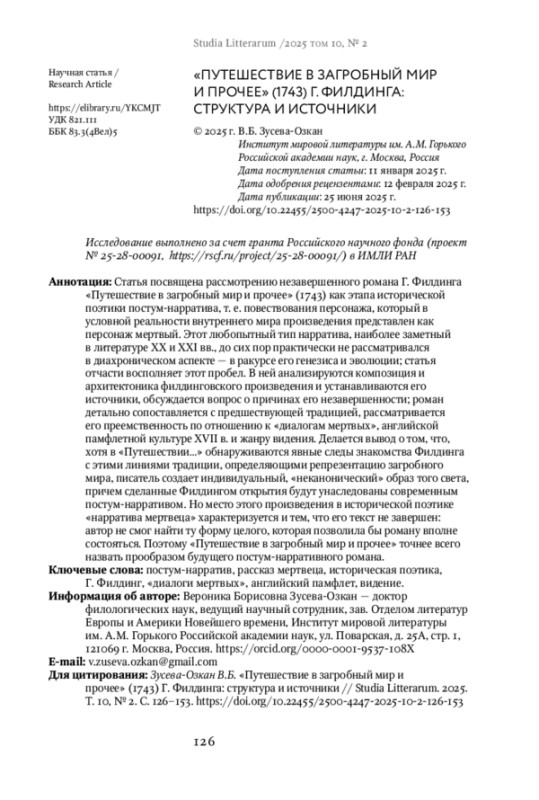
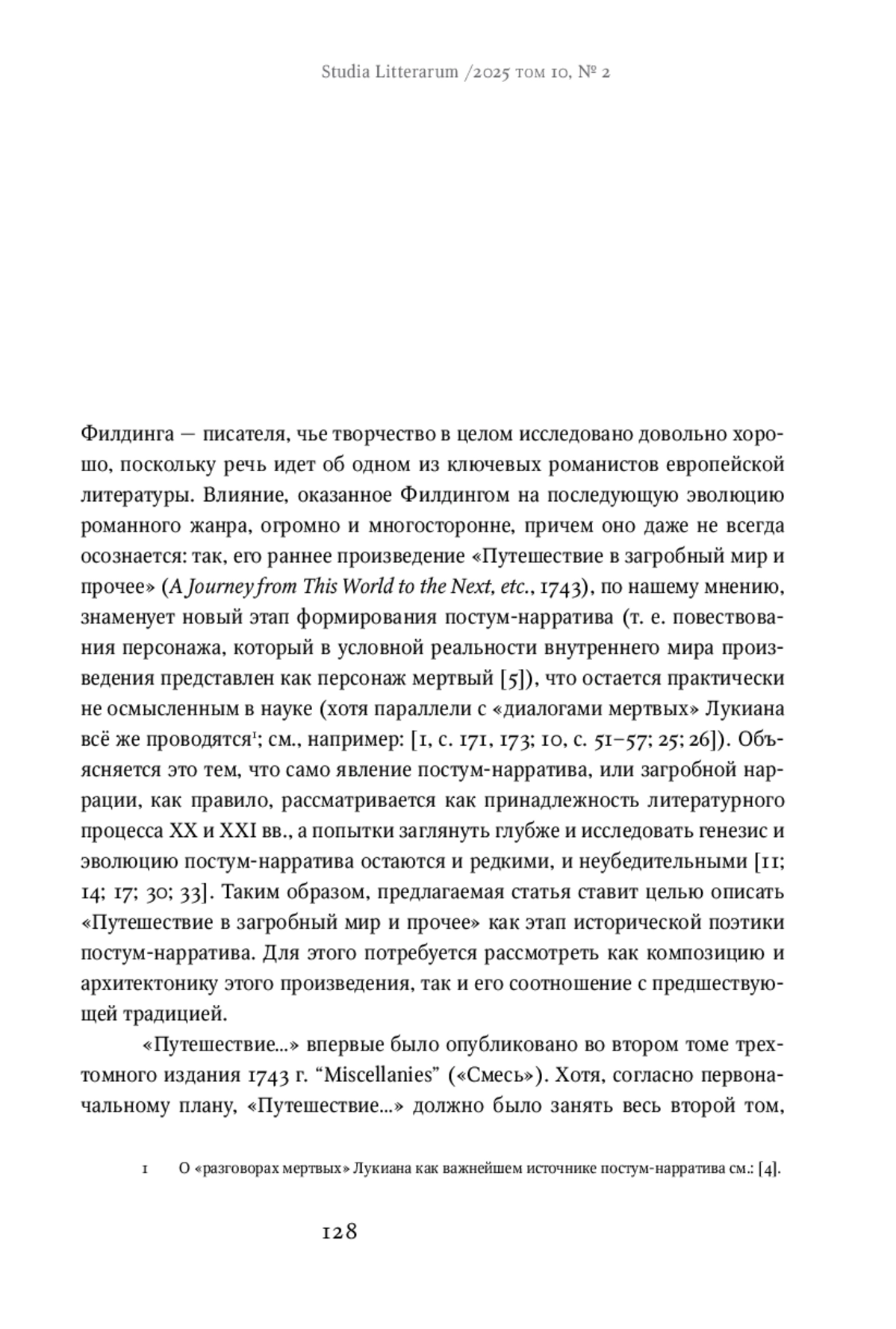
Статья посвящена рассмотрению незавершенного романа Г. Филдинга «Путешествие в загробный мир и прочее» (1743) как этапа исторической поэтики постум-нарратива, т. е. повествования персонажа, который в условной реальности внутреннего мира произведения представлен как персонаж мертвый. Этот любопытный тип нарратива, наиболее заметный в литературе XX и XXI вв., до сих пор практически не рассматривался в диахроническом аспекте — в ракурсе его генезиса и эволюции; статья отчасти восполняет этот пробел. В ней анализируются композиция и архитектоника филдинговского произведения и устанавливаются его источники, обсуждается вопрос о причинах его незавершенности; роман детально сопоставляется с предшествующей традицией, рассматривается его преемственность по отношению к «диалогам мертвых», английской памфлетной культуре XVII в. и жанру видения. Делается вывод о том, что, хотя в «Путешествии…» обнаруживаются явные следы знакомства Филдинга с этими линиями традиции, определяющими репрезентацию загробного мира, писатель создает индивидуальный, «неканонический» образ того света, причем сделанные Филдингом открытия будут унаследованы современным постум-нарративом. Но место этого произведения в исторической поэтике «нарратива мертвеца» характеризуется и тем, что его текст не завершен: автор не смог найти ту форму целого, которая позволила бы роману вполне состояться. Поэтому «Путешествие в загробный мир и прочее» точнее всего назвать прообразом будущего постум-нарративного романа.
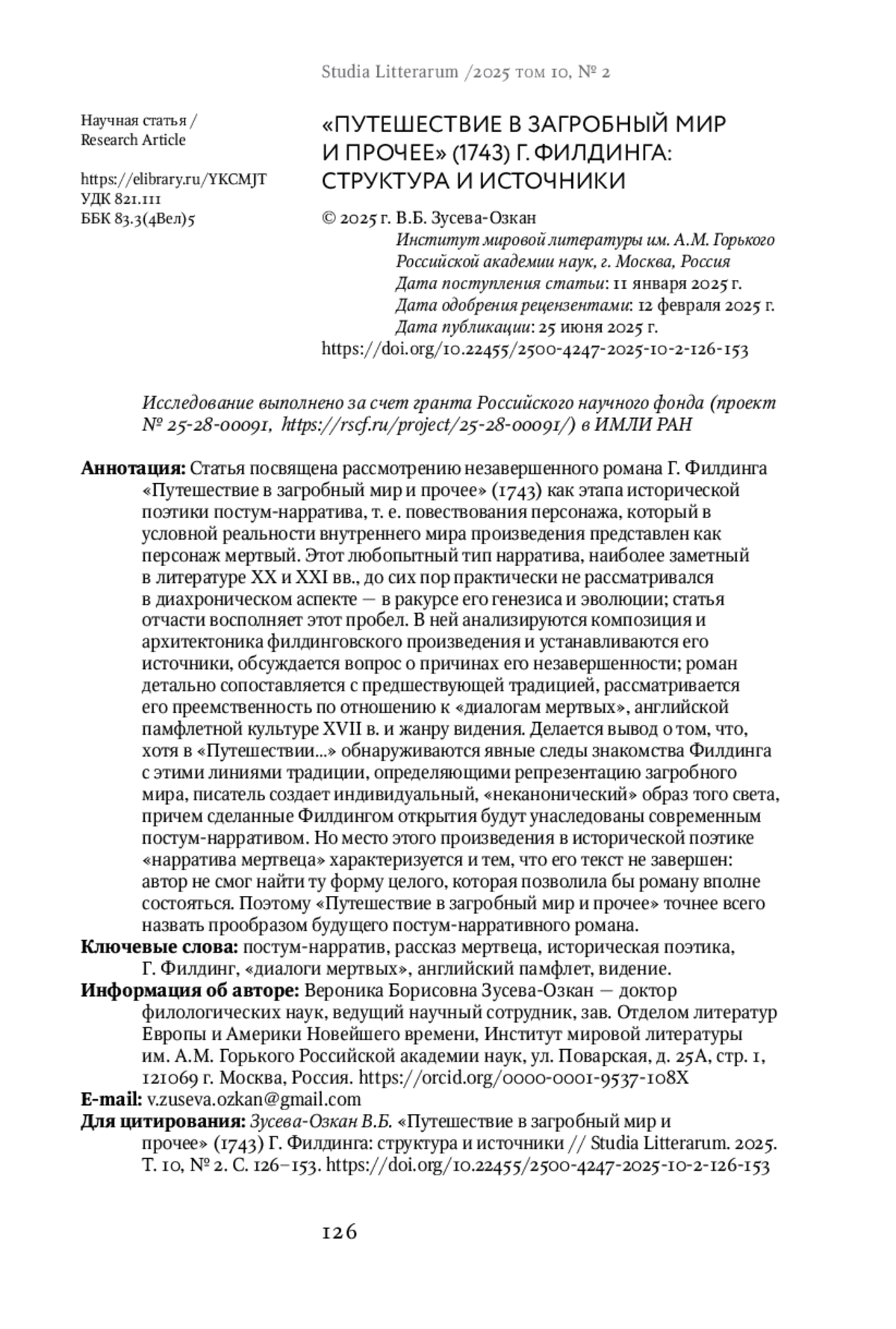
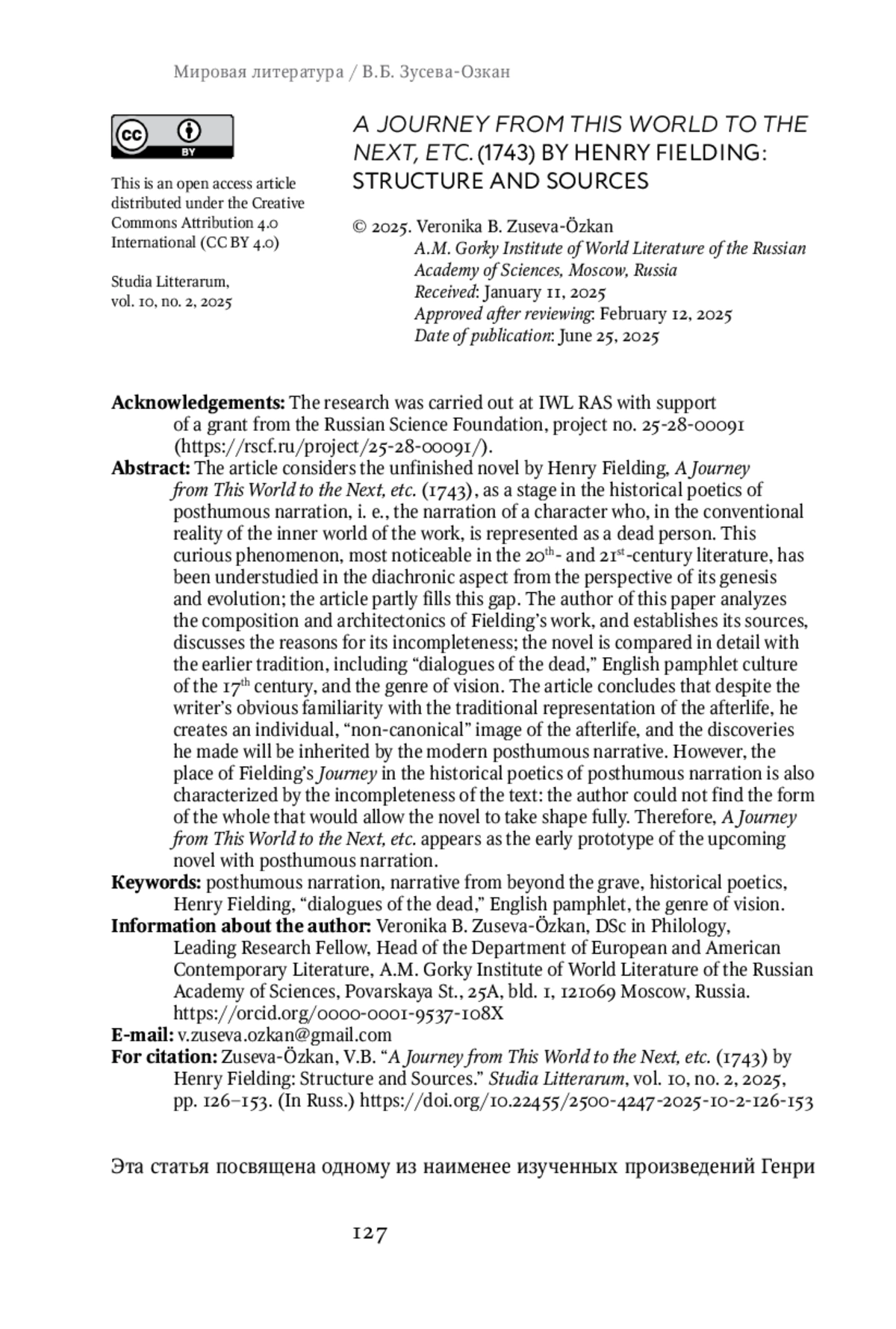
The article considers the unfinished novel by Henry Fielding, A Journey from This World to the Next, etc. (1743), as a stage in the historical poetics of posthumous narration, i. e., the narration of a character who, in the conventional reality of the inner world of the work, is represented as a dead person. This curious phenomenon, most noticeable in the 20th- and 21st-century literature, has been understudied in the diachronic aspect from the perspective of its genesis and evolution; the article partly fills this gap. The author of this paper analyzes the composition and architectonics of Fielding’s work, and establishes its sources, discusses the reasons for its incompleteness; the novel is compared in detail with the earlier tradition, including “dialogues of the dead,” English pamphlet culture of the 17th century, and the genre of vision. The article concludes that despite the writer’s obvious familiarity with the traditional representation of the afterlife, he creates an individual, “non-canonical” image of the afterlife, and the discoveries he made will be inherited by the modern posthumous narrative. However, the place of Fielding’s Journey in the historical poetics of posthumous narration is also characterized by the incompleteness of the text: the author could not find the form of the whole that would allow the novel to take shape fully. Therefore, A Journey from This World to the Next, etc. appears as the early prototype of the upcoming novel with posthumous narration.
Предпросмотр статьи
Идентификаторы и классификаторы
- SCI
- Литература
Если у вас возникли вопросы или появились предложения по содержанию статьи, пожалуйста, направляйте их в рамках данной темы.