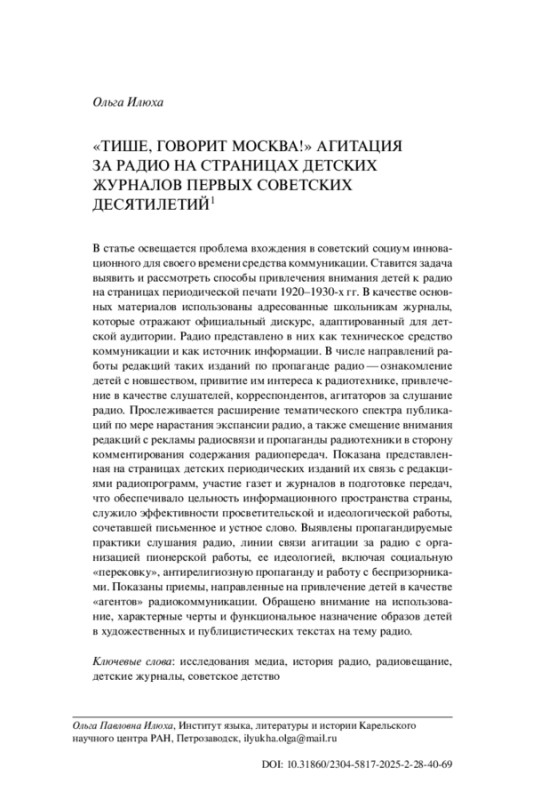
В статье освещается проблема вхождения в советский социум инновационного для своего времени средства коммуникации. Ставится задача выявить и рассмотреть способы привлечения внимания детей к радио на страницах периодической печати 1920-1930-х гг. В качестве основных материалов использованы адресованные школьникам журналы, которые отражают официальный дискурс, адаптированный для детской аудитории. Радио представлено в них как техническое средство коммуникации и как источник информации. В числе направлений работы редакций таких изданий по пропаганде радио - ознакомление детей с новшеством, привитие им интереса к радиотехнике, привлечение в качестве слушателей, корреспондентов, агитаторов за слушание радио. Прослеживается расширение тематического спектра публикаций по мере нарастания экспансии радио, а также смещение внимания редакций с рекламы радиосвязи и пропаганды радиотехники в сторону комментирования содержания радиопередач. Показана представленная на страницах детских периодических изданий их связь с редакциями радиопрограмм, участие газет и журналов в подготовке передач, что обеспечивало цельность информационного пространства страны, служило эффективности просветительской и идеологической работы, сочетавшей письменное и устное слово. Выявлены пропагандируемые практики слушания радио, линии связи агитации за радио с организацией пионерской работы, ее идеологией, включая социальную «перековку», антирелигиозную пропаганду и работу с беспризорниками. Показаны приемы, направленные на привлечение детей в качестве «агентов» радиокоммуникации. Обращено внимание на использование, характерные черты и функциональное назначение образов детей в художественных и публицистических текстах на тему радио.
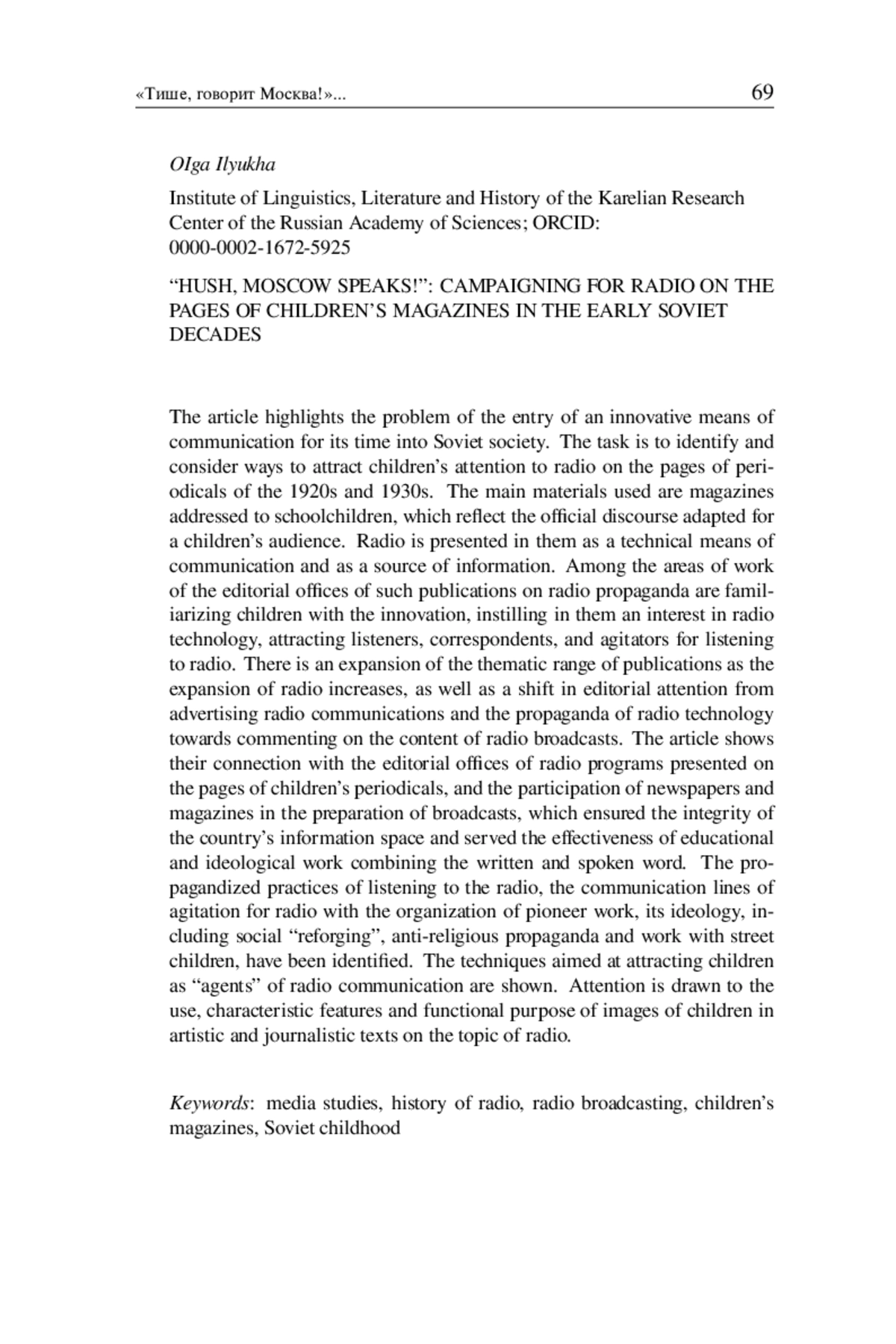
The article highlights the problem of the entry of an innovative means of communication for its time into Soviet society. The task is to identify and consider ways to attract children’s attention to radio on the pages of periodicals of the 1920s and 1930s. The main materials used are magazines addressed to schoolchildren, which reflect the official discourse adapted for a children’s audience. Radio is presented in them as a technical means of communication and as a source of information. Among the areas of work of the editorial offices of such publications on radio propaganda are familiarizing children with the innovation, instilling in them an interest in radio technology, attracting listeners, correspondents, and agitators for listening to radio. There is an expansion of the thematic range of publications as the expansion of radio increases, as well as a shift in editorial attention from advertising radio communications and the propaganda of radio technology towards commenting on the content of radio broadcasts. The article shows their connection with the editorial offices of radio programs presented on the pages of children’s periodicals, and the participation of newspapers and magazines in the preparation of broadcasts, which ensured the integrity of the country’s information space and served the effectiveness of educational and ideological work combining the written and spoken word. The propagandized practices of listening to the radio, the communication lines of agitation for radio with the organization of pioneer work, its ideology, including social “reforging”, antireligious propaganda and work with street children, have been identified. The techniques aimed at attracting children as “agents” of radio communication are shown. Attention is drawn to the use, characteristic features and functional purpose of images of children in artistic and journalistic texts on the topic of radio.
Предпросмотр статьи
Идентификаторы и классификаторы
- SCI
- Литература
- Префикс DOI
- 10.31860/2304-5817-2025-2-28-40-69
- eLIBRARY ID
- 88747310
Если у вас возникли вопросы или появились предложения по содержанию статьи, пожалуйста, направляйте их в рамках данной темы.