

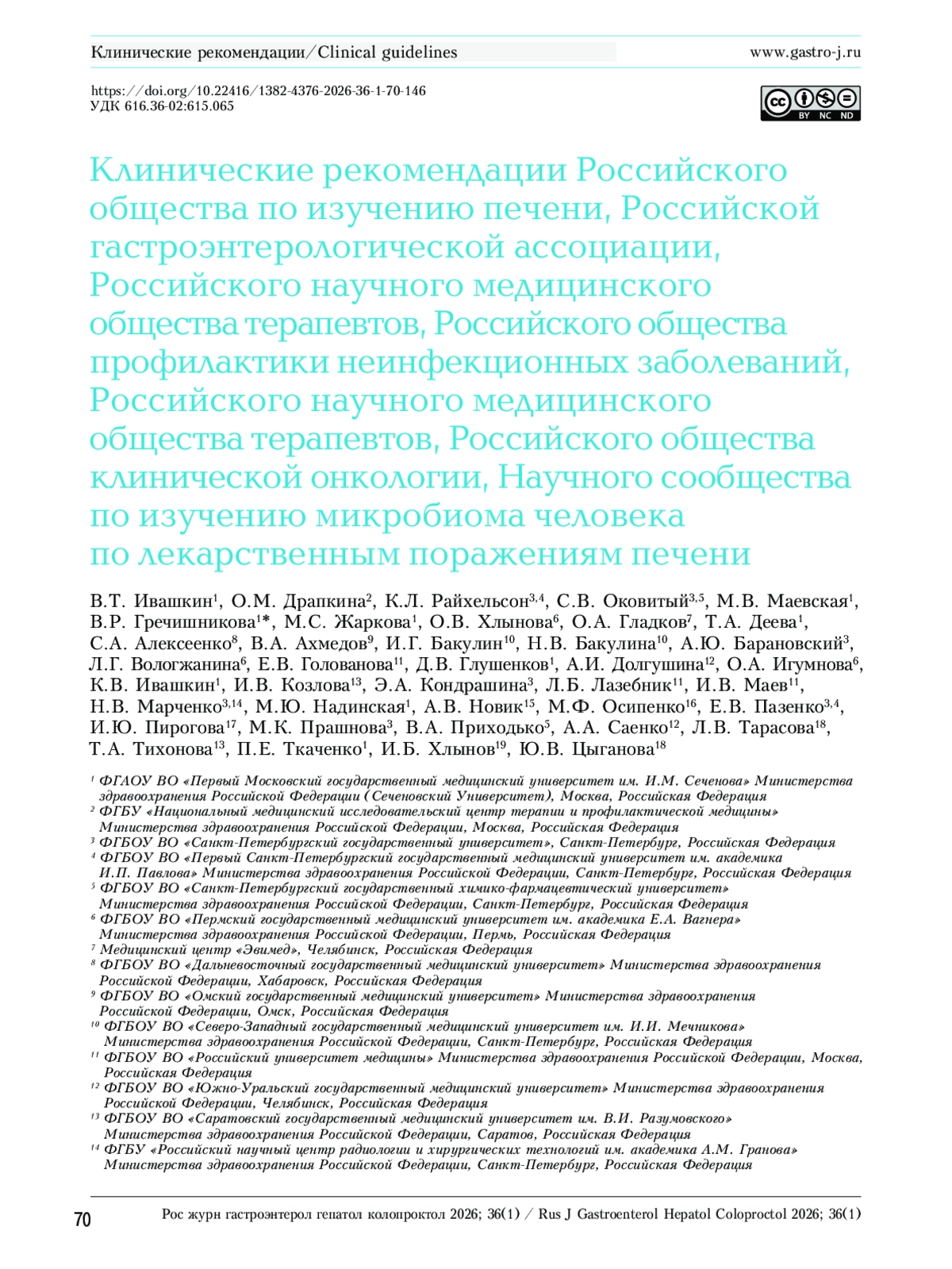
Цель представления: клинических рекомендаций заключается в обеспечении информационной поддержки для принятия врачами-гастроэнтерологами, врачами общей практики и врачами-терапевтами решений, способствующих повышению качества оказания медицинской помощи пациенту с лекарственными поражениями печени, с учетом новейших клинических данных и принципов доказательной медицины.
Основное содержание. Клинические рекомендации содержат информацию о современных представлениях об этиологии, факторах риска и патогенезе лекарственных поражений печени, особенностях их клинического течения. Также в рекомендациях представлена информация об актуальных методах лабораторной и инструментальной, инвазивной и неинвазивной диагностики лекарственных поражений печени и их клинических фенотипов, подходах к их лечению с учетом наличия коморбидностей, особенностей диспансерного наблюдения и профилактики. Приведенная информация проиллюстрирована алгоритмами дифференциального диагноза, действий врача. Помимо этого, присутствует информация для пациента и критерии оценки качества оказания медицинской помощи.
Заключение. Осведомленность специалистов в вопросах диагностики, лечения и наблюдения пациентов с лекарственными поражениями печени способствует своевременной постановке диагноза и инициации лечения, что в отдаленной перспективе будет существенно влиять на их прогноз и качество жизни.
Предпросмотр статьи


Идентификаторы и классификаторы
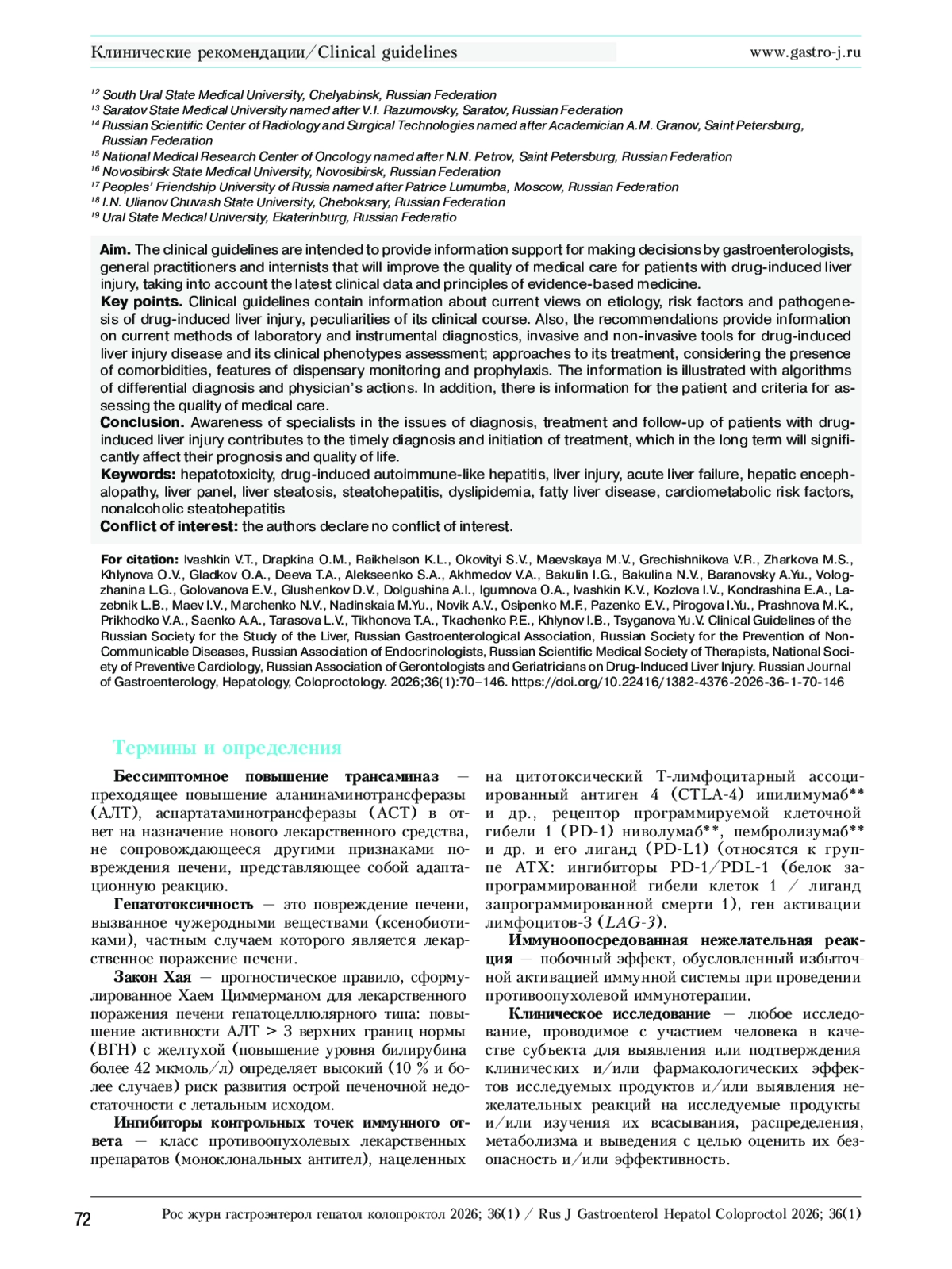
Бессимптомное повышение трансаминаз — преходящее повышение аланинаминотрансферазы (АЛТ), аспартатаминотрансферазы (АСТ) в ответ на назначение нового лекарственного средства, не сопровождающееся другими признаками повреждения печени, представляющее собой адаптационную реакцию.
Если у вас возникли вопросы или появились предложения по содержанию статьи, пожалуйста, направляйте их в рамках данной темы.
Список литературы
1. European Association for the Study of the Liver. EASL Clinical Practice Guidelines: Drug-induced liver injury. J Hepatol. 2019;70(6):1222-61. DOI: 10.1016/j.jhep.2019.02.014 ▼ Контекст
2. Fontana R.J., Liou I., Reuben A., Suzuki A., Fiel M.I., Lee W., et al. AASLD practice guidance on drug, herbal, and dietary supplement-induced liver injury. Hepatology. 2023;77(3):1036-65. DOI: 10.1002/hep.32689 EDN: RCYMWG ▼ Контекст
3. Chen M., Suzuki A., Borlak J., Andrade R.J., Lucena M.I. Drug-induced liver injury: Interactions between drug properties and host factors. J Hepatol. 2015;63(2):503-14. DOI: 10.1016/j.jhep.2015.04.016 ▼ Контекст
4. Council for International Organizations of Medical Sciences (CIOMS). Drug-induced liver injury (DILI): Current status and future directions for drug development and the post-market setting. Geneva, 2020. URL: https://cioms.ch/wp-content/uploads/2020/06/CIOMS_DILI_Web_16Jun2020.pdf. ▼ Контекст
5. Hoofnagle J.H., Björnsson E.S. Drug-induced liver injury - types and phenotypes. N Engl J Med. 2019;381(3):264-73. DOI: 10.1056/NEJMra1816149 ▼ Контекст
6. Li M., Wang Y., Lv T.T., Liu J.M., Kong Y.Y., Jia J.D., et al. Mapping the incidence of drug-induced liver injury: A systematic review and meta-analysis. J Dig Dis. 2023;24(5):332-9. DOI: 10.1111/1751-2980.13205 EDN: HUJLJH ▼ Контекст
7. Lucena M.I., Sanabria J., García-Cortes M., Stephens C., Andrade R.J. Drug-induced liver injury in older people. Lancet Gastroenterol Hepatol. 2020;5(9):862-74. DOI: 10.1016/S2468-1253(20)30006-6 EDN: LZVPMN ▼ Контекст
8. Yu S., Li J., He T., Zheng H., Wang S., Sun Y., et al. Age-related differences in drug-induced liver injury: A retrospective single-center study from a large liver disease specialty hospital in China, 2002-2022. Hepatol Int. 2024;18(4):1202-13. DOI: 10.1007/s12072-024-10679-1 EDN: JZJVAT ▼ Контекст
9. Lucena M.I., Andrade R.J., Kaplowitz N., GarcíaCortes M., Fernández M.C., Romero-Gomez M., et al. Phenotypic characterization of idiosyncratic drug-induced liver injury: The influence of age and sex. Hepatology. 2009;49(6):2001-9. DOI: 10.1002/hep.22895 ▼ Контекст
10. Chalasani N., Björnsson E. Risk factors for idiosyncratic drug-induced liver injury. Gastroenterology. 2010;138(7):2246-59. DOI: 10.1053/j.gastro.2010.04.001 EDN: NAXPSF ▼ Контекст
11. Andrade R.J., Lucena M.I., Fernández M.C., Pelaez G., achkoria K., García-Ruiz E., et al. Drug-induced liver injury: An analysis of 461 incidences submitted to the Spanish registry over a 10-year period. Gastroenterology. 2005;129(2):512-21. DOI: 10.1016/j.gastro.2005.05.006 ▼ Контекст
12. Reuben A., Koch D.G., Lee W.M.; Acute Liver Failure Study Group. Drug-induced acute liver failure: results of a U.S. multicenter, prospective study. Hepatology. 2010;52(6):2065-76. DOI: 10.1002/hep.23937 ▼ Контекст
13. Chalasani N.P., Maddur H., Russo M.W., Wong R.J., Reddy K.R.; Practice Parameters Committee of the American College of Gastroenterology. ACG clinical guideline: Diagnosis and management of idiosyncratic drug-induced liver injury. Am J Gastroenterol. 2021;116(5):878-98. DOI: 10.14309/ajg.0000000000001259 EDN: PNREZN ▼ Контекст
14. Ивашкин В.Т., Барановский А.Ю., Райхельсон К.Л., Пальгова Л.К., Маевская М.В., Кондрашина Э.А. и др. Лекарственные поражения печени (клинические рекомендации для врачей). Российский журнал гастроэнтерологии, гепатологии, колопроктологии. 2019;29(1):85-115. DOI: 10.22416/1382-4376-2019-29-1-101-131 EDN: ZERHTF ▼ Контекст
15. Daly A.K. Genetics of drug-induced liver injury: Current knowledge and future prospects. Clin Transl Sci. 2023;16(1):37-42. DOI: 10.1111/cts.13424 EDN: OAVXYK ▼ Контекст
16. Cirulli E.T., Nicoletti P., Abramson K., Andrade R.J., Bjornsson E.S., Chalasani N., et al.; Drug-Induced Liver Injury Network (DILIN) investigators; International DILI consortium (iDILIC). A missense variant in PTPN22 is a risk factor for drug-induced liver injury. Gastroenterology. 2019;156(6):1707-16.e2. DOI: 10.1053/j.gastro.2019.01.034 ▼ Контекст
17. Hautekeete M.L., Horsmans Y., Van Waeyenberge C., Demanet C., Henrion J., Verbist L., et al. HLA association of amoxicillin-clavulanate - induced hepatitis. Gastroenterology. 1999;117(5):1181-6. DOI: 10.1016/s0016-5085(99)70404-x ▼ Контекст
18. Huang Y.S., Chern H.D., Su W.J., Wu J.C., Lai S.L., Yang S.Y., et al. Polymorphism of the N-acetyltransferase 2 gene as a susceptibility risk factor for antituberculosis drug-induced hepatitis. Hepatology. 2002;35(4):883-9. DOI: 10.1053/jhep.2002.32102 ▼ Контекст
19. Nicoletti P., Devarbhavi H., Goel A., Venkatesan R., Eapen C.E., Grove J.I., et al. Genetic risk factors in drug-induced liver injury due to isoniazid-containing antituberculosis drug regimens. Clin Pharmacol Ther. 2021;109(4):1125-35. DOI: 10.1002/cpt.2100 EDN: CEFVAQ ▼ Контекст
20. Hayashi P.H., Rockey D.C., Fontana R.J., Tillmann H.L., Kaplowitz N., Barnhart H.X., et al.; Drug-Induced Liver Injury Network (DILIN) Investigators. Death and liver transplantation within 2 years of onset of drug-induced liver injury. Hepatology. 2017;66(4):1275-85. DOI: 10.1002/hep.29283 ▼ Контекст
21. Andrade R.J., López-Ortega S., López-Vega M.C., Robles M., Cueto I., Lucena M.I. Idiosyncratic drug hepatotoxicity: A 2008 update. Expert Rev Clin Pharmacol. 2008;1(2):261-76. DOI: 10.1586/17512433.1.2.261 ▼ Контекст
22. Dakhoul L., Ghabril M., Gu J., Navarro V., Chalasani N., Serrano J.; United States Drug Induced Liver Injury Network. Heavy consumption of alcohol is not associated with worse outcomes in patients with idiosyncratic drug-induced liver injury compared to non-drinkers. Clin Gastroenterol Hepatol. 2018;16(5):722-9.e2. DOI: 10.1016/j.cgh.2017.12.036 ▼ Контекст
23. Van Roey G., Goos W., Claessens C., Hoorens A., Verlinden W., Schouten J. Acute grade IV toxic hepatitis due to the e-cigarette. Acta Gastroenterol Belg. 2024;87(1):44-7. DOI: 10.51821/87.1.11378 EDN: AYPMKH ▼ Контекст
24. Liu A., Walter M., Wright P., Bartosik A., Dolciami D., Elbasir A., et al. Prediction and mechanistic analysis of drug-induced liver injury (DILI) based on chemical structure. Biol Direct. 2021;16(1):6. DOI: 10.1186/s13062-020-00285-0 EDN: ZVZCOF ▼ Контекст
25. Zhang H., Ding L., Zou Y., Hu S.Q., Huang H.G., Kong W.B., et al. Predicting drug-induced liver injury in human with Naïve Bayes classifier approach. J Comput Aided Mol Des. 2016;30(10):889-98. DOI: 10.1007/s10822-016-9972-6 EDN: JGVGOF ▼ Контекст
26. Pessayre D., Fromenty B., Berson A., Robin M.A., Lettéron P., Moreau R., et al. Central role of mitochondria in drug-induced liver injury. Drug Metab Rev. 2012;44(1):34-87. DOI: 10.3109/03602532.2011.604086 EDN: PNAROP ▼ Контекст
27. Albrecht W., Kappenberg F., Brecklinghaus T., Stoeber R., Marchan R., Zhang M., et al. Prediction of human drug-induced liver injury (DILI) in relation to oral doses and blood concentrations. Arch Toxicol. 2019;93(6):1609-37. DOI: 10.1007/s00204-019-02492-9 EDN: MJEMBT ▼ Контекст
28. Sandhu N., Navarro V. Drug-induced liver injury in GI practice. Hepatol Commun. 2020;4(5):631-45. DOI: 10.1002/hep4.1503 EDN: IPMSLY ▼ Контекст
29. Lin J., Li M., Mak W., Shi Y., Zhu X., Tang Z., et al. Applications of in silico models to predict drug-induced liver injury. Toxics. 2022;10(12):788. DOI: 10.3390/toxics10120788 EDN: IFAWRW ▼ Контекст
30. Lee K.S., Oh S.J., Kim H.M., Lee K.H., Kim S.K. Assessment of reactive metabolites in drug-induced liver injury. Arch Pharm Res. 2011;34(11):1879-86. DOI: 10.1007/s12272-011-1108-x ▼ Контекст
31. Onfiani G., Nascimbeni F., Carubbi F. A case of statin-induced liver injury with positive rechallenge with a second statin. Is there a class effect? J Basic Clin Physiol Pharmacol. 2021;32(6):1151-5. DOI: 10.1515/jbcpp-2021-0013 EDN: NWBXSM ▼ Контекст
32. De Abajo F.J., Montero D., Madurga M., García Rodríguez L.A. Acute and clinically relevant drug-induced liver injury: A population based case-control study. Br J Clin Pharmacol. 2004;58(1):71-80. DOI: 10.1111/j.1365-2125.2004.02133.x EDN: FPATOL ▼ Контекст
33. Björnsson E.S., Bergmann O.M., Björnsson H.K., Kvaran R.B., Olafsson S. Incidence, presentation, and outcomes in patients with drug-induced liver injury in the general population of Iceland. Gastroenterology. 2013;144(7):1419-25. DOI: 10.1053/j.gastro.2013.02.006 ▼ Контекст
34. Larrey D. Epidemiology and individual susceptibility to adverse drug reactions affecting the liver. Semin Liver Dis. 2002;22(2):145-55. DOI: 10.1055/s-2002-30105 ▼ Контекст
35. Low E.X.S., Zheng Q., Chan E., Lim S.G. Drug induced liver injury: East versus West - a systematic review and meta-analysis. Clin Mol Hepatol. 2020;26(2):142-54. DOI: 10.3350/cmh.2019.1003 EDN: ZLVSUQ ▼ Контекст
36. Meier Y., Cavallaro M., Roos M., Pauli-Magnus C., Folkers G., Meier P.J., et al. Incidence of drug-induced liver injury in medical inpatients. Eur J Clin Pharmacol. 2005;61(2):135-43. DOI: 10.1007/s00228-004-0888-z EDN: TPSDCG ▼ Контекст
37. Idilman R., Bektas M., Cinar K., Toruner M., Cerit E.T., Doganay B., et al. The characteristics and clinical outcome of drug-induced liver injury: A single-center experience. J Clin Gastroenterol. 2010;44(6):e128-32. DOI: 10.1097/MCG.0b013e3181c5e9cc ▼ Контекст
38. Licata A. Adverse drug reactions and organ damage: The liver. Eur J Intern Med. 2016;28:9-16. DOI: 10.1016/j.ejim.2015.12.017 ▼ Контекст
39. Byeon J.H., Kil J.H., Ahn Y.C., Son C.G. Systematic review of published data on herb induced liver injury. J Ethnopharmacol. 2019;233:190-6. DOI: 10.1016/j.jep.2019.01.006 ▼ Контекст
40. Wang J., Ma Z., Niu M., Zhu Y., Liang Q., Zhao Y., et al. Evidence chain-based causality identification in herb-induced liver injury: Exemplification of a well-known liver-restorative herb Polygonum multiflorum. Front Med. 2015;9(4):457-67. DOI: 10.1007/s11684-015-0417-8 EDN: YNSGAT ▼ Контекст
41. Byeon J.H., Kil J.H., Ahn Y.C., Son C.G. Systematic review of published data on herb induced liver injury. J Ethnopharmacol. 2019;233:190-6. DOI: 10.1016/j.jep.2019.01.006 ▼ Контекст
42. Райхельсон К.Л., Пальгова Л.К., Кондрашина Э.А., Марченко Н.В., Барановский А.Ю. Лекарственные поражения печени: клинические рекомендации для врачей. СПб., 2017. ▼ Контекст
43. Brennan P.N., Cartlidge P., Manship T., Dillon J.F. Guideline review: EASL clinical practice guidelines: Drug-induced liver injury (DILI). Frontline Gastroenterol. 2021;13(4):332-6. DOI: 10.1136/flgastro-2021-101886 EDN: OPBEZY ▼ Контекст
44. Драпкина О.М., Маев И.В., Ахмедов В.А., Вологжанина Л.Г., Долгушина А.И., Игумнова О.А. и др. Лекарственные поражения печени (ЛПП) у взрослых. Экспериментальная и клиническая гастроэнтерология. 2024;12:5-48. DOI: 10.31146/1682-8658-ecg-232-12-5-48 EDN: WNKKBH ▼ Контекст
45. Mao Y., Ma S., Liu C., Liu X., Su M., Li D., et al.; Technology Committee on DILI Prevention, Management, Chinese Medical Biotechnology Association; Study Group on Drug-Induced Liver Disease, Chinese Society of Hepatology, Chinese Medical Association. Chinese guideline for the diagnosis and treatment of drug-induced liver injury: An update. Hepatol Int. 2024;18(2):384-419. DOI: 10.1007/s12072-023-10633-7 EDN: VRARRZ ▼ Контекст
46. Kleiner D.E. The pathology of drug-induced liver injury. Semin Liver Dis. 2009;29(4):364-72. DOI: 10.1055/s-0029-1240005 ▼ Контекст
47. Kleiner D.E., Chalasani N.P., Lee W.M., Fontana R.J., Bonkovsky H.L., Watkins P.B., et al.; Drug-Induced Liver Injury Network (DILIN). Hepatic histological findings in suspected drug-induced liver injury: Systematic evaluation and clinical associations. Hepatology. 2014;59(2):661-70. DOI: 10.1002/hep.26709 ▼ Контекст
48. Zhang X., Ouyang J., Thung S.N. Histopathologic manifestations of drug-induced hepatotoxicity. Clin Liver Dis. 2013;17(4):547-64. DOI: 10.1016/j.cld.2013.07.004 ▼ Контекст
49. Bonkovsky H.L., Kleiner D.E., Gu J., Odin J.A., Russo M.W., Navarro V.M., et al.; U.S. Drug Induced Liver Injury Network Investigators. Clinical presentations and outcomes of bile duct loss caused by drugs and herbal and dietary supplements. Hepatology. 2017;65(4):1267- 77. DOI: 10.1002/hep.28967 ▼ Контекст
50. Rabinowich L., Shibolet O. Drug induced steatohepatitis: An uncommon culprit of a common disease. Biomed Res Int. 2015;2015:168905. DOI: 10.1155/2015/168905 ▼ Контекст
51. Goodman Z.D. Drug hepatotoxicity. Clin Liver Dis. 2002;6(2):381-97. DOI: 10.1016/s1089-3261(02)00011-9 ▼ Контекст
52. Lu H.C., González I.A., Byrnes K. Ground-glass hepatocellular inclusions are associated with polypharmacy. Ann Diagn Pathol. 2021;52:151740. DOI: 10.1016/j.anndiagpath.2021.151740 EDN: KXEHDO ▼ Контекст
53. Bessone F., Dirchwolf M., Rodil M.A., Razori M.V., Roma M.G. Review article: Drug-induced liver injury in the context of nonalcoholic fatty liver disease - a physiopathological and clinical integrated view. Aliment Pharmacol Ther. 2018;48(9):892-913. DOI: 10.1111/apt.14952 ▼ Контекст
54. Kleiner D.E. Liver histology in the diagnosis and prognosis of drug-induced liver injury. Clin Liver Dis (Hoboken). 2014;4(1):12-6. DOI: 10.1002/cld.371 ▼ Контекст
55. Björnsson E., Kalaitzakis E., Olsson R. The impact of eosinophilia and hepatic necrosis on prognosis in patients with drug-induced liver injury. Aliment Pharmacol Ther. 2007;25(12):1411-21. DOI: 10.1111/j.1365-2036.2007.03330.x ▼ Контекст
56. Aithal G.P., Watkins P.B., Andrade R.J., Larrey D., Molokhia M., Takikawa H., et al. Case definition and phenotype standardization in drug-induced liver injury. Clin Pharmacol Ther. 2011;89(6):806-15. DOI: 10.1038/clpt.2011.58 ▼ Контекст
57. Fontana R.J., Seeff L.B., Andrade R.J., Björnsson E., Day C.P., Serrano J., et al. Standardization of nomenclature and causality assessment in drug-induced liver injury: Summary of a clinical research workshop. Hepatology. 2010;52(2):730-42. DOI: 10.1002/hep.23696 ▼ Контекст
58. Andrade R.J., Aithal G.P., de Boer Y.S., Liberal R., Gerbes A., Regev A., et al.; IAIHG and EASL DHI- LI Consortium. Nomenclature, diagnosis and management of drug-induced autoimmune-like hepatitis (DI-ALH): An expert opinion meeting report. J Hepatol. 2023;79(3):853-66. DOI: 10.1016/j.jhep.2023.04.033 EDN: ZAPZNU ▼ Контекст
59. García-Cortés M., Ortega-Alonso A., Matilla-Cabello G., Medina-Cáliz I., Castiella A., Conde I., et al. Clinical presentation, causative drugs and outcome of patients with autoimmune features in two prospective DILI registries. Liver Int. 2023;43(8):1749-60. DOI: 10.1111/liv.15623 EDN: GNMOPX ▼ Контекст
60. Björnsson E., Talwalkar J., Treeprasertsuk S., Kamath P.S., Takahashi N., Sanderson S., et al. Drug-induced autoimmune hepatitis: Clinical characteristics and prognosis. Hepatology. 2010;51(6):2040-8. DOI: 10.1002/hep.23588 ▼ Контекст
61. De Boer Y.S., Kosinski A.S., Urban T.J., Zhao Z., Long N., Chalasani N., et al.; Drug-Induced Liver Injury Network. Features of autoimmune hepatitis in patients with drug-induced liver injury. Clin Gastroenterol Hepatol. 2017;15(1):103-2.e2. DOI: 10.1016/j.cgh.2016.05.043 ▼ Контекст
62. Licata A., Maida M., Cabibi D., Butera G., Macaluso F.S., Alessi N., et al. Clinical features and outcomes of patients with drug-induced autoimmune hepatitis: A retrospective cohort study. Dig Liver Dis. 2014;46(12):1116-20. DOI: 10.1016/j.dld.2014.08.040 ▼ Контекст
63. Perdices E.V., Medina-Cáliz I., Hernando S., Ortega A., Martín-Ocaña F., Navarro J.M., et al. Hepatotoxicity associated with statin use: Analysis of the cases included in the Spanish Hepatotoxicity Registry. Rev Esp Enferm Dig. 2014;106(4):246-54. ▼ Контекст
64. Björnsson E.S., Medina-Caliz I., Andrade R.J., Lucena M.I. Setting up criteria for drug-induced autoimmune-like hepatitis through a systematic analysis of published reports. Hepatol Commun. 2022;6(8):1895-909. DOI: 10.1002/hep4.1959 EDN: YLXVAH ▼ Контекст
65. Codoni G., Kirchner T., Engel B., Villamil A.M., Efe C., Stattermayer A.F., et al. Histological and serological features of acute liver injury after SARS-CoV-2 vaccination. JHEP Rep. 2023;5(1):100605. DOI: 10.1016/j.jhepr.2022.100605 EDN: IOBOCW ▼ Контекст
66. Xu Z., Qi G., Liu X., Li Z., Zhang A., Ma J., et al. Hepatotoxicity in immune checkpoint inhibitors: A pharmacovigilance study from 2014-2021. PLoS One. 2023;18(3):e0281983. DOI: 10.1371/journal.pone.0281983 EDN: AWQKBN ▼ Контекст
67. Lohse A.W., Sebode M., Bhathal P.S., Clouston A.D., Dienes H.P., Jain D., et al. Consensus recommendations for histological criteria of autoimmune hepatitis from the international AIH pathology group: Results of a workshop on AIH histology hosted by the European reference network on hepatological diseases and the European society of pathology: results of a workshop on AIH histology hosted by the European reference network on hepatological diseases and the European society of pathology. Liver Int. 2022;42(5):1058-69. DOI: 10.1111/liv.15217 EDN: UORPOW ▼ Контекст
68. García-Cortés M., Pinazo-Bandera J.M., Lucena M.I., Andrade R.J. Drug-induced autoimmune-like hepatitis. Clin Liver Dis (Hoboken). 2024;23(1):e0172. DOI: 10.1097/CLD.0000000000000172 EDN: YRPSAO ▼ Контекст
69. Calle A.M., Aguirre N., Ardila J.C., Cardona Villa R. DRESS syndrome: A literature review and treatment algorithm. World Allergy Organ J. 2023;16(3):100673. DOI: 10.1016/j.waojou.2022.100673 EDN: MFOZOH ▼ Контекст
70. Kardaun S.H., Sekula P., Valeyrie-Allanore L., Liss Y., Chu C.Y., Creamer D., et al.; RegiSCAR study group. Drug reaction with eosinophilia and systemic symptoms (DRESS): An original multisystem adverse drug reaction. Results from the prospective RegiSCAR study. Br J Dermatol. 2013;169(5):1071-80. DOI: 10.1111/bjd.12501 ▼ Контекст
71. De A., Rajagopalan M., Sarda A., Das S., Biswas P. Drug reaction with eosinophilia and systemic symptoms: An update and review of recent literature. Indian J Dermatol. 2018;63(1):30-40. DOI: 10.4103/ijd.IJD_582_17 ▼ Контекст
72. Choudhary S., McLeod M., Torchia D., Romanelli P. Drug reaction with eosinophilia and systemic symptoms (DRESS) syndrome. J Clin Aesthet Dermatol. 2013;6(6):31-7. ▼ Контекст
73. Alphonce B., Komanya F., Magitta N.F., Deodatus S., Sindato E. Amoxicillin-induced DRESS syndrome without eosinophilia. Clin Case Rep. 2024;12(8):e9333. DOI: 10.1002/ccr3.9333 EDN: BGWHUR ▼ Контекст
74. Chen Y.C., Chang C.Y., Cho Y.T., Chiu H.C., Chu C.Y. Long-term sequelae of drug reaction with eosinophilia and systemic symptoms: A retrospective cohort study from Taiwan. J Am Acad Dermatol. 2013;68(3):459-65. DOI: 10.1016/j.jaad.2012.08.009 ▼ Контекст
75. Takinami M., Ono A., Kawabata T., Mamesaya N., Kobayashi H., Omori S., et al. Comparison of clinical features between immune-related sclerosing cholangitis and hepatitis. Invest New Drugs. 2021;39(6):1716-23. DOI: 10.1007/s10637-021-01136-z EDN: KXRMDV ▼ Контекст
76. Tew A., Khoja L., Pallan L., Steven N. Management of immune-related hepatitis in patients being treated with checkpoint inhibitors for metastatic melanoma, a review and case series. J Oncol Pharm Pract. 2023;29(5):1163- 71. DOI: 10.1177/10781552221103548 EDN: AZCJYI ▼ Контекст
77. Onoyama T., Takeda Y., Yamashita T., Hamamoto W., Sakamoto Y., Koda H., et al. Programmed cell death-1 inhibitor-related sclerosing cholangitis: A systematic review. World J Gastroenterol. 2020;26(3):353-65. DOI: 10.3748/wjg.v26.i3.353 EDN: VJFXQR ▼ Контекст
78. Sundaram V., Björnsson E.S. Drug-induced cholestasis. Hepatol Commun. 2017;1(8):726-35. DOI: 10.1002/hep4.1088 ▼ Контекст
79. Gudnason H.O., Björnsson H.K., Gardarsdottir M., Thorisson H.M., Olafsson S., Bergmann O.M., et al. Secondary sclerosing cholangitis in patients with drug-induced liver injury. Dig Liver Dis. 2015;47(6):502-7. DOI: 10.1016/j.dld.2015.03.002 ▼ Контекст
80. Bjornsson E.S., Devarbhavi H.C. Drug-induced cholestatic liver diseases. Hepatology. 2025;82(4):996-1015. DOI: 10.1097/HEP.0000000000001052 EDN: UEOAEJ ▼ Контекст
81. Bessone F., Hernández N., Tanno M., Roma M.G. Drug-induced vanishing bile duct syndrome: From pathogenesis to diagnosis and therapeutics. Semin Liver Dis. 2021;41(3):331-48. DOI: 10.1055/s-0041-1729972 EDN: QPZJGW ▼ Контекст
82. Visentin M., Lenggenhager D., Gai Z., Kullak-Ublick G.A. Drug-induced bile duct injury. Biochim Biophys Acta Mol Basis Dis. 2018;1864(4 Pt B):1498-506. DOI: 10.1016/j.bbadis.2017.08.033
83. LiverTox: Clinical and Research Information on Drug-Induced Liver Injury. Bethesda (MD): National Institute of Diabetes and Digestive and Kidney Diseases; 2012. URL: https://www.ncbi.nlm.nih.gov/books/NBK547852.
84. Stevenson H.L., Prats M.M., Sasatomi E. Chemotherapy-induced Sinusoidal Injury (CSI) score: A novel histologic assessment of chemotherapy-related hepatic sinusoidal injury in patients with colorectal liver metastasis. BMC Cancer. 2017;17(1):35. DOI: 10.1186/s12885-016-2998-2 EDN: GLMBNT
85. Overman M.J., Maru D.M., Charnsangavej C., Loyer E.M., Wang H., Pathak P., et al. Oxaliplatin-mediated increase in spleen size as a biomarker for the development of hepatic sinusoidal injury. J Clin Oncol. 2010;28(15):2549-55. DOI: 10.1186/s12885-016-2998-2
86. Morioka D., Izumisawa Y., Yamaguchi K., Sato K., Komiyama S., Nakagawa K., et al. Surgical intervention for portal hypertension caused by oxaliplatin-based chemotherapy: A case report and a review of literature regarding radiological and/or surgical interventions for oxaliplatin-associated portal hypertension. Clin J Gastroenterol. 2020;13(5):799-805. DOI: 10.1007/s12328-020-01157-w EDN: YLOMLD
87. Lee W.M. Drug-induced acute liver failure. Clin Liver Dis. 2013;17(4):575-86. DOI: 10.1016/j.cld.2013.07.001
88. Tujios S., Stravitz R.T., Lee W.M. Management of acute liver failure: Update 2022. Semin Liver Dis. 2022;42(3):362-78. DOI: 10.1055/s-0042-1755274 EDN: ICKBOU
89. Burt A.D., Ferrell L.D., Hübscher S.G., Portmann B.C. MacSween’s pathology of the liver. 6th ed. Churchill Livingstone, 2012:645-760.
90. Лазебник Л.Б., Голованова Е.В., Хлынова О.В., Алексеенко С.А., Арямкина О.Л., Бакулин И.Г. и др. Лекарственные поражения печени (ЛПП) у взрослых. Экспериментальная и клиническая гастроэнтерология. 2020;174(2):29-54. DOI: 10.31146/1682-8658-ecg-174-2-29-54 EDN: RNLXSH ▼ Контекст
91. Calderon R.M., Cubeddu L.X., Goldberg R.B., Schiff E.R. Statins in the treatment of dyslipidemia in the presence of elevated liver aminotransferase levels: A therapeutic dilemma. Mayo Clin Proc. 2010;85(4):349-56. DOI: 10.4065/mcp.2009.0365
92. Bessone F., Hernandez N., Tagle M., Arrese M., Parana R., Méndez-Sánchez N., et al. Drug-induced liver injury: A management position paper from the Latin American Association for Study of the liver. Ann Hepatol. 2021;24:100321. DOI: 10.1016/j.aohep.2021.100321 EDN: MTHKKI ▼ Контекст
93. Ghabril M., Vuppalanchi R., Chalasani N. Drug-induced liver injury in patients with chronic liver disease. Liver Int. 2025;45(3):e70019. DOI: 10.1111/liv.70019 EDN: PRQJPG
94. Chalasani N., Bonkovsky H.L., Fontana R., Lee W., Stolz A., Talwalkar J., et al.; United States Drug Induced Liver Injury Network. Features and outcomes of 899 patients with drug-induced liver injury: The DILIN prospective study. Gastroenterology. 2015;148(7):1340- 52.e7. DOI: 10.1053/j.gastro.2015.03.006 ▼ Контекст
95. Stephens C., Robles-Diaz M., Medina-Caliz I., Garcia-Cortes M., Ortega-Alonso A., Sanabria-Cabrera J., et al. Comprehensive analysis and insights gained from longterm experience of the Spanish DILI Registry. J Hepatol. 2021;75(1):86-97. DOI: 10.1016/j.jhep.2021.01.029 EDN: XRTIWW
96. Fontana R.J., Watkins P.B., Bonkovsky H.L., Chalasani N., Davern T., Serrano J., et al.; DILIN Study Group. Drug-induced liver injury network (DILIN) prospective study: Rationale, design and conduct. Drug Saf. 2009;32(1):55-68. DOI: 10.2165/00002018-200932010-00005 EDN: PRWIEV
97. De La Guerra R., Daniel T., Adewuyi O., Babich M. Drug-induced liver injury (DILI): A practical review. Pract Gastroenterol. 2024;(17):16-25. URL: https://practicalgastro.com/wp-content/uploads/2025/01/Babich-December-2024.pdf.
98. Crabb D.W., Bataller R., Chalasani N.P., Kamath P.S., Lucey M., Mathurin P., et al.; NIAAA Alcoholic Hepatitis Consortia. Standard definitions and common data elements for clinical trials in patients with alcoholic hepatitis: Recommendation from the NIAAA Alcoholic Hepatitis Consortia. Gastroenterology. 2016;150(4):785-90. DOI: 10.1053/j.gastro.2016.02.042
99. Ивашкин В.Т., Лазебник Л.Б., Голованова Е.В., Деева Т.А., Драпкина О.М., Еремина Е.Ю. и др. Алкогольная болезнь печени: клинические рекомендации. М.; 2024. URL: https://cr.minzdrav.gov.ru/preview-cr/711_2.
100. Hayashi P.H., Rockey D.C., Fontana R.J., Tillmann H.L., Kaplowitz N., Barnhart H.X., et al.; Drug-Induced Liver Injury Network (DILIN) Investigators. Death and liver transplantation within 2 years of onset of druginduced liver injury. Hepatology. 2017;66(4):1275-85. DOI: 10.1002/hep.29283 ▼ Контекст
101. Martinez-Cabriales S.A., Shear N.H., Gonzalez-More-no E.I. Liver involvement in the drug reaction, eosinophilia, and systemic symptoms syndrome. World J Clin Cases. 2019;7(6):705-16. DOI: 10.12998/wjcc.v7.i6.705 ▼ Контекст
102. Kroshinsky D., Cardones A.R.G., Blumenthal K.G. Drug reaction with eosinophilia and systemic symptoms. N Engl J Med. 2024;391(23):2242-54. DOI: 10.1056/NEJMra2204547 EDN: DFDIUC ▼ Контекст
103. Kano Y., Ishida T., Hirahara K., Shiohara T. Visceral involvements and long-term sequelae in druginduced hypersensitivity syndrome. Med Clin North Am. 2010;94(4):743-59. DOI: 10.1016/j.mcna.2010.03.004 ▼ Контекст
104. Mockenhaupt M. Severe drug-induced skin reactions: Clinical pattern, diagnostics and therapy. J Dtsch Dermatol Ges. 2009;7(2):142-60. DOI: 10.1111/j.1610-0387.2008.06878.x ▼ Контекст
105. Fu S., Wu D., Jiang W., Li J., Long J., Jia C., et al. Molecular biomarkers in drug-induced liver injury: Challenges and future perspectives. Front Pharmacol. 2020;10:1667. DOI: 10.3389/fphar.2019.01667 EDN: HDCXPI ▼ Контекст
106. Clarke J.I., Dear J.W., Antoine D.J. Recent advances in biomarkers and therapeutic interventions for hepatic drug safety - false dawn or new horizon? Expert Opin Drug Saf. 2016;15(5):625-34. DOI: 10.1517/14740338.2016.1160057 EDN: WQNETZ ▼ Контекст
107. Senior J.R. Can rechallenge be done safely after mild or moderate drug-induced liver injury? Hepatology. 2016;63(3):691-3. DOI: 10.1002/hep.28353 ▼ Контекст
108. Tajima S., Yamamoto N., Masuda S. Clinical prospects of biomarkers for the early detection and/or prediction of organ injury associated with pharmacotherapy. Biochem Pharmacol. 2019;170:113664. DOI: 10.1016/j.bcp.2019.113664 ▼ Контекст
109. Gazzin S., Masutti F., Vitek L., Tiribelli C. The molecular basis of jaundice: An old symptom revisited. Liver Int. 2017;37(8):1094-102. DOI: 10.1111/liv.13351 ▼ Контекст
110. Danan G., Benichou C. Causality assessment of adverse reactions to drugs. Part I: A novel method based on the conclusions of international consensus meetings: Application to drug-induced liver injuries. J Clin Epidemiol. 1993;46(11):1323-30. DOI: 10.1016/0895-4356(93)90101-6 ▼ Контекст
111. Bénichou C. Criteria of drug-induced liver disorders. Report of an international consensus meeting. J Hepatol. 1990;11(2):272-6. DOI: 10.1016/0168-8278(90)90124-a ▼ Контекст
112. Benichou C., Danan G., Flahault A. Causality assessment of adverse reactions to drugs. Part II: An original model for validation of drug causality assessment methods: Case reports with positive rechallenge. J Clin Epidemiol. 1993;46(11):1331-6. DOI: 10.1016/0895-4356(93)90102-7 ▼ Контекст
113. Agarwal V.K., McHutchison J.G., Hoofnagle J.H.; Drug-Induced Liver Injury Network. Important elements for the diagnosis of drug-induced liver injury. Clin Gastroenterol Hepatol. 2010;8(5):463-70. DOI: 10.1016/j.cgh.2010.02.008 ▼ Контекст
114. Сандлер Ю.Г., Винницкая Е.В., Райхельсон К.Л., Ивашкин К.В., Бацких С.Н., Александрова Е.Н. и др. Диагностика и лечение пациентов с аутоиммунным гепатитом (соглашение специалистов). Российский журнал гастроэнтерологии, гепатологии, колопроктологии. 2024;34(6):100-19. DOI: 10.22416/1382-4376-2024-34-6-100-119 EDN: QBQYZQ ▼ Контекст
115. Tan E.M., Feltkamp T.E., Smolen J.S., Butcher B., Dawkins R., Fritzler M.J., et al. Range of antinuclear antibodies in “healthy” individuals. Arthritis Rheum. 1997;40(9):1601-11. DOI: 10.1002/art.1780400909 ▼ Контекст
116. Damoiseaux J., Andrade L.E.C., Carballo O.G., Conrad K., Francescantonio P.L.C., Fritzler M.J., et al. Clinical relevance of HEp-2 indirect immunofluorescent patterns: The International Consensus on ANA patterns (ICAP) perspective. Ann Rheum Dis. 2019;78(7):879-89. DOI: 10.1136/annrheumdis-2018-214436 EDN: ROCHAP ▼ Контекст
117. Mittal V., Muralee S., Tampi R.R. Valproic acid-induced hyperammonemia in the elderly: A review of the literature. Case Rep Med. 2009;2009:802121. DOI: 10.1155/2009/802121 ▼ Контекст
118. Shakerdi L., Ryan A. Drug-induced hyperammonaemia. J Clin Pathol. 2023;76(8):501-9. DOI: 10.1136/jcp-2022-208644 EDN: LKJPHS ▼ Контекст
119. Ahmad J., Reddy K.R., Tillmann H.L., Hayashi P.H., Chalasani N., Fontana R.J., et al. Importance of hepatitis C virus RNA testing in patients with suspected drug-induced liver injury. Dig Dis Sci. 2019;64(9):2645-52. DOI: 10.1007/s10620-019-05591-w EDN: XITCJT ▼ Контекст
120. Grewal P., Ahmad J. Beware of HCV and HEV in patients with suspected drug-induced liver injury. Curr Hepatol Rep. 2018;17(3):270-5. DOI: 10.1007/s11901018-0410-1 ▼ Контекст
121. Fontana R.J., Engle R.E., Hayashi P.H., Gu J., Kleiner D.E., Nguyen H., et al. Incidence of hepatitis E infection in American patients with suspected drug-induced liver injury is low and declining: The DILIN prospective study. Am J Gastroenterol. 2022;117(9):1462-70. DOI: 10.14309/ajg.0000000000001869 EDN: SZREVF ▼ Контекст
122. Davern T.J., Chalasani N., Fontana R.J., Hayashi P.H., Protiva P., Kleiner D.E., et al. Acute hepatitis E infection accounts for some cases of suspected drug-induced liver injury. Gastroenterology. 2011;141(5):1665- 72. DOI: 10.1053/j.gastro.2011.07.051 ▼ Контекст
123. European Association for the Study of the Liver. EASL-ERN Clinical Practice Guidelines on Wilson’s disease. J Hepatol. 2025;82(4):690-728. DOI: 10.1016/j.jhep.2024.11.007 EDN: FWBABI ▼ Контекст
124. European Association for the Study of the Liver. EASL Clinical Practice Guidelines on haemochromatosis. J Hepatol. 2022;77(2):479-502. DOI: 10.1016/j.jhep.2022.03.033 EDN: ZCNWDN ▼ Контекст
125. European Association for the Study of the Liver. EASL Clinical Practice Guidelines: The diagnosis and management of patients with primary biliary cholangitis. J Hepatol. 2017;67(1):145-72. DOI: 10.1016/j.jhep.2017.03.022 ▼ Контекст
126. Hu S., Zhao F., Wang Q., Chen W.X. The accuracy of the anti-mitochondrial antibody and the M2 subtype test for diagnosis of primary biliary cirrhosis: A meta-analysis. Clin Chem Lab Med. 2014;52(11):1533-42. DOI: 10.1515/cclm-2013-0926 ▼ Контекст
127. Balcerac A., Bihan K., Lebrun-Vignes B., Thabut D., Salem J.E., Weiss N. Drug-associated hyperammonaemia: A Bayesian analysis of the WHO Pharmacovigilance Database. Ann Intensive Care. 2022;12(1):55. DOI: 10.1186/s13613-022-01026-4 EDN: IGFZNJ ▼ Контекст
128. Надинская М.Ю., Маевская М.В., Бакулин И.Г., Бессонова Е.Н., Буеверов А.О., Жаркова М.С. и др. Диагностическое и прогностическое значение гипераммониемии у пациентов с циррозом печени, печеночной энцефалопатией и саркопенией (соглашение специалистов). Российский журнал гастроэнтерологии, гепатологии, колопроктологии. 2024;34(1):85-100. DOI: 10.22416/13824376-2024-34-1-85-100 EDN: NTMBCP ▼ Контекст
129. Vakrinou A., Murphy E., Sisodiya S.M., Vivekananda U., Balestrini S. Risk factors and outcome of hyperammonaemia in people with epilepsy. J Neurol. 2022;269(12):6395-405. DOI: 10.1007/s00415-022-11304-7 EDN: WUICYT ▼ Контекст
130. Meier C., Burns K., Manolikos C., Fatovich D., Bell D.A. Hyperammonaemia: Review of the pathophysiology, aetiology and investigation. Pathology. 2024;56(6):763-72. DOI: 10.1016/j.pathol.2024.06.002 EDN: KMRIHX ▼ Контекст
131. Aitkenhead H. UK National audit of the measurement of ammonia. Ann Clin Biochem. 2023;60(2):117-25. DOI: 10.1177/00045632231152085 EDN: GRQAKL ▼ Контекст
132. National Metabolic Biochemistry Network. Guidelines for the investigation of hyperammonaemia. 2023. URL: https://metbio.net/wp-content/uploads/MetBio-Guideline-PERE918546-10-12-2018.pdf. ▼ Контекст
133. Ahmad J., Rossi S., Rodgers S.K., Ghabril M., Fontana R.J., Stolz A., et al. Sclerosing cholangitis-like changes on magnetic resonance cholangiography in patients with drug induced liver injury. Clin Gastroenterol Hepatol. 2019;17(4):789-90. DOI: 10.1016/j.cgh.2018.06.035 ▼ Контекст
134. Grewal P., Ahmad J. Bile duct injury due to drug induced liver injury. Curr Hepatol Rep. 2019;18(3):269-73. DOI: 10.1007/s11901-019-00474-0 ▼ Контекст
135. De Castro V.L., Moura E.G., Chaves D.M., Bernardo W.M., Matuguma S.E., Artifon E.L. Endoscopic ultrasound versus magnetic resonance cholangiopancreatography in suspected choledocholithiasis: A systematic review. Endosc Ultrasound. 2016;5(2):118-28. DOI: 10.4103/23039027.180476 ▼ Контекст
136. Ahmed T., Ahmad J. Recent advances in the diagnosis of drug-induced liver injury. World J Hepatol. 2024;16(2):186-92. DOI: 10.4254/wjh.v16.i2.186 EDN: ACIQTQ ▼ Контекст
137. Larrey D., Meunier L., Valla D., Hillaire S., Hernandez-Gea V., Dutheil D., et al. Drug induced liver injury and vascular liver disease. Clin Res Hepatol Gastroenterol. 2020;44(4):471-9. DOI: 10.1016/j.clinre.2020.03.020 EDN: HKGMLE ▼ Контекст
138. Del Carmen Manzano-Robleda M., Barranco-Fragoso B., Uribe M., Méndez-Sánchez N. Portal vein thrombosis: what is new? Ann Hepatol. 2015;14(1):20-7. ▼ Контекст
139. Park S.H., Choe J.Y., Kim S.K. Assessment of liver fibrosis by transient elastography in rheumatoid arthritis patients treated with methotrexate. Joint Bone Spine. 2010;77(6):588-92. DOI: 10.1016/j.jbspin.2010.02.024 ▼ Контекст
140. Berends M.A., Snoek J., de Jong E.M., Van Krieken J.H., de Knegt R.J., van Oijen M.G., et al. Biochemical and biophysical assessment of MTX-induced liver fibrosis in psoriasis patients: Fibrotest predicts the presence and Fibroscan predicts the absence of significant liver fibrosis. Liver Int. 2007;27(5):639-45. DOI: 10.1111/j.1478-3231.2007.01489.x ▼ Контекст
141. Crespo G., Fernández-Varo G., Mariño Z., Casals G., Miquel R., Martínez S.M., et al. ARFI, FibroScan, ELF, and their combinations in the assessment of liver fibrosis: A prospective study. J Hepatol. 2012;57(2):281-7. DOI: 10.1016/j.jhep.2012.03.016 ▼ Контекст
142. Atallah E., Grove J.I., Crooks C., Burden-Teh E., Abhishek A., Moreea S., et al. Risk of liver fibrosis associated with long-term methotrexate therapy may be overestimated. J Hepatol. 2023;78(5):989-97. DOI: 10.1016/j.jhep.2022.12.034 EDN: NJEMVX ▼ Контекст
143. Özkan S.G., Pata C., Şekuri A., Çınar Y., Özkan H.A. Transient elastography of liver: Could it be a guide for diagnosis and management strategy in hepatic veno-occlusive disease (sinusoidal obstruction syndrome)? Transfus Apher Sci. 2022;61(1):103370. DOI: 10.1016/j.transci.2022.103370 EDN: CAHJEA ▼ Контекст
144. Ahmad J., Barnhart H.X., Bonacini M., Ghabril M., Hayashi P.H., Odin J.A., et al.; Drug-Induced Liver Injury Network. Value of liver biopsy in the diagnosis of drug-induced liver injury. J Hepatol. 2022;76(5):1070- 8. DOI: 10.1016/j.jhep.2021.12.043 EDN: RMHFUQ ▼ Контекст
145. Chalasani N.P., Hayashi P.H., Bonkovsky H.L., Navarro V.J., Lee W.M., Fontana R.J.; Practice Parameters Committee of the American College of Gastroenterology. ACG clinical guideline: The diagnosis and management of idiosyncratic drug-induced liver injury. Am J Gastroenterol. 2014;109(7):950-66. DOI: 10.1038/ajg.2014.131 ▼ Контекст
146. Kleiner D.E. Role of liver biopsy in the management of idiosyncratic DILI. Liver Int. 2025;45(3):e16097. DOI: 10.1111/liv.16097 EDN: YOYKZZ ▼ Контекст
147. Danan G., Teschke R. RUCAM in drug and herb induced liver injury: The Update. Int J Mol Sci. 2015;17(1):14. DOI: 10.3390/ijms17010014
148. García-Cortés M., Stephens C., Lucena M.I., Fernández-Castañer A., Andrade R.J. Causality assessment methods in drug induced liver injury: Strengths and weaknesses. J Hepatol. 2011;55(3):683-91. DOI: 10.1016/j.jhep.2011.02.007
149. Teschke R., Wolff A., Frenzel C., Schwarzenboeck A., Schulze J., Eickhoff A. Drug and herb induced liver injury: Council for International Organizations of Medical Sciences scale for causality assessment. World J Hepatol. 2014;6(1):17-32. DOI: 10.4254/wjh.v6.i1.17
150. Teschke R., Eickhoff A., Schulze J. Drug- and herb-induced liver injury in clinical and translational hepatology: Causality assessment methods, quo vadis? J Clin Transl Hepatol. 2013;1(1):59-74. DOI: 10.14218/JCTH.2013.D002X
151. Hayashi P.H., Lucena M.I., Fontana R.J., Bjornsson E.S., Aithal G.P., Barnhart H., et al. A revised electronic version of RUCAM for the diagnosis of DILI. Hepatology. 2022;76(1):18-31. DOI: 10.1002/hep.32327 EDN: JEALMS
152. Zhao X., Wang Y., Lai R., Wang X., Yu Y., Li M., et al. Validation of the revised electronic version of RUCAM for diagnosis of DILI in Chinese patients. Hepatol Commun. 2024;8(4):e0235. DOI: 10.1097/HC9.0000000000000235 EDN: TDKSZU
153. Hayashi P.H., Fontana R.J. Clinical features, diagnosis and natural history of drug-induced liver injury. Semin Liver Dis. 2014;34(2):134-44. DOI: 10.1055/s-0034-1375955
154. Lucena M., Camargo R., Andrade R.J., Perez-Sanchez C.J., De LaCuesta F. Comparison of two clinical scales for causality assessment in hepatotoxicity. Hepatology. 2001;33(1):123-30. DOI: 10.1053/jhep.2001.20645
155. Takikawa H., Takamori Y., Kumagi T., Onji M., Watanabe M., Shibuya A., et al. Assessment of 287 Japanese cases of drug induced liver injury by the diagnostic scale of the international consensus meeting. Hepatol Res. 2003;27(3):192-5. DOI: 10.1016/s1386-6346(03)00232-8
156. Teschke R., Danan G. Worldwide use of RUCAM for causality assessment in 81,856 idiosyncratic DILI and 14,029 HILI cases published 1993 - mid 2020: A comprehensive analysis. Medicines (Basel). 2020;7(10):62. DOI: 10.3390/medicines7100062 EDN: YUSFAI
157. Teschke R., Frenzel C., Schulze J., Eickhoff A. Herbal hepatotoxicity: Challenges and pitfalls of causality assessment methods. World J Gastroenterol. 2013;19(19):2864- 82. DOI: 10.3748/wjg.v19.i19.2864
158. Fontana R.J., Avigan M.I., Janssen H.L.A., Regev A., Mishra P., Gaggar A., et al. Liver safety assessment in clinical trials of new agents for chronic hepatitis B. J Viral Hep. 2020;27(2):96-109. DOI: 10.1111/jvh.13223
159. Regev A., Seeff L.B., Merz M., Ormarsdottir S., Aithal G.P., Gallivan J., et al. Causality assessment for suspected DILI during clinical phases of drug development. Drug Saf. 2014;37(Suppl. 1):S47-56. DOI: 10.1007/s40264-014-0185-4 EDN: ADEJJK
160. Rochon J., Protiva P., Seeff L.B., Fontana R.J., Liang-punsakul S., Watkins P.B., et al.; Drug-Induced Liver Injury Network (DILIN). Reliability of the Roussel Uclaf causality assessment method for assessing causality in drug-induced liver injury. Hepatology. 2008;48(4):1175-83. DOI: 10.1002/hep.22442
161. Thakkar S., Li T., Liu Z., Wu L., Roberts R., Tong W. Drug-induced liver injury severity and toxicity (DILIst): Binary classification of 1279 drugs by human hepatotoxicity. Drug Discov Today. 2020;25(1):201-8. DOI: 10.1016/j.drudis.2019.09.022 EDN: JMSHBK
162. Björnsson H.K., Björnsson E.S. Drug-induced liver injury: Pathogenesis, epidemiology, clinical features, and practical management. Eur J Intern Med. 2022;97:26-31. DOI: 10.1016/j.ejim.2021.10.035 EDN: EFPLTD
163. Tillmann H.L., Suzuki A., Barnhart H.X., Serrano J., Rockey D.C. Tools for causality assessment in drug-induced liver disease. Curr Opin Gastroenterol. 2019;35(3):183-90. DOI: 10.1097/MOG.0000000000000526
164. Hayashi P.H., Barnhart H.X., Fontana R.J., Chalasani N., Davern T.J., Talwalkar J.A., et al. Reliability of causality assessment for drug, herbal and dietary supplement hepatotoxicity in the drug-induced liver injury network (DILIN). Liver Int. 2015;35(5):1623-32. DOI: 10.1111/liv.12540
165. Zeng G., Eslick G.D., Weltman M. Systematic review and meta-analysis: Comparing hepatocellular and cholestatic patterns of drug-induced liver injury. ILIVER. 2023;2(2):122-9. DOI: 10.1016/j.iliver.2023.05.002 EDN: JRBLGU
166. Fontana R.J., Hayashi P.H., Gu J., Reddy K.R., Barnhart H., Watkins P.B., et al.; DILIN Network. Idiosyncratic drug-induced liver injury is associated with substantial morbidity and mortality within 6 months from onset. Gastroenterology. 2014;147(1):96-108.e4. DOI: 10.1053/j.gastro.2014.03.045
167. Ghabril M., Gu J., Yoder L., Corbito L., Ringel A., Beyer C.D., et al. Development and validation of a model consisting of comorbidity burden to calculate risk of death within 6 months for patients with suspected drug-induced liver injury. Gastroenterology. 2019;157(5):1245-52.e3. DOI: 10.1053/j.gastro.2019.07.006
168. Chalasani N., Fontana R.J., Bonkovsky H.L., Watkins P.B., Davern T., Serrano J., et al.; Drug Induced Liver Injury Network (DILIN). Causes, clinical features, and outcomes from a prospective study of drug-induced liver injury in the United States. Gastroenterology. 2008;135(6):1924-34. DOI: 10.1053/j.gastro.2008.09.011
169. Björnsson E., Olsson R. Outcome and prognostic markers in severe drug-induced liver disease. Hepatology. 2005;42(2):481-9. DOI: 10.1002/hep.20800 ▼ Контекст
170. Zimmerman H.J. Hepatotoxicity: The adverse effects of drugs and other chemicals on the liver. New York: Appleton-Century-Crofts; 1978:351-5.
171. Jiménez M., Rodrigo L., Romero-Gomez M., Navarro J.M., Planas R., Costa J., et al.; Spanish Group for the Study of Drug-Induced Liver Disease. Drug-induced liver injury: An analysis of 461 incidences submitted to the Spanish registry over a 10-year period. Gastroenterology. 2005;129(2):512-21. DOI: 10.1016/j.gastro.2005.05.006
172. Lo Re V. 3rd, Haynes K., Forde K.A., Goldberg D.S., Lewis J.D., Carbonari D.M., et al. Risk of acute liver failure in patients with drug-induced liver injury: Evaluation of Hy’s law and a new prognostic model. Clin Gastroenterol Hepatol. 2015;13(13):2360-8. DOI: 10.1016/j.cgh.2015.06.020 ▼ Контекст
173. Robles-Diaz M., Lucena M.I., Kaplowitz N., Stephens C., Medina-Cáliz I., González-Jimenez A., et al.; Spanish DILI Registry; SLatinDILI Network; Safer and Faster Evidence-based Translation Consortium. Use of Hy’s law and a new composite algorithm to predict acute liver failure in patients with drug-induced liver injury. Gastroenterology. 2014;147(1):109-18.e5. DOI: 10.1053/j.gastro.2014.03.050 ▼ Контекст
174. Wang Y., Zou C.L., Zhang J., Qiu L.X., Huang Y.F., Zhao X.Y., et al. Development and validation of a novel model to predict liver-related mortality in patients with idiosyncratic drug-induced liver injury. Hepatobiliary Pancreat Dis Int. 2023;22(6):584-93. DOI: 10.1016/j.hbpd.2023.06.002 EDN: FRKTTD ▼ Контекст
175. Xiong X., Xu Q., Wang B. A retrospective study to evaluate Hy’s law, DrILTox ALF score, Robles-Diaz model, and a new logistic regression model for predicting acute liver failure in Chinese patients with drug-induced liver injury. Expert Opin Drug Saf. 2024;23(2):207-11. DOI: 10.1080/14740338.2023.2195624 EDN: NMYKFG ▼ Контекст
176. Han L., Huang A., Chen J., Teng G., Sun Y., Chang B., et al. Clinical characteristics and prognosis of non-APAP drug-induced acute liver failure: A large multicenter cohort study. Hepatol Int. 2024;18(1):225-37. DOI: 10.1007/s12072-023-10541-w EDN: TZOKDJ ▼ Контекст
177. Ghabril M., Gu J., Yoder L., Corbito L., Ringel A., Beyer C.D., et al. Development and validation of a model consisting of comorbidity burden to calculate risk of death within 6 months for patients with suspected drug-induced liver injury. Gastroenterology. 2019;157(5):1245-52.e3. DOI: 10.1053/j.gastro.2019.07.006 ▼ Контекст
178. Wang Y., Zou C., Wee A., Liu J., Ma Z., Guo T., et al. Comparison of the prognostic models for mortality in idiosyncratic drug-induced liver injury. Hepatol Int. 2023;17(2):488-98. DOI: 10.1007/s12072-022-10405-9 EDN: IYKNYG ▼ Контекст
179. McPhail M.J., Farne H., Senvar N., Wendon J.A., Bernal W. Ability of King’s College criteria and model for end-stage liver disease scores to predict mortality of patients with acute liver failure: A meta-analysis. Clin Gastroenterol Hepatol. 2016;14(4):516-25.e5. DOI: 10.1016/j.cgh.2015.10.007 ▼ Контекст
180. Devarbhavi H., Patil M., Reddy V.V., Singh R., Joseph T., Ganga D. Drug-induced acute liver failure in children and adults: Results of a single-centre study of 128 patients. Liver Int. 2018;38(7):1322-9. DOI: 10.1111/liv.13662 ▼ Контекст
181. Church R.J., Kullak-Ublick G.A., Aubrecht J., Bonkovsky H.L., Chalasani N., Fontana R.J., et al. Candidate biomarkers for the diagnosis and prognosis of drug-induced liver injury: An international collaborative effort. Hepatology. 2019;69(2):760-73. DOI: 10.1002/hep.29802 ▼ Контекст
182. Koch D.G., Tillman H., Durkalski V., Lee W.M., Reuben A. Development of a model to predict transplant-free survival of patients with acute liver failure. Clin Gastroenterol Hepatol. 2016;14(8):1199-206.e2. DOI: 10.1016/j.cgh.2016.03.046 ▼ Контекст
183. Stravitz R.T., Lee W.M. Acute liver failure. Lancet. 2019;394(10201):869-81. DOI: 10.1016/S0140-6736(19)31894-X
184. O’Grady J.G., Alexander G.J., Hayllar K.M., Williams R. Early indicators of prognosis in fulminant hepatic failure. Gastroenterology. 1989;97(2):439-45. DOI: 10.1016/0016-5085(89)90081-4
185. Panackel C., Raja K., Fawas M., Jacob M. Prognostic models in acute liver failure-historic evolution and newer updates “prognostic models in acute liver failure”. Best Pract Res Clin Gastroenterol. 2024;73:101957. DOI: 10.1016/j.bpg.2024.101957 EDN: FOLWRK ▼ Контекст
186. McPhail M.J., Wendon J.A., Bernal W. Meta-analysis of performance of Kings’s College Hospital Criteria in prediction of outcome in non-paracetamol-induced acute liver failure. J Hepatol. 2010;53(3):492-9. DOI: 10.1016/j.jhep.2010.03.023
187. Лазебник Л.Б., Голованова Е.В., Хлынова О.В., Алексеенко С.А., Арямкина О.Л., Бакулин И.Г. и др. Лекарственные поражения печени (ЛПП) у взрослых. Экспериментальная и клиническая гастроэнтерология. 2020;174(2):29-54. DOI: 10.31146/1682-8658-ecg-174-2-29-54 EDN: RNLXSH ▼ Контекст
188. M’Kada H., Perazzo H., Munteanu M., Ngo Y., Ramanujam N., Fautrel B., et al.; Drug Induced Liver Injury Groupe Hospitalier Pitié-Salpêtrière Group; Safer and Faster Evidence-based Translation Consortium. Real time identification of drug-induced liver injury (DILI) through daily screening of ALT results: A prospective pilot cohort study. PLoS ONE. 2012;7(8):e42418. DOI: 10.1371/journal.pone.0042418 ▼ Контекст
189. Lewis J.H. ‘Hy’s law,’ the ‘Rezulin Rule,’ and other predictors of severe drug-induced hepatotoxicity: Putting risk-benefit into perspective. Pharmacoepidemiol Drug Saf. 2006;15(4):221-9. DOI: 10.1002/pds.1209
190. Dara L., Liu Z.X., Kaplowitz N. Mechanisms of adaptation and progression in idiosyncratic drug induced liver injury, clinical implications. Liver Int. 2016;36(2):158-65. DOI: 10.1111/liv.12988
191. Pratt D.S., Kaplan M.M. Evaluation of abnormal liver-enzyme results in asymptomatic patients. N Engl J Med. 2000;342(17):1266-71. DOI: 10.1056/nejm200004273421707
192. Lewis J.H. The adaptive response (drug tolerance) helps to prevent drug-induced liver injury. Gastroenterol Hepatol (N Y). 2012;8(5):333-336.
193. Singhal R., Harrill A.H., Menguy-Vacheron F., Jayyosi Z., Benzerdjeb H., Watkins P.B. Benign elevations in serum aminotransferases and biomarkers of hepatotoxicity in healthy volunteers treated with cholestyramine. BMC Pharmacol Toxicol. 2014;15:42. DOI: 10.1186/2050-6511-15-42 EDN: WSCGPS ▼ Контекст
194. FDA. Clinical white paper. 2000. URL: http://www.fda.gov/cder/livertox/clinical.pdf. ▼ Контекст
195. Arora N., Goldhaber S.Z. Anticoagulants and transaminase elevation. Circulation. 2006;113(15):e698-702. DOI: 10.1161/CIRCULATIONAHA.105.603100 ▼ Контекст
196. Lewis J.H., Khaldoyanidi S.K., Britten C.D., Wei A.H., Subklewe M. Clinical significance of transient asymptomatic elevations in aminotransferase (TAEAT) in oncology. Am J Clin Oncol. 2022;45(8):352-65. DOI: 10.1097/COC.0000000000000932 EDN: GAQDAP ▼ Контекст
197. FDA. Guidance for industry: Drug-induced liver injury: premarketing clinical evaluation. 2009. URL: https://www.fda.gov/media/116737/download. ▼ Контекст
198. Ткаченко П.Е., Маевская М.В., Ивашкин В.Т. Гепатотоксичность. Практические рекомендации RUSSCO, часть 2. Злокачественные опухоли. 2024;14(3s2):83-96. DOI: 10.18027/2224-5057-2024-14-3s2-2-05 ▼ Контекст
199. Viganò M., La Milia M., Grassini M.V., Pugliese N., De Giorgio M., Fagiuoli S. Hepatotoxicity of small molecule protein kinase inhibitors for cancer. Cancers (Basel). 2023;15(6):1766. DOI: 10.3390/cancers15061766 EDN: GXQSWL ▼ Контекст
200. Минздрав РФ. Государственный реестр лекарственных средств (ГРЛС). URL: http://grls.rosminzdrav.ru. ▼ Контекст
201. Минздрав РФ. Рубрикатор клинических рекомендаций. URL: https://cr.minzdrav.gov.ru. ▼ Контекст
202. Cunningham M., Gupta R., Butler M. Checkpoint inhibitor hepatotoxicity: Pathogenesis and management. Hepatology. 2024;79(1):198-212. DOI: 10.1097/HEP.0000000000000045 EDN: OIUWGG ▼ Контекст
203. Peeraphatdit T.B., Wang J., Odenwald M.A., Hu S., Hart J., Charlton M.R. Hepatotoxicity from immune checkpoint inhibitors: A systematic review and management recommendation. Hepatology. 2020;72(1):315-29. DOI: 10.1002/hep.31227 EDN: QMZZIC ▼ Контекст
204. Huffman B.M., Kottschade L.A., Kamath P.S., Markovic S.N. Hepatotoxicity after immune checkpoint inhibitor therapy in melanoma: Natural progression and management. Am J Clin Oncol. 2018;41(8):760-5. DOI: 10.1097/COC.0000000000000374 ▼ Контекст
205. Riveiro-Barciela M., Barreira-Díaz A., Callejo-Pérez A., Muñoz-Couselo E., Díaz-Mejía N., Díaz-González Á., et al. Retreatment with immune checkpoint inhibitors after a severe immune-related hepatitis: Results from a prospective multicenter study. Clin Gastroenterol Hepatol. 2023;21(3):732-40. DOI: 10.1016/j.cgh.2022.03.050 EDN: WUDJMP ▼ Контекст
206. Licata A., Minissale M.G., Stankevičiūtė S., Sanabria-Cabrera J., Lucena M.I., Andrade R.J., et al. N-acetylcysteine for preventing acetaminophen-induced liver injury: A comprehensive review. Front Pharmacol. 2022;13:828565. DOI: 10.3389/fphar.2022.828565 EDN: KTUDDE ▼ Контекст
207. Stine J.G., Lewis J.H. Current and future directions in the treatment and prevention of drug-induced liver injury: A systematic review. Expert Rev Gastroenterol Hepatol. 2016;10(4):517-36. DOI: 10.1586/17474124.2016.1127756 ▼ Контекст
208. Woodhead J.L., Howell B.A., Yang Y., Harrill A.H., Clewell H.J. 3rd, Andersen M.E., et al. An analysis of N-acetylcysteine treatment for acetaminophen overdose using a systems model of drug-induced liver injury. J Pharmacol Exp Ther. 2012;342(2):529-40. DOI: 10.1124/jpet.112.192930 ▼ Контекст
209. Chen Y., Johansson E., Yang Y., Miller M.L., Shen D., Orlicky D.J., et al. Oral N-acetylcysteine rescues lethality of hepatocyte-specific Gclc-knockout mice, providing a model for hepatic cirrhosis. J Hepatol. 2010;53(6):1085- 94. DOI: 10.1016/j.jhep.2010.05.028 ▼ Контекст
210. González R., Ferrín G., Hidalgo A.B., Ranchal I., López-Cillero P., Santos-Gónzalez M., et al. N-acetylcysteine, coenzyme Q10 and superoxide dismutase mimetic prevent mitochondrial cell dysfunction and cell death induced by d-galactosamine in primary culture of human hepatocytes. Chem Biol Interact. 2009;181(1):95-106. DOI: 10.1016/j.cbi.2009.06.003 ▼ Контекст
211. Jin X., Wang L., Wu H.S., Zhang L., Wang C.Y., Tian Y., et al. N-acetylcysteine inhibits activation of tolllike receptor 2 and 4 gene expression in the liver and lung after partial hepatic ischemia-reperfusion injury in mice. Hepatobiliary Pancreat Dis Int. 2007;6(3):284-9. ▼ Контекст
212. Popescu M., Bratu A., Agapie M., Borjog T., Jafal M., Sima R.M., et al. The use and potential benefits of N-acetylcysteine in non-acetaminophen acute liver failure: An etiology-based review. Biomedicines. 2024;12(3):676. DOI: 10.3390/biomedicines12030676 EDN: PATALA ▼ Контекст
213. Chiew A.L., Reith D., Pomerleau A., Wong A., Isoardi K.Z., Soderstrom J., Buckley N.A. Updated guidelines for the management of paracetamol poisoning in Australia and New Zealand. Med J Aust. 2020;212(4):175-83. DOI: 10.5694/mja2.50428 ▼ Контекст
214. Green J.L., Heard K.J., Reynolds K.M., Albert D. Oral and intravenous acetylcysteine for treatment of acetaminophen toxicity: A systematic review and meta-analysis. West J Emerg Med. 2013;14(3):218-26. DOI: 10.5811/westjem.2012.4.6885 ▼ Контекст
215. Avigan M.I. DILI and drug development: A regulatory perspective. Semin Liver Dis. 2014;34(2):215-26. DOI: 10.1055/s-0034-1375961 ▼ Контекст
216. Hendrickson R.G. What is the most appropriate dose of N-acetylcysteine after massive acetaminophen overdose? Clin Toxicol (Phila). 2019;57(8):686-91. DOI: 10.1080/15563650.2019.1579914 ▼ Контекст
217. Virmani M.A., Cirulli M. The role of l-carnitine in mitochondria, prevention of metabolic inflexibility and disease initiation. Int J Mol Sci. 2022;23(5):2717. DOI: 10.3390/ijms23052717 EDN: PIVYIR ▼ Контекст
218. Perrott J., Murphy N.G., Zed P.J. L-carnitine for acute valproic acid overdose: A systematic review of published cases. Ann Pharmacother. 2010;44(7-8):1287-93. DOI: 10.1345/aph.1P135 ▼ Контекст
219. Meijer R., Vivekananda U., Balestrini S., Walker M., Lachmann R., Haeberle J., et al. Ammonia: What adult neurologists need to know. Pract Neurol. 2020;practneurol-2020-002654. DOI: 10.1136/practneurol-2020-002654 ▼ Контекст
220. Russell S. Carnitine as an antidote for acute valproate toxicity in children. Curr Opin Pediatr. 2007;19(2):206- 10. DOI: 10.1097/MOP.0b013e32805e879a ▼ Контекст
221. Bohan T.P., Helton E., McDonald I., König S., Gazitt S., Sugimoto T., et al. Effect of L-carnitine treatment for valproate-induced hepatotoxicity. Neurology. 2001;56(10):1405-9. DOI: 10.1212/wnl.56.10.1405 ▼ Контекст
222. Schulte R., Hinson A., Huynh V., Breese E.H., Pierro J., Rotz S., et al. Levocarnitine for pegaspargase-induced hepatotoxicity in older children and young adults with acute lymphoblastic leukemia. Cancer Med. 2021;10(21):7551- 60. DOI: 10.1002/cam4.4281 EDN: PXECSI ▼ Контекст
223. Blackman A., Boutin A., Shimanovsky A., Baker W.J., Forcello N. Levocarnitine and vitamin B complex for the treatment of pegaspargase-induced hepatotoxicity: A case report and review of the literature. J Oncol Pharm Pract. 2018;24(5):393-7. DOI: 10.1177/1078155217710714 ▼ Контекст
224. Bessone F., Hillotte G.L., Ahumada N., Jaureguizahar F., Medeot A.C., Roma M.G. UDCA for drug-induced liver disease: Clinical and pathophysiological basis. Semin Liver Dis. 2024;44(1):1-22. DOI: 10.1055/s-0044-1779520 EDN: KNKQIN ▼ Контекст
225. Bessone F., Hillotte G.L., Tamagnone N., Arnedillo D., Roma M.G. Ursodeoxycholic acid for the management of drug-induced liver injury: Role of hepatoprotective and anti-cholestatic mechanisms. J Clin Transl Hepatol. 2025;13(2):162-8. DOI: 10.14218/JCTH.2024.00325 ▼ Контекст
226. Devarbhavi H., Aithal G., Treeprasertsuk S., Takikawa H., Mao Y., Shasthry S.M., et al.; Asia Pacific Association of Study of Liver. Drug-induced liver injury: Asia Pacific Association of Study of Liver consensus guidelines. Hepatol Int. 2021;15(2):258-82. DOI: 10.1007/s12072-021-10144-3 EDN: VTUJSW ▼ Контекст
227. Robles-Díaz M., Nezic L., Vujic-Aleksic V., Björnsson E.S. Role of ursodeoxycholic acid in treating and preventing idiosyncratic drug-induced liver injury. A systematic review. Front Pharmacol. 2021;12:744488. DOI: 10.3389/fphar.2021.744488 EDN: WIADWU ▼ Контекст
228. Wree A., Dechêne A., Herzer K., Hilgard P., Syn W.K., Gerken G., et al. Steroid and ursodesoxycholic acid combination therapy in severe drug-induced liver injury. Digestion. 2011;84(1):54-9. DOI: 10.1159/000322298 ▼ Контекст
229. Stepanov Y., Yagmur V., Melanich S., Popok D. Efficacy of ursodeoxycholic acid in the treatment of COVID-19 infection and drug-in
Выпуск

Другие статьи выпуска
Цель: представить клиническое наблюдение пациента с сакроилеитом, предшествующим развитию типичной клинической картины болезни Крона с поражением толстой кишки.
Основные положения. Пациент К., 39 лет, поступил в клинику с жалобами на боль в области крестца на протяжении 13 лет, к которой позже присоединились боль в левой подвздошной области, неустойчивый стул (чередование диареи и запоров), гематохезия. При обследовании выявлены признаки болезни Крона с поражением толстой кишки и билатерального сакроилеита. Начата терапия адалимумабом с хорошим клиническим эффектом. При контрольном обследовании достигнута эндоскопическая ремиссия заболевания, однако сохраняются резидуальные МРТ-признаки билатерального сакроилеита.
Заключение. Представлен клинический случай результата лечения адалимумабом пациента с болезнью Крона с поражением толстой кишки, дебютировавшей развитием сакроилеита. Адалимумаб доказан с точки зрения эффективности при болезни Крона и сакроилеите, в том числе при их сочетании.
Цель: представить клиническое наблюдение пациента с кишечными и внекишечными проявлениями целиакии, а также проиллюстрировать возможности эндоскопической диагностики в оценке степени восстановления слизистой оболочки тонкой кишки на фоне безглютеновой диеты.
Основные положения. Терапевтическая цель применения безглютеновой диеты при целиакии заключается в достижении восстановления слизистой оболочки тонкой кишки. Этот процесс происходит медленно и регистрируется лишь у трети пациентов. У пациентки 30 лет с симптомами диспепсии, анемией и подозрением на локализованную склеродермию при эзофагогастродуоденоскопии выявлены эндоскопические признаки энтеропатии, характерной для целиакии: отсутствие кишечных ворсинок, сглаженность складок, мозаичность слизистой оболочки; морфологически подтверждена тотальная атрофия ворсин Marsh 3С, получена серологическая верификация диагноза. Спустя 2,5 года на фоне приверженности строгой безглютеновой диете обнаружено полное восстановление слизистой оболочки — появление складок, наличие ворсинок на всем протяжении, отсутствие мозаичного рельефа.
Заключение. Достижение и контроль ремиссии целиакии играют важную роль в стратегии лечения пациентов. Диета с полной элиминацией глютена продемонстрировала получение успешного результата в ожидаемые сроки. На сегодняшний день эндоскопические технологии, включая улучшенное изображение, увеличение, узкий спектр, и использование прогностических классификаций тяжести атрофии обладают большой диагностической ценностью в оценке восстановления слизистой оболочки тонкой кишки.
Цель исследования: оценить промежуточные результаты проспективного многоцентрового рандомизированного исследования сравнительной оценки лазерной деструкции в комбинации с pit-picking и иссечения с пластикой по Bascom II в лечении эпителиального копчикового хода.
Материалы и методы. Набор пациентов проводился с ноября 2022 г. по апрель 2024 г. Исследование включало 62 пациента (по 31 пациенту в каждой группе): первая группа была оперирована в объеме иссечения пилонидальной кисты с пластикой по Bascom II, во второй группе была выполнена лазерная деструкция (ЛД) в комбинации с pit-picking. При достижении половины выборки принято решение провести промежуточный анализ результатов. Первичная конечная точка исследования — частота рецидивов заболевания после оперативного лечения. Вторичными конечными точками исследования являются: выраженность болевого синдрома на 1, 3, 5, 7, 10, 14 и 21-е сутки послеоперационного периода; качество жизни больных до операции и спустя 1, 3 и 6 месяцев после операции согласно опроснику SF-12 (The 12-item Short Form Survey); частота и характер интраоперационных осложнений; частота характер послеоперационных осложнений; заживление послеоперационной раны с ее полной эпителизацией, формированием рубца.
Результаты. Обе группы были сопоставимы по полу, возрасту, индексу массы тела. Продолжительность операции и объем кровопотери были статистически значимо меньше в группе ЛД + pit-picking (p < 0,001). Число послеоперационных койко-дней было статистически значимо выше в группе Bascom II (p < 0,01). Баллы по визуально-аналоговой шкале оказались статистически значимо выше в группе Bascom II на 1–10-е сутки после операции (p < 0,05). Заживление послеоперационной раны с полной эпителизацией произошло статистически значимо быстрее в группе Bascom II по сравнению с группой ЛД + pit-picking — через 24 (16–33) и 35 (28–45) дней соответственно (p = 0,002). Количество визитов было статистически значимо меньше в группе Bascom II (p < 0,001). Возвращение пациентов к ежедневной физической активности в группах Bascom II и ЛД + pit-picking произошло через 14 (11–16) и 4 (3–4) дня соответственно (p < 0,001). Согласно SF-12 через месяц после операции группа ЛД + pit-picking показала лучшие результаты по физическим и ментальным показателям (p < 0,001). Спустя 6 месяцев после операции уже в группе Bascom II были зарегистрированы лучшие результаты по обоим показателям (p < 0,001). Рецидив заболевания, потребовавший повторного оперативного вмешательства, оказался выше в группе ЛД + pit-picking: 0 vs 5 случаев (16,1%), p = 0,053.
Выводы. Лазерная деструкция в комбинации с pit-picking демонстрирует преимущества в виде меньшей частоты ранних послеоперационных осложнений и более быстрого восстановления физической активности пациентов. Однако данный метод ассоциирован с пролонгированным амбулаторным наблюдением и более высокой частотой рецидивов по сравнению с техникой Bascom II.
Цель: изучить у пациенток с функциональным запором (ФЗ) взаимосвязь между выраженностью клинических симптомов, особенностями метаболизма триптофана, составом кишечной микробиоты, качеством жизни, состоянием психоэмоциональной и когнитивной сфер, а также оценить способность прукалоприда в качестве монотерапии и в составе комбинированной терапии с мультиштаммовым пробиотиком оказывать влияние на данные показатели.
Материалы и методы. В исследование включены 70 пациенток с ФЗ, которые были рандомизированы в две равные группы: пациентки группы ФЗ-П получали прукалоприд в дозе 2 мг ежедневно на протяжении 8 недель, а пациентки группы ФЗ-ПП — прукалоприд в аналогичной дозе вместе с мультиштаммовым пробиотиком (Bifidobacterium bifidum, Bifidobacterium longum, Bifidobacterium infantis, Lactobacillus rhamnosus не менее 1×10⁹ КОЕ каждого штамма в капсуле) по 1 капсуле 3 раза в день в течение 8 недель. На этапе включения, а также через 2, 4 и 8 недель у групп оценивались кратность дефекации в неделю, форма стула (с применением Бристольской шкалы формы кала), выраженность вздутия живота и боли в животе на фоне вздутия (использовалась визуальная аналоговая шкала), а также наличие необходимости в дополнительном натуживании, ощущения неполной и затрудненной дефекации. До и после лечения всем участницам исследования проводилась оценка уровней интерлейкина-1β, кортизола, мозгового нейротрофического фактора, триптофана, кинуренина, кинуреновой кислоты, сывороточного и тромбоцитарного серотонина. Для оценки состояния психоэмоциональной сферы применялись тест Спилбергера — Ханина (State-Trait Anxiety Inventory, STAI), шкала Гамильтона для оценки депрессии (Hamilton Rating Scale for Depression, HDRS), четырехмерный опросник для оценки дистресса, депрессии, тревоги и соматизации (Dutch Four-Dimensional Symptoms Questionnaire, 4DSQ), шкала для краткой оценки когнитивного статуса (Brief Assessment of Cognition in Schizophrenia, BACS), опросник для оценки качества жизни (SF-36). Состав кишечной микробиоты в образцах кала определялся с помощью секвенирования 16S рРНК.
Результаты. Исследование завершили 34 пациентки в группе ФЗ-П и 30 пациенток в группе ФЗ-ПП. Вздутие живота прямо коррелировало с выраженностью соматизации (r = 0,25; p < 0,005) и обратно — с уровнем кортизола (r = –0,29; p < 0,05). Выраженность боли в животе прямо коррелировала с уровнем ситуативной и личностной тревожности (STAI), дистресса, тревоги и соматизации (4DSQ) (r = 0,32, p < 0,05; r = 0,28, p < 0,05; r = 0,31, p < 0,05; r = 0,26, p < 0,05; r = 0,35, p < 0,005 соответственно), и обратно — с показателями жизнеспособности, эмоционального состояния и психического здоровья (r = –0,28, p < 0,05; r = –0,32, p < 0,01; r = –0,30, p < 0,05 соответственно). Тип формы стула обратно коррелировал с уровнем кинуренина (r = –0,27; p < 0,05) и кинуреновой кислоты (r = –0,26; p < 0,05). Наличие ощущения неполного опорожнения коррелировало с выраженностью депрессии по опроснику HDRS (r = 0,27; p < 0,05) и ситуативной тревожности (r = 0,25; p < 0,05). Ощущение затрудненной эвакуации прямо коррелировало с уровнем интерлейкина-1β (r = 0,25; p < 0,05) и дистресса (r = 0,27, p < 0,05) и обратно — с соотношением плазмоцитарного серотонина к кинуренину (r = –0,27; p < 0,05). Показатели кратности дефекации в неделю и наличия необходимости в дополнительном натуживании статистически значимо не коррелировали ни с одной из переменных. Возраст участниц исследования, длительность заболевания и когнитивные показатели не продемонстрировали достоверной корреляции с выраженностью симптомов ФЗ. При оценке состава кишечной микробиоты выявлены различные корреляции с симптомами ФЗ, наиболее значимой из которых являлась прямая корреляция уровня бактерий семейства Ruminococcaceae с выраженностью вздутия живота (r = 0,39; p < 0,05). После рандомизации образованные группы достоверно не различались по оцениваемым клиническим, лабораторным и психометрическим показателям, качеству жизни, возрасту и длительности заболевания (p > 0,05). На фоне лечения в обеих группах достоверно улучшились все показатели клинической картины, однако в группе ФЗ-П наблюдалось более выраженное уменьшение боли в животе (p < 0,005) и ощущения неполного опорожнения (р < 0,05). Только в группе ФЗ-П наблюдалось значимое улучшение когнитивной функции, при этом общий балл и результаты тестов опросника BACS «Семантическая и речевая беглость», «Шифровка» и «Башни Лондона» оказались достоверно выше, чем в группе ФЗ-ПП (p < 0,0001, p < 0,05, p < 0,05 и p < 0,0001 соответственно). Качество жизни, напротив, оказалось значимо выше в группе ФЗ-ПП за счет показателей «Жизнеспособность» (p < 0,05), «Эмоциональное состояние» (p < 0,001) и «Психическое здоровье» (p < 0,05). Ключевым различием состава кишечной микробиоты между группами в исходе лечения оказалось изменение численности представителей порядка Lactobacillales за счет семейства Streptococcaceae, которые увеличились в группе ФЗ-П и уменьшились в группе ФЗ-ПП (p < 0,05). В группе ФЗ-ПП также значимо увеличилось количество представителей семейства Ruminococcaceae (p < 0,05), а также других бактерий, обладающих способностью синтезировать короткоцепочечные жирные кислоты. Нежелательные явления на фоне терапии на протяжении всего периода наблюдения не были отмечены ни в одной группе.
Заключение. Нарушение постоянства компонентов оси «микробиота — кишечник — мозг» при ФЗ тесно сопряжено с клинической картиной заболевания. Эффективность прукалоприда в качестве монотерапии и в комбинации с мультиштаммовым пробиотиком в отношении клинической картины ФЗ развивается за счет влияния на компоненты оси «микробиота — кишечник — мозг», не связанные напрямую с патогенезом ФЗ, при этом данные подходы оказывают разнонаправленное влияние на когнитивную функцию, качество жизни и численность отдельных представителей типа Firmicutes (Bacillota).
Цель. Острая на фоне хронической печеночная недостаточность (ОХПН) представляет собой наиболее тяжелую форму острой декомпенсации цирроза печени, характеризующуюся интенсивным системным воспалением и дисфункцией иммунной системы. Известно, что интерлейкин-4 (IL-4) поляризует макрофаги в сторону М2-фенотипа. Рецептор CD206 позволяет идентифицировать воспалительные перитонеальные макрофаги у пациентов с циррозом и может быть связан с прогнозом при ОХПН. Мы изучили прогностическую ценность сывороточного IL-4 и уровня растворимого CD206 (sCD206) в асцитической жидкости у пациентов с острой декомпенсацией и ОХПН, а также их связь с развитием осложнений и ранней летальностью.
Материалы и методы. В исследование были включены 60 пациентов с ОХПН и острой декомпенсацией, а также 30 пациентов с циррозом печени в качестве контрольной группы. Были собраны клинические данные, наблюдение за выживаемостью проводилось в течение 1 и 3 месяцев. При поступлении были проанализированы образцы крови для оценки функции печени и почек, а также определены уровни сывороточного IL-4 и CD206, растворимого в асцитической жидкости. Оценена корреляция с показателями функции печени и прогнозом.
Результаты. Уровни IL-4 и CD206 были достоверно выше у пациентов с острой декомпенсацией и ОХПН по сравнению с контрольной группой и положительно коррелировали друг с другом, а также со шкалами Чайлда — Пью, MELD-Na и степени тяжести ОХПН. Многофакторный регрессионный анализ показал, что исходный балл по шкале Чайлда — Пью, уровень асцитического sCD206 и сывороточного IL-4 являются единственными независимыми предикторами летальности в течение как одного, так и трех месяцев.
Выводы. Сывороточный IL-4 и асцитический sCD206 (маркеры макрофагов) могут прогнозировать раннюю летальность при острой декомпенсации и ОХПН. Включение этих маркеров в традиционные шкалы оценки заболеваний печени может повысить их прогностическую эффективность.
Цель: дать характеристику частоты, клинических признаков, патофизиологических механизмов, диагностики и лечения пациентов с идиопатическим гастропарезом.
Материал и методы. Поиск источников проводили в общедоступных базах данных рецензируемой научной литературы РИНЦ, CyberLeninka, PubMed/MEDLINE, Google Scholar в 1990–2025 гг. по ключевым словам «идиопатический гастропарез», «симптомы», «патофизиология», «диагностика», «лечение», «консенсус».
Результаты. Консенсусы Объединенного европейского гастроэнтерологического общества международных обществ нейрогастроэнтерологии и моторики по гастропарезу (2021) и Римского фонда по идиопатическому гастропарезу (2025) определяют идиопатический гастропарез как симптомы тошноты и рвоты с часто сопутствующими постпрандиальным переполнением и ранним насыщением, связанные с задержкой опорожнения желудка при отсутствии механической обструкции. По оценкам экспертов, частота гастропареза в США составляет 0,16–4 %. Среди возможных патофизиологических механизмов идиопатического гастропареза (дисфункция n. vagus и гладкомышечных клеток, потеря интерстициальных клеток Кахаля, nNOS, макрофагов, экспрессирующих гемоксигеназу-1, аномалии синцития PDGFRα+-клеток и др.), наиболее доказана автономная нейропатия с потерей энтеральных нервов. В диагностике идиопатического гастропареза предпочтительны сцинтиграфия в течение 4 часов и 13С-дыхательный тест. Рекомендации Консенсусов в лечении идиопатического гастропареза: нутрициологическая поддержка, из всего спектра фармакологических и хирургических вмешательств потенциально полезными являются прокинетики и противорвотные средства. Однако зачастую результаты лечения не удовлетворяют клиническим потребностям.
Заключение. Необходимы широкомасштабные проспективные исследования альтернативных подходов к диагностике и индивидуализированных методов лечения идиопатического гастропареза.
Статистика статьи
Статистика просмотров за 2026 год.
Издательство
- Издательство
- НАУЧНОЕ ОБЩЕСТВО ГАСТРОЭНТЕРОЛОГОВ РОССИИ
- Регион
- Россия, Москва
- Почтовый адрес
- 111123, г Москва, р-н Перово, шоссе Энтузиастов, д 86
- Юр. адрес
- 111123, г Москва, р-н Перово, шоссе Энтузиастов, д 86
- ФИО
- Лазебник Леонид Борисович (ДИРЕКТОР)
- Контактный телефон
- +7 (___) _______
- Сайт
- https://gastro.ru/