
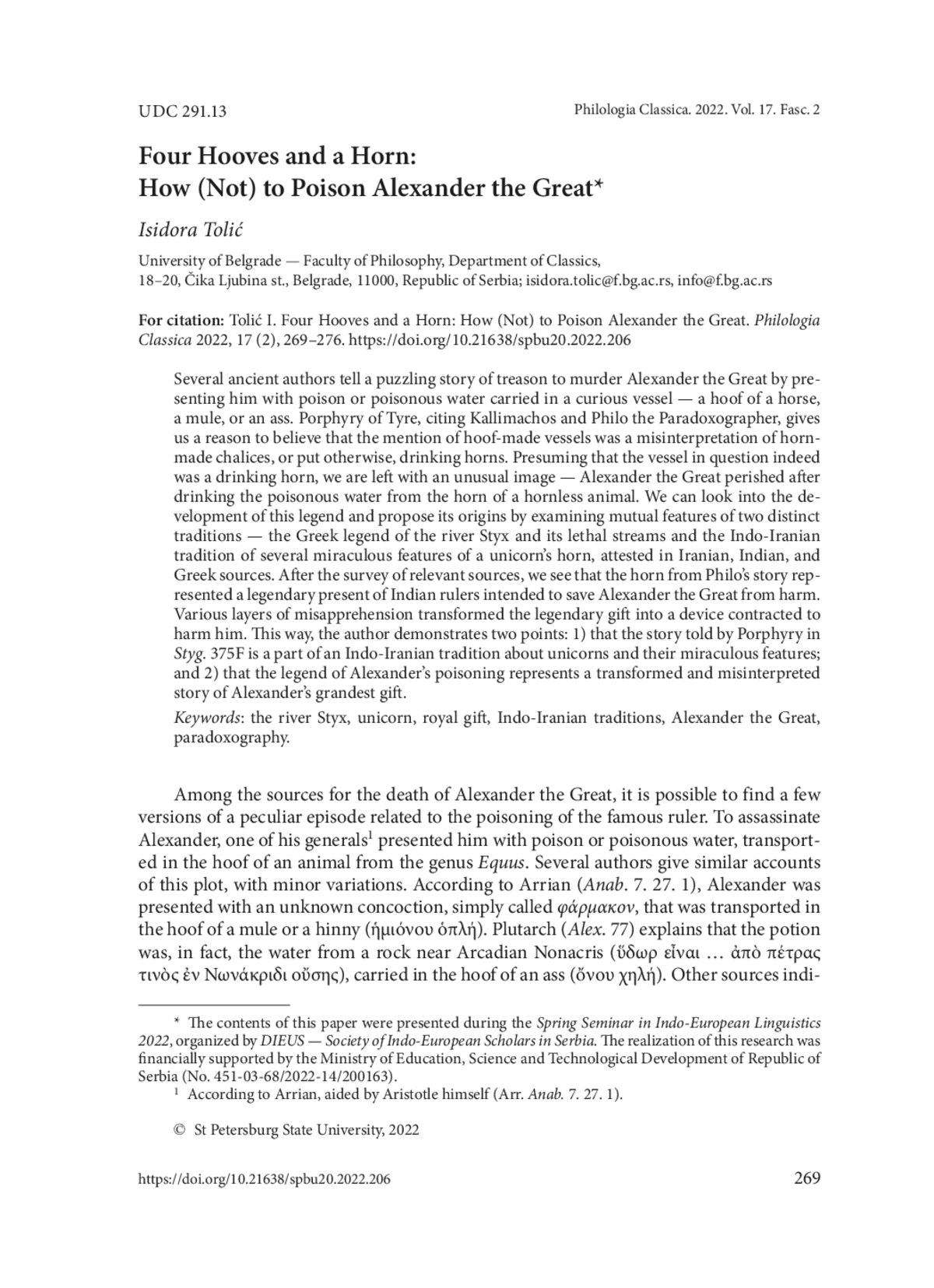
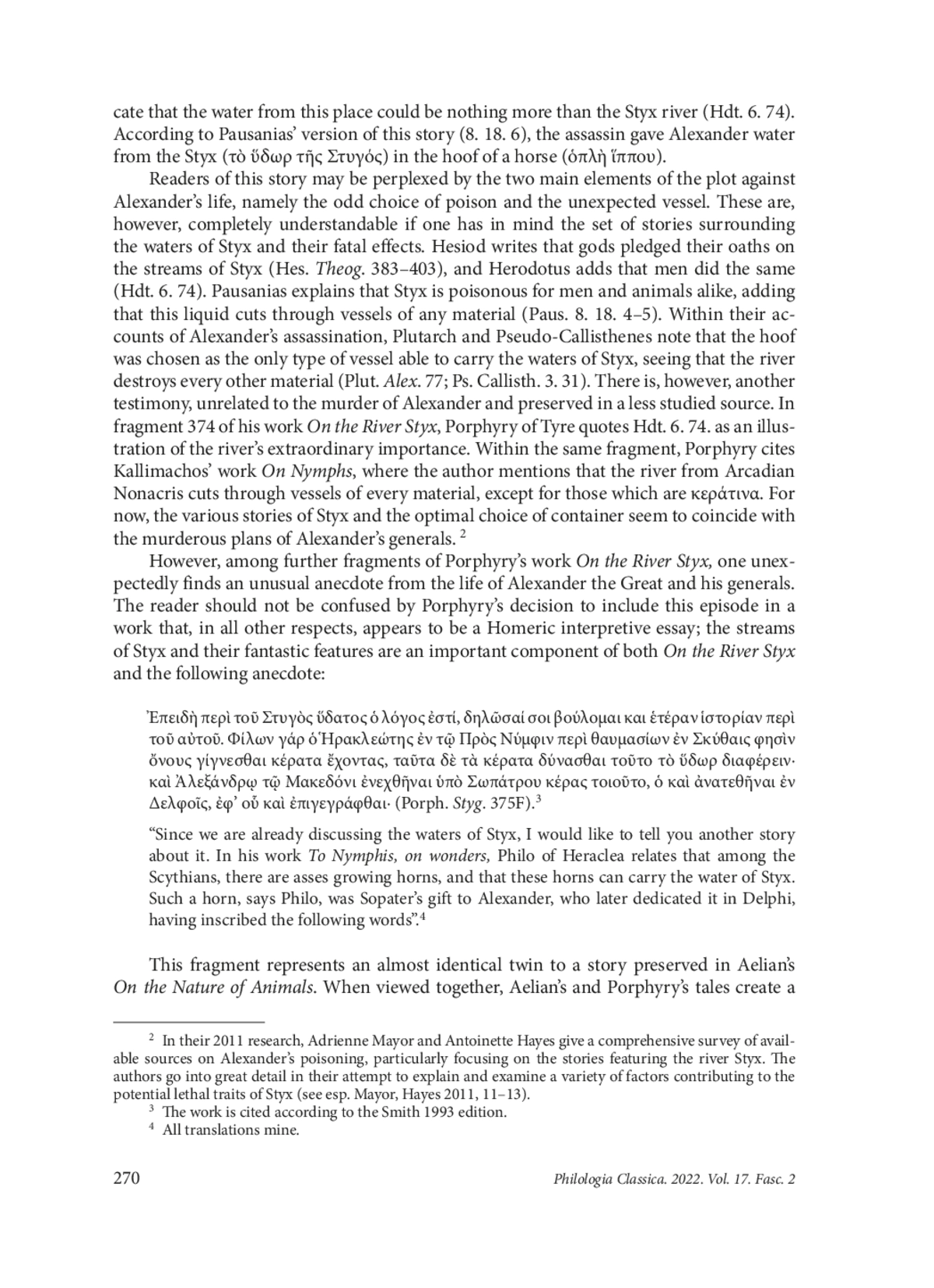
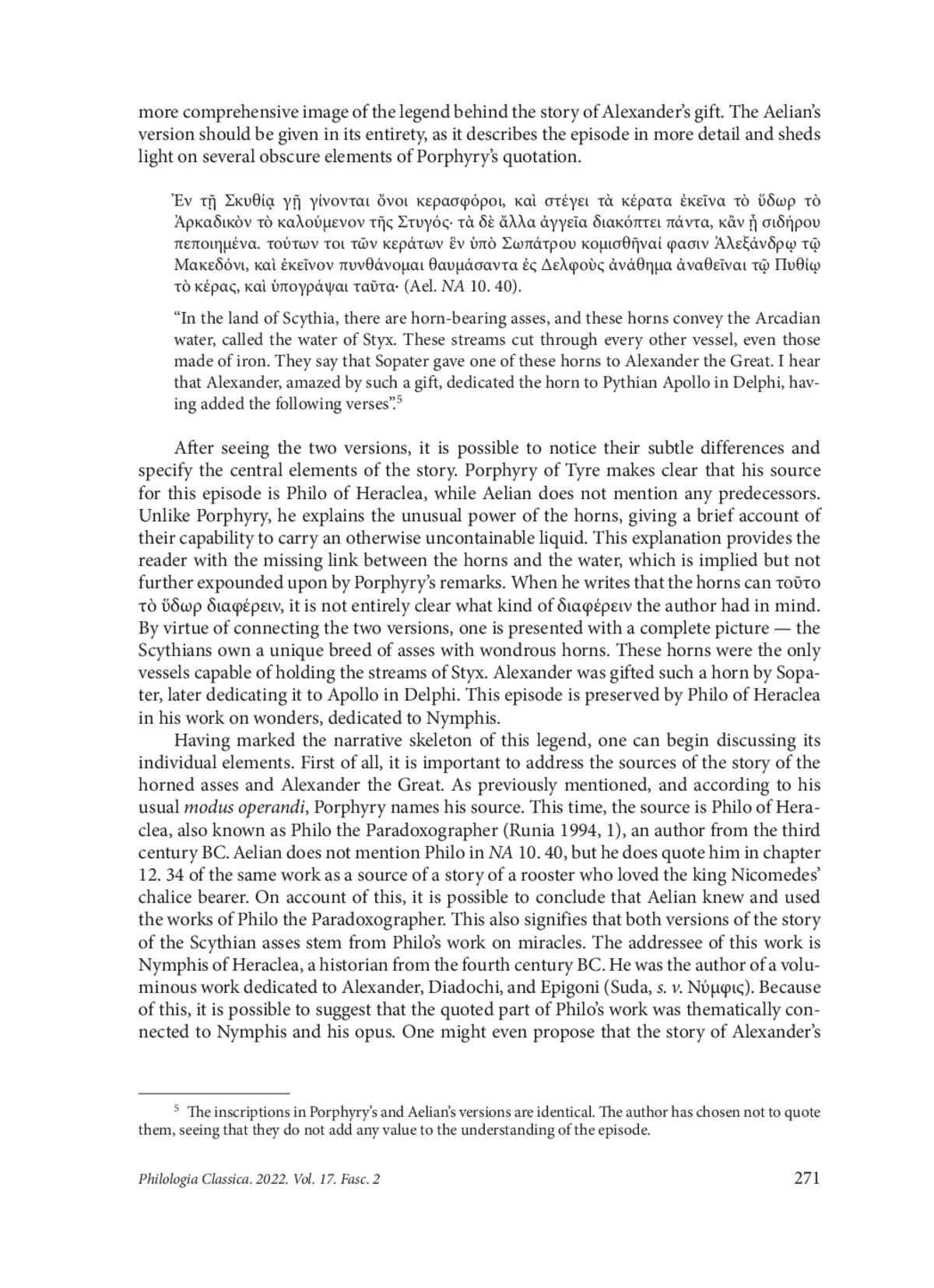
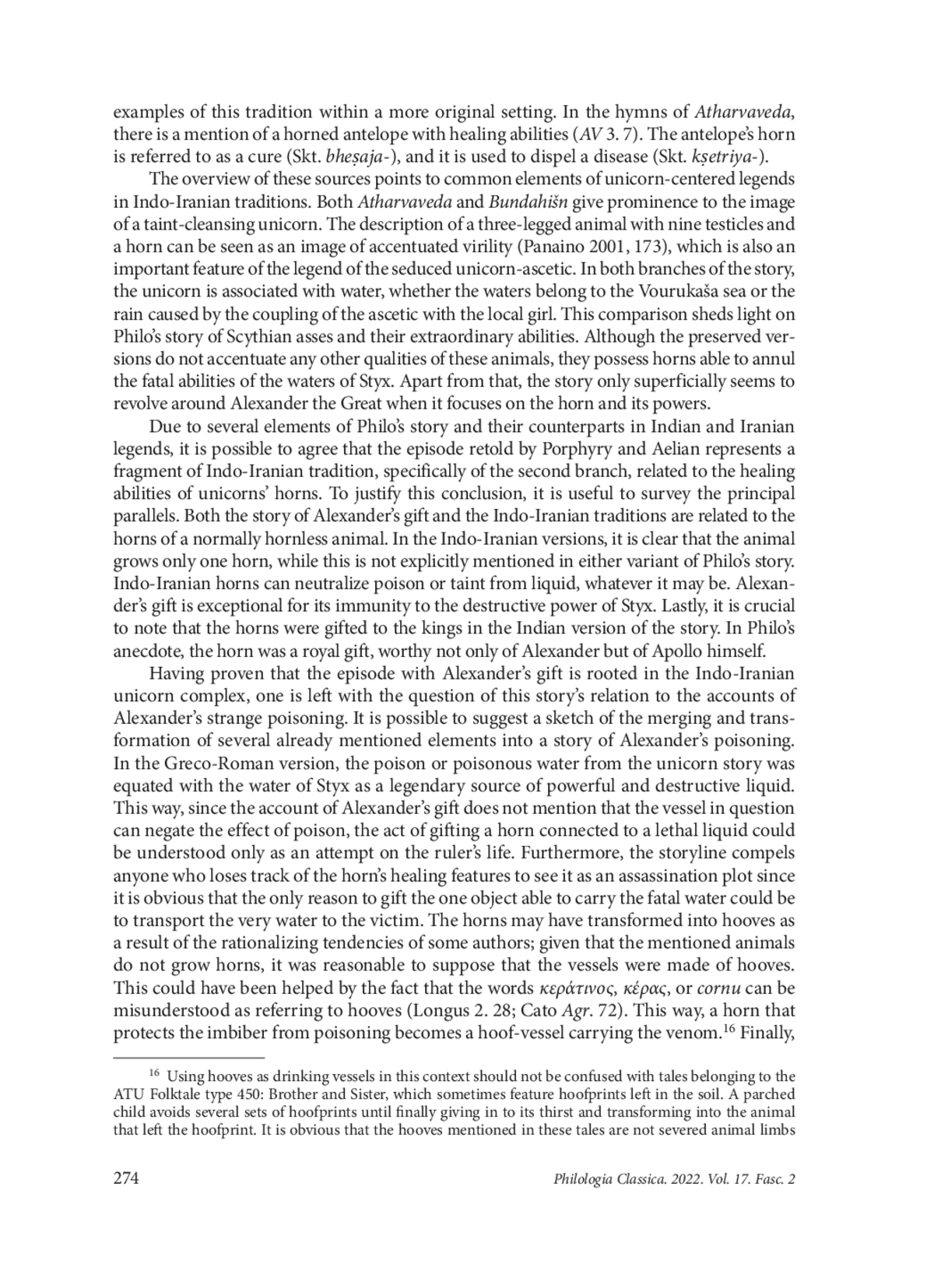
Several ancient authors tell a puzzling story of treason to murder Alexander the Great by presenting him with poison or poisonous water carried in a curious vessel — a hoof of a horse, a mule, or an ass. Porphyry of Tyre, citing Kallimachos and Philo the Paradoxographer, gives us a reason to believe that the mention of hoof-made vessels was a misinterpretation of hornmade chalices, or put otherwise, drinking horns. Presuming that the vessel in question indeed was a drinking horn, we are left with an unusual image — Alexander the Great perished after drinking the poisonous water from the horn of a hornless animal. We can look into the development of this legend and propose its origins by examining mutual features of two distinct traditions — the Greek legend of the river Styx and its lethal streams and the Indo-Iranian tradition of several miraculous features of a unicorn’s horn, attested in Iranian, Indian, and Greek sources. After the survey of relevant sources, we see that the horn from Philo’s story represented a legendary present of Indian rulers intended to save Alexander the Great from harm. Various layers of misapprehension transformed the legendary gift into a device contracted to harm him. This way, the author demonstrates two points: 1) that the story told by Porphyry in Styg. 375F is a part of an Indo-Iranian tradition about unicorns and their miraculous features; and 2) that the legend of Alexander’s poisoning represents a transformed and misinterpreted story of Alexander’s grandest gift.
Предпросмотр статьи
Идентификаторы и классификаторы
- SCI
- Литература
Если у вас возникли вопросы или появились предложения по содержанию статьи, пожалуйста, направляйте их в рамках данной темы.