
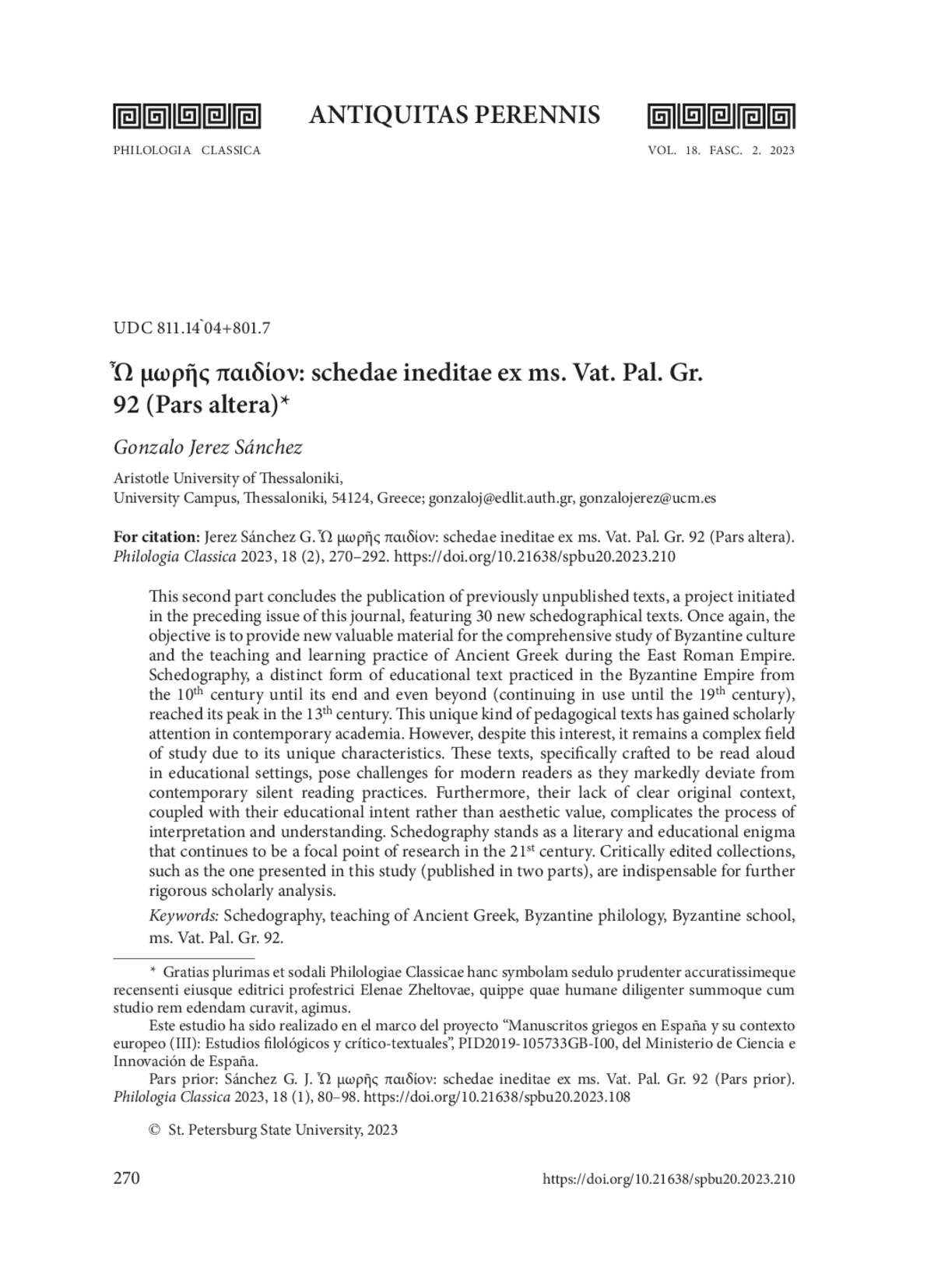
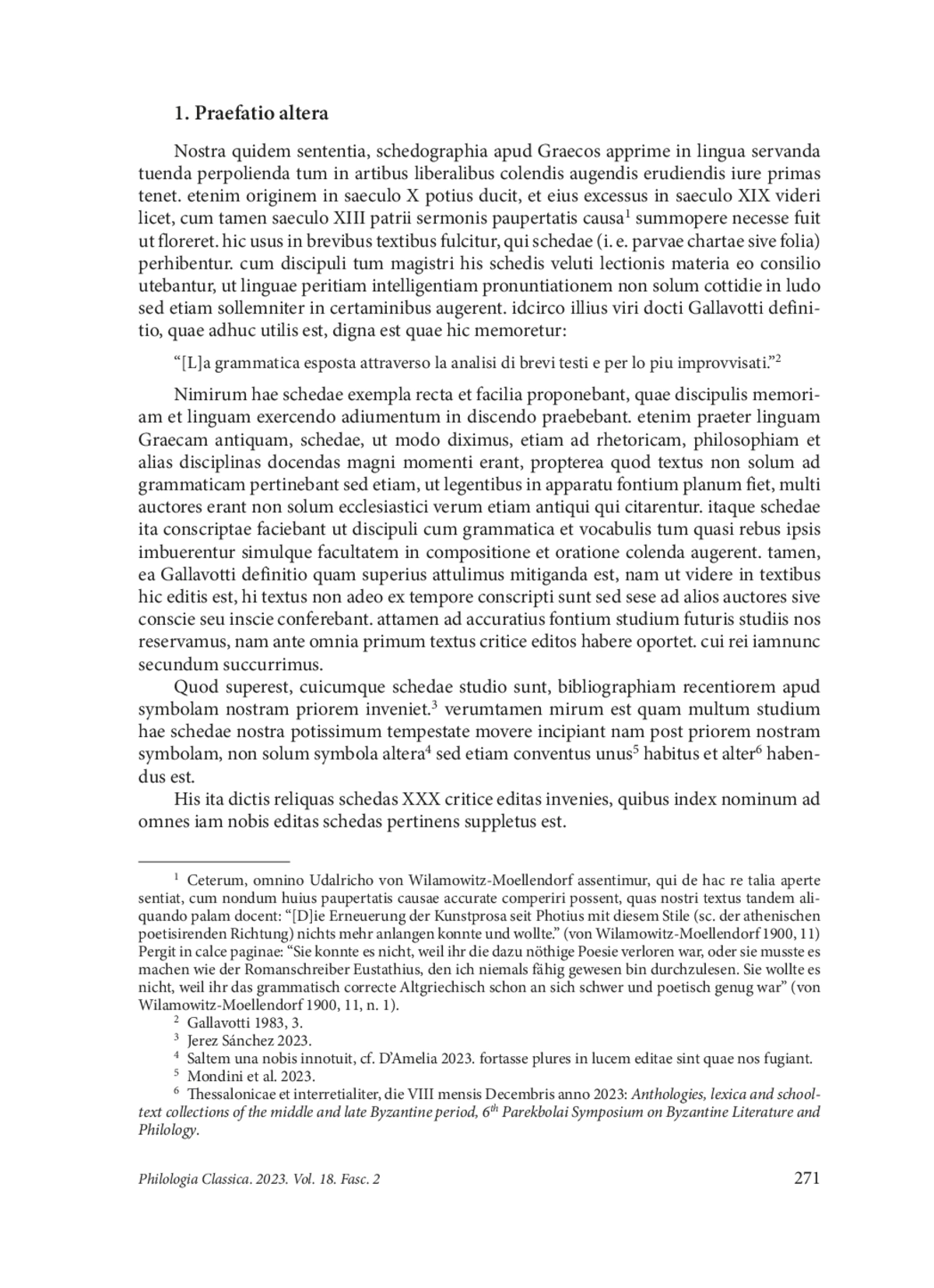
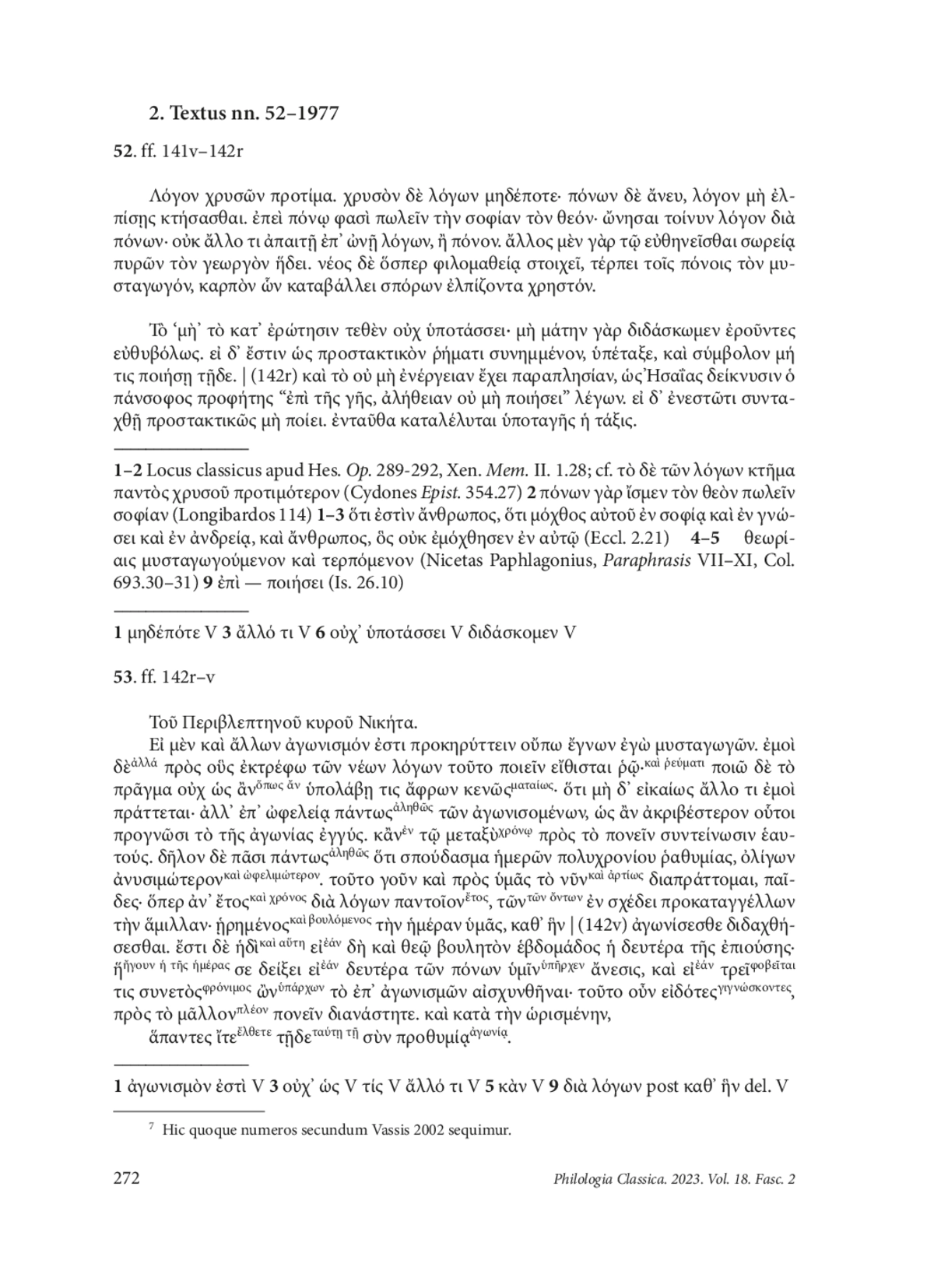
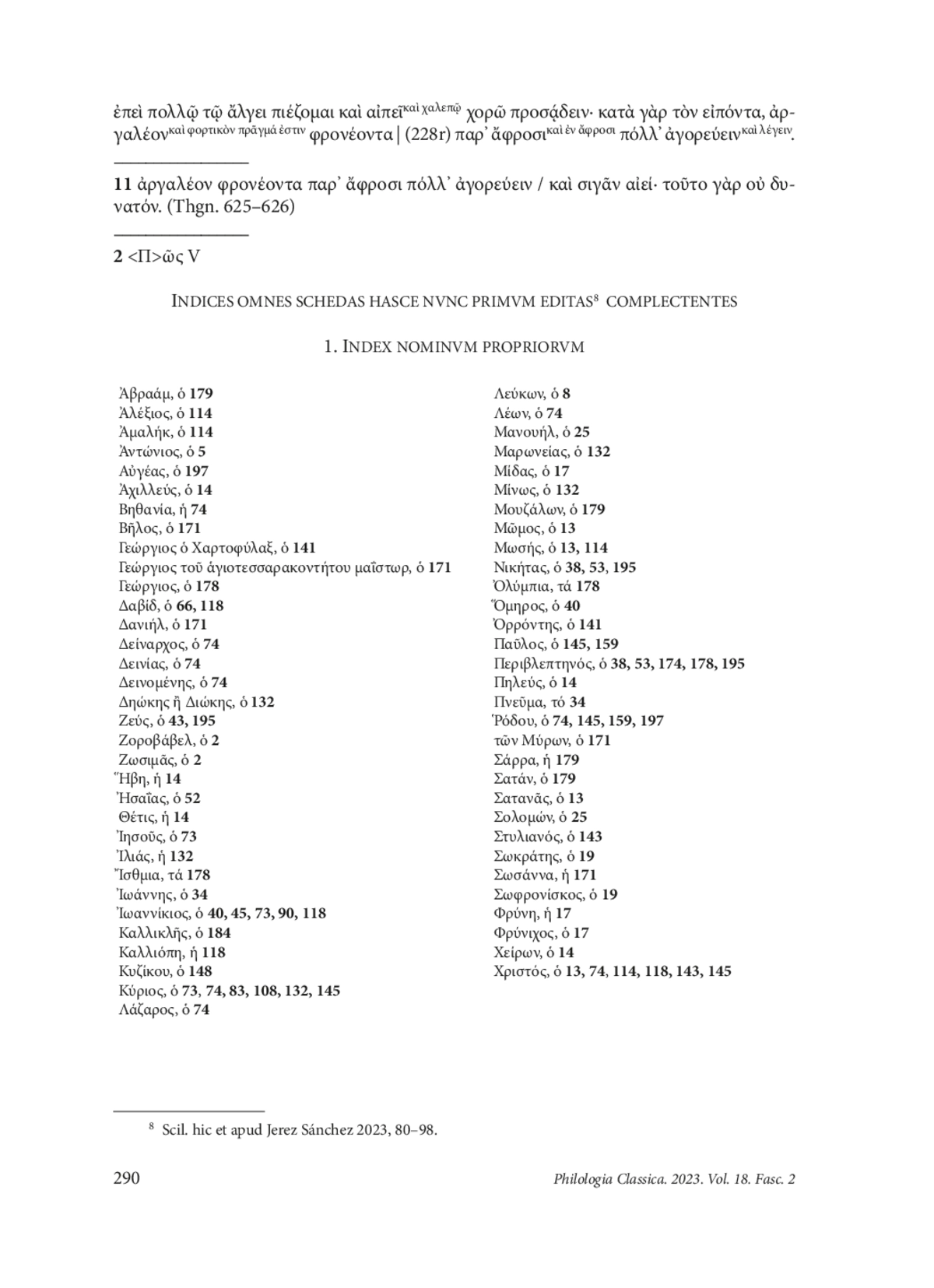
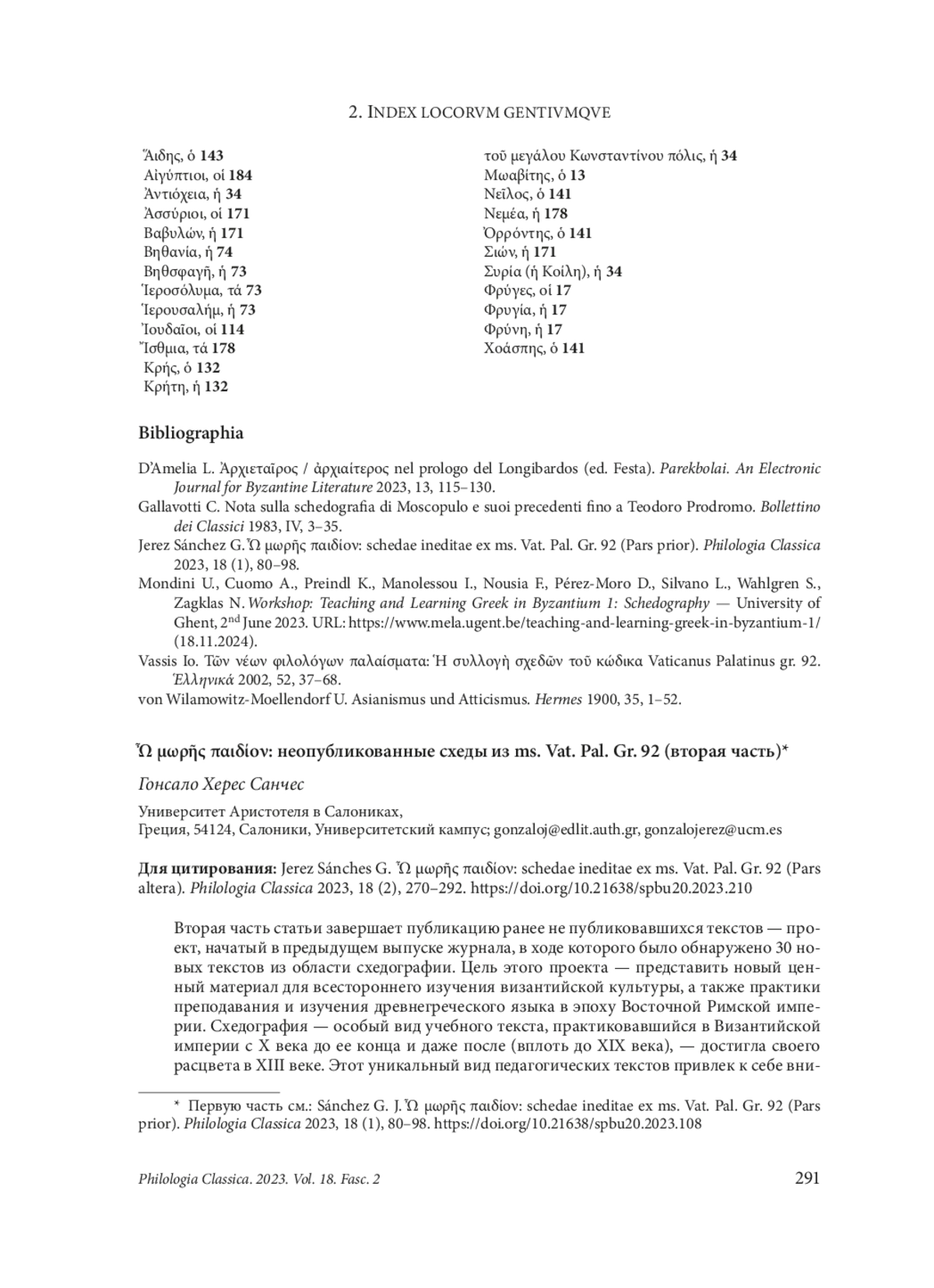
This second part concludes the publication of previously unpublished texts, a project initiated in the preceding issue of this journal, featuring 30 new schedographical texts. Once again, the objective is to provide new valuable material for the comprehensive study of Byzantine culture and the teaching and learning practice of Ancient Greek during the East Roman Empire. Schedography, a distinct form of educational text practiced in the Byzantine Empire from the 10th century until its end and even beyond (continuing in use until the 19th century), reached its peak in the 13th century. This unique kind of pedagogical texts has gained scholarly attention in contemporary academia. However, despite this interest, it remains a complex field of study due to its unique characteristics. These texts, specifically crafted to be read aloud in educational settings, pose challenges for modern readers as they markedly deviate from contemporary silent reading practices. Furthermore, their lack of clear original context, coupled with their educational intent rather than aesthetic value, complicates the process of interpretation and understanding. Schedography stands as a literary and educational enigma that continues to be a focal point of research in the 21st century. Critically edited collections, such as the one presented in this study (published in two parts), are indispensable for further rigorous scholarly analysis
Предпросмотр статьи
Идентификаторы и классификаторы
- SCI
- Языкознание
Если у вас возникли вопросы или появились предложения по содержанию статьи, пожалуйста, направляйте их в рамках данной темы.