
The paper considers an abstract structure that defines the characteristics of the planetary system, both at its inception and upon reaching its evolutionary maturity. The structure is regarded as a chain of dimensionless relationships comprising the allowed states as nodes and connections linking them as the rules that ensure the system’s stability. This structure does not bear the specifics of any natural objects; its positions can describe various contents. The system is understood as a part of a structure with defined boundaries. A special trinitarian methodology is used. Initially, nodes are formed within a unit segment of the 1:2 numerical axis and are placed within a framework structure, a special geometric structure that allows for monitoring changes in the network. A series of scenarios understood as sequences of structural events are realized one after another. The first focuses on irreversible changes and includes two stages: the initial stage, where relationships are formed, and the final stage, when order spreads throughout the network, i. e., the entire network is constructed on the basis of a single relationship and is interpreted as evolutionarily mature. The second scenario relies on cyclical repetitions of relationships; within it, the order parameter n is formed, combining two relative characteristics. This scenario allows for a detailed description of processes within a single segment of the axis. The paper combines these two scenarios. As an application of the model, the formation of the structure of planetary orbits in the solar system is considered. Here, the relative angular momentum (the area “swept” per unit time by a body moving in a circular orbit when normalized to the first orbit) acts is the order parameter n. The parameter n is similar to the principal quantum number in wave mechanics. Discrete positions of the parameter n determine both the planetary periods and the planetary distances in the ecliptic plane. Initially, the system contains Mercury, Venus, Earth, Mars, Phaeton (conventionally), Jupiter, Saturn, Chiron (conventionally), Uranus, and Pluto. In an evolutionarily mature system, Neptune appears. The observed state of the system is interpreted as intermediate. On average, the range over which evolutionary changes in n occur is 1.021. The model allows for a brief and visual representation of the process of planetary system assembly.
The huge role of a non-linear language in the formation of a new non-linear worldview, which created a new non-linear-synergetic paradigm of modern science, is shown. First, the development of this language induced the development of nonlinear dynamics and its formation as a new science. Secondly, this language has enriched many sciences with such concepts as “deterministic chaos”, “strange attractor”, “dissipative structures”, “fractal”, “bifurcation”, which have now become general scientific. Thirdly, this language formed the basis of a new “non-linear” thinking. Fourth, the non-linear language, which is especially attractive to young scientists, has contributed to the influx of new talented scientists into non-linear dynamics. All of the above played a decisive role in the formation of a new general scientific non-linear paradigm, impossible and inconceivable without a new language. It is thanks to this language that modern scientists look at the world with a “nonlinear vision”, not imagining a linear reality, incomparably enriching their ideas about everything that exists and develops. So, eidetically varying the concept of “chaos”, outlined the range of systems that allow chaotic behavior, found out the methodological principles for the study of such systems, determined the characteristic features of chaotic development, and thus passed the “second stage” of the phenomenological analysis of deterministic chaos.
The modern theory of development includes such concepts as entropy, dissipative and conservative structures, equilibrium systems, etc. But what is behind these concepts?
Are they not quite correct, which leads to a misunderstanding of the development process? How, on their basis, can a more general process diagram be constructed that would give a complete description of social dynamics?
In recent years, a new promising general scientific direction has emerged to study the processes of self-organization in complex open systems of Nature and Society. Under open systems it is customary to understand systems capable of exchanging matter, energy and information with the environment. Openness in combination with the accumulative and internal resonance of the system leads to the activation of internal processes of self-organization and the complication of the structure, which is the essence of its evolution.
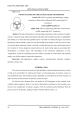
The role of bifurcation or structural-phase transitions in the evolution of complex systems is analyzed using a phenomenological algorithm and formalized concepts of adaptability and stability. It is shown that the algorithm makes it possible to estimate the degree of transition harmonicity and the stability of the new state. Knowledge of the features of the most critical zones of structural-phase transitions makes it possible to change the trajectory, pace and ultimate goal of the evolution of various dangerous natural processes by small energy impacts, preventing their development to extreme states. The knowledge of the functional significance of such “acupuncture” points of evolutionary processes makes it possible to control them with minimal energy costs for the purpose of preventive protection.
The evolution (unfolding) of a number of characteristics in an abstract system of relations is investigated depending on the change in its maximum scale factor, which allows the dependence of the Sun burning on the eccentricity of the Earth orbit to represent using an application. A structural approach is used, which basically excludes the specifics of specific systems. The analysis tool is a protostructure, while the structure is understood as a set of relations, and the protostructure appears as its supposed primary basis. It consists of two components, endowed with cyclic nature, and specifies the spectrum of positions of the order parameter n k , where k is an ordinal number of a node being an allowed state in the selected cycle k = 1 - 10. All normalizations are performed for the k = 3, which is convenient for the application. Earlier, for the node k = 3, we obtained model positions Δ 3 at different stages of evolution, where Δ 3 is the splitting of the position n 3 as a result of its interaction with other n-positions in the system of nodes k = 1-10. To compare the nodes in the named system, scale factors are proposed, of which the largest is selected. It is also shown that as a result of the interaction between the protostructure components, the system boundary n min is formed, on which, on the one hand, the limiting velocity υ max / υ 3, and on the other, the splitting of the position n 3 , Δ 3, depend. The indicated speed is understood as an invariant and corresponds to the speed of light within δ = 1 * 10 -5 %. This paper analyses M / m 3, which is the largest scale factor of the system called the key one; it decreases in the process of evolution and plays the role of a control parameter, on which all other characteristics depend, except for the invariant υ max / υ 3. The following values are suggested for M / m3: a) initial value; b) the value at which the splitting Δ 3 appears, and c) the relationships of the above characteristics. Being based on this, and taking into account the backstory, a disc
One of the aspects concerning the evolution (unfolding) of an abstract system of relations is investigated; this makes it possible to reveal its characteristic limiting relative speed and show that it differs little from the speed of light in the application. A structural approach is used, which basically excludes the specifics of specific systems. The analysis tools are the previously proposed protostructure and the order parameter n based on it. The structure is interpreted as a network consisting of nodes being allowed states and their links, which are rules responsible for stability. The structure is understood as a set of relationships, and the protostructure acts as its supposed principium endowed with a cyclic nature and specifying the spectrum of positions for the order parameter n k, where k = 1, 2, 3… 10 is the ordinal number of a node in the cycle 1:10. This mentioned cycle contains, in particular, the nodes n 2 and n 3, while most of the normalizations are performed using k = 3, which is convenient for application. The links between the previously revealed initial boundary of the system of relationships n min and the splitting Δ 3 for the node n 3 are considered; the splitting is also established on the basis of model considerations and corresponds to observations. Initially, the node n 2 is rigidly connected to the boundary n min. In this paper, we analyse the appearance and evolution of the link between the boundary n min and the node n 3 and the downplaying of the initial link with n 2. A search procedure n min is considered depending on the selection of Δ 3,. The positions n min and n 3 differ by about 4 orders of magnitude and are treated as a single system. The analysis is based on offsets of nodes relative to the original position, which allows us to ignore the difference in orders. The evolution process is unfolded as a scenario, or a set of successive steps or structural events, as a result of which a high degree of compatibility of system nodes is realized.
In the appendix, the system und