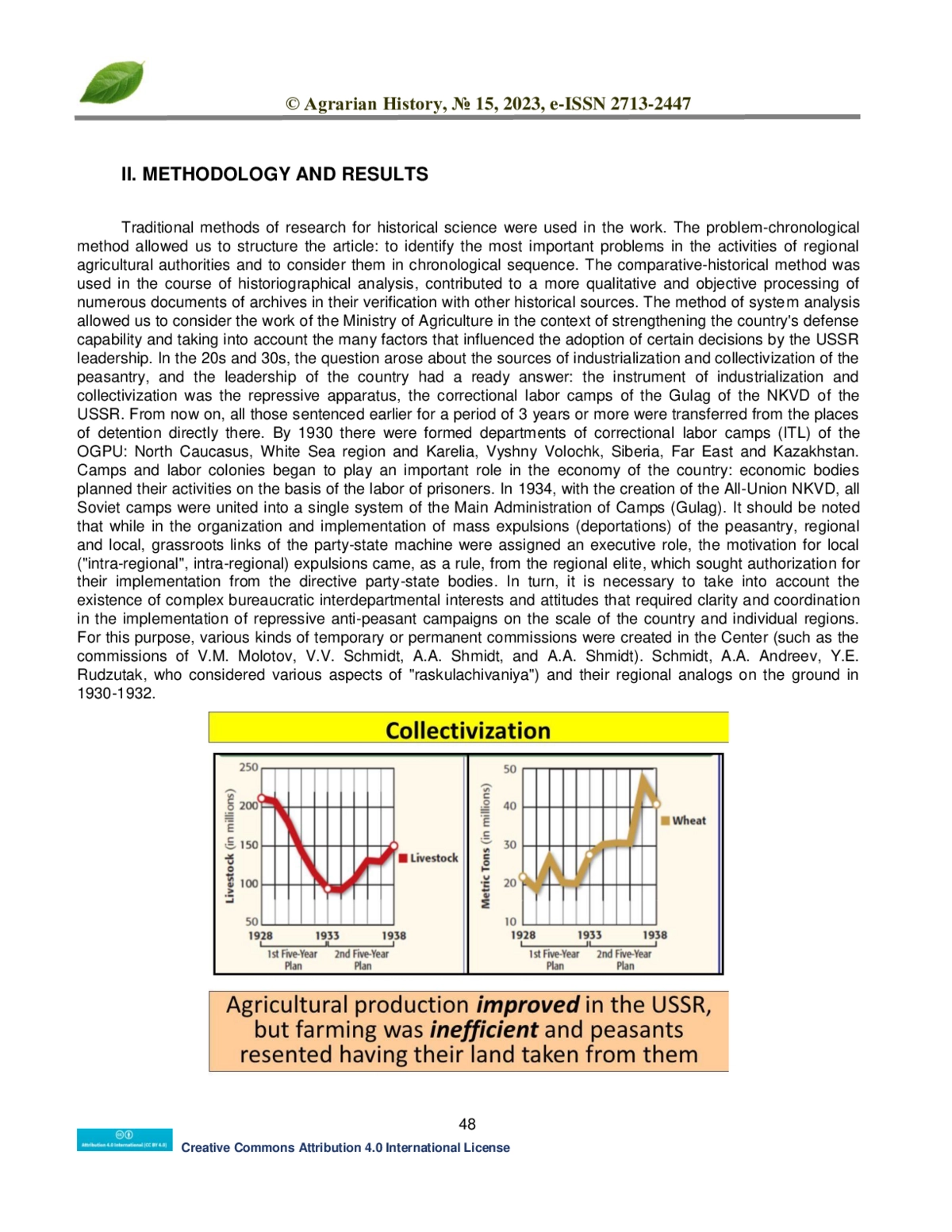
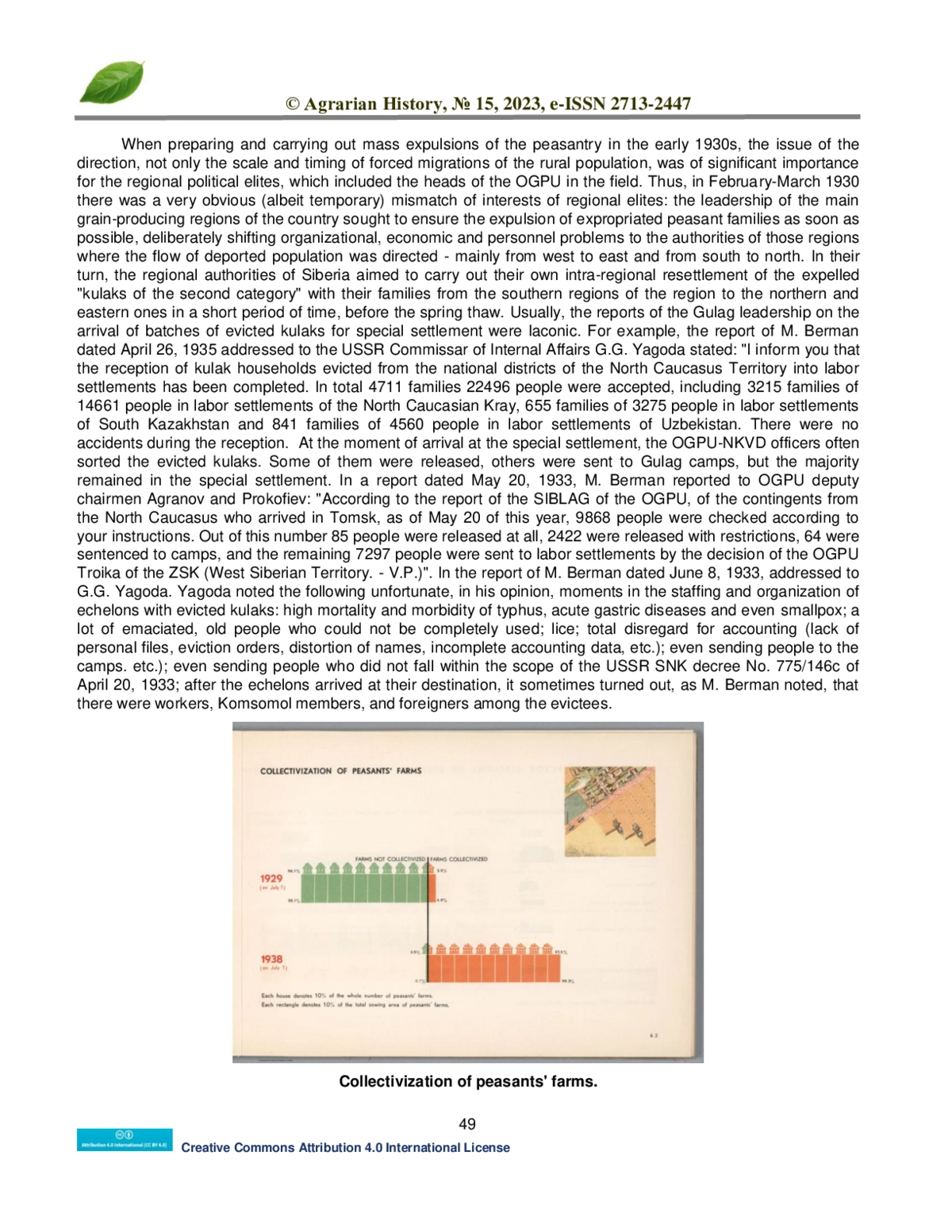
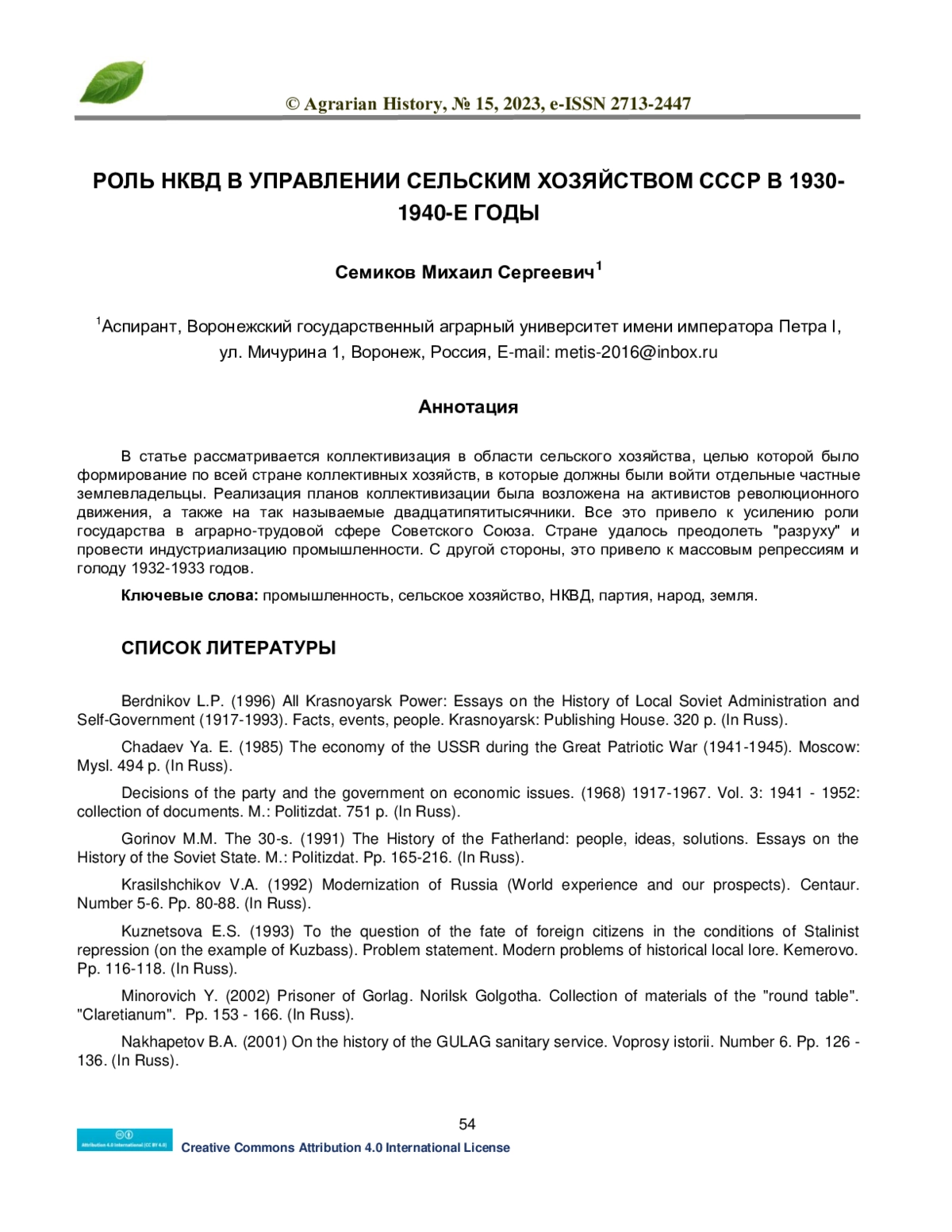
В статье рассматривается коллективизация в области сельского хозяйства, целью которой было формирование по всей стране коллективных хозяйств, в которые должны были войти отдельные частные землевладельцы. Реализация планов коллективизации была возложена на активистов революционного движения, а также на так называемые двадцатипятитысячники. Все это привело к усилению роли государства в аграрно-трудовой сфере Советского Союза. Стране удалось преодолеть “разруху” и провести индустриализацию промышленности. С другой стороны, это привело к массовым репрессиям и голоду 1932-1933 годов.
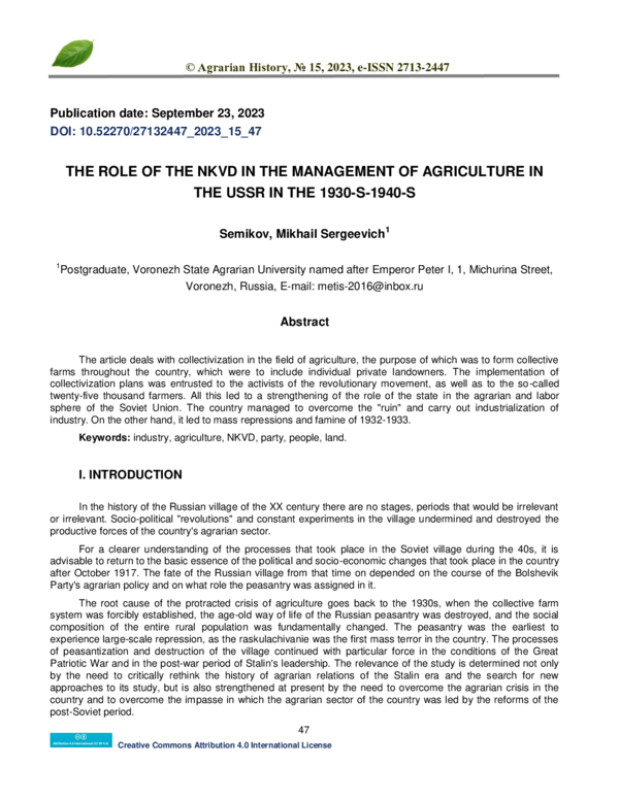
The article deals with collectivization in the field of agriculture, the purpose of which was to form collective farms throughout the country, which were to include individual private landowners. The implementation of collectivization plans was entrusted to the activists of the revolutionary movement, as well as to the so-called twenty-five thousand farmers. All this led to a strengthening of the role of the state in the agrarian and labor sphere of the Soviet Union. The country managed to overcome the “ruin” and carry out industrialization of industry. On the other hand, it led to mass repressions and famine of 1932-1933.
Предпросмотр статьи
Идентификаторы и классификаторы
- SCI
- История
- УДК
- 93/94. История
Если у вас возникли вопросы или появились предложения по содержанию статьи, пожалуйста, направляйте их в рамках данной темы.