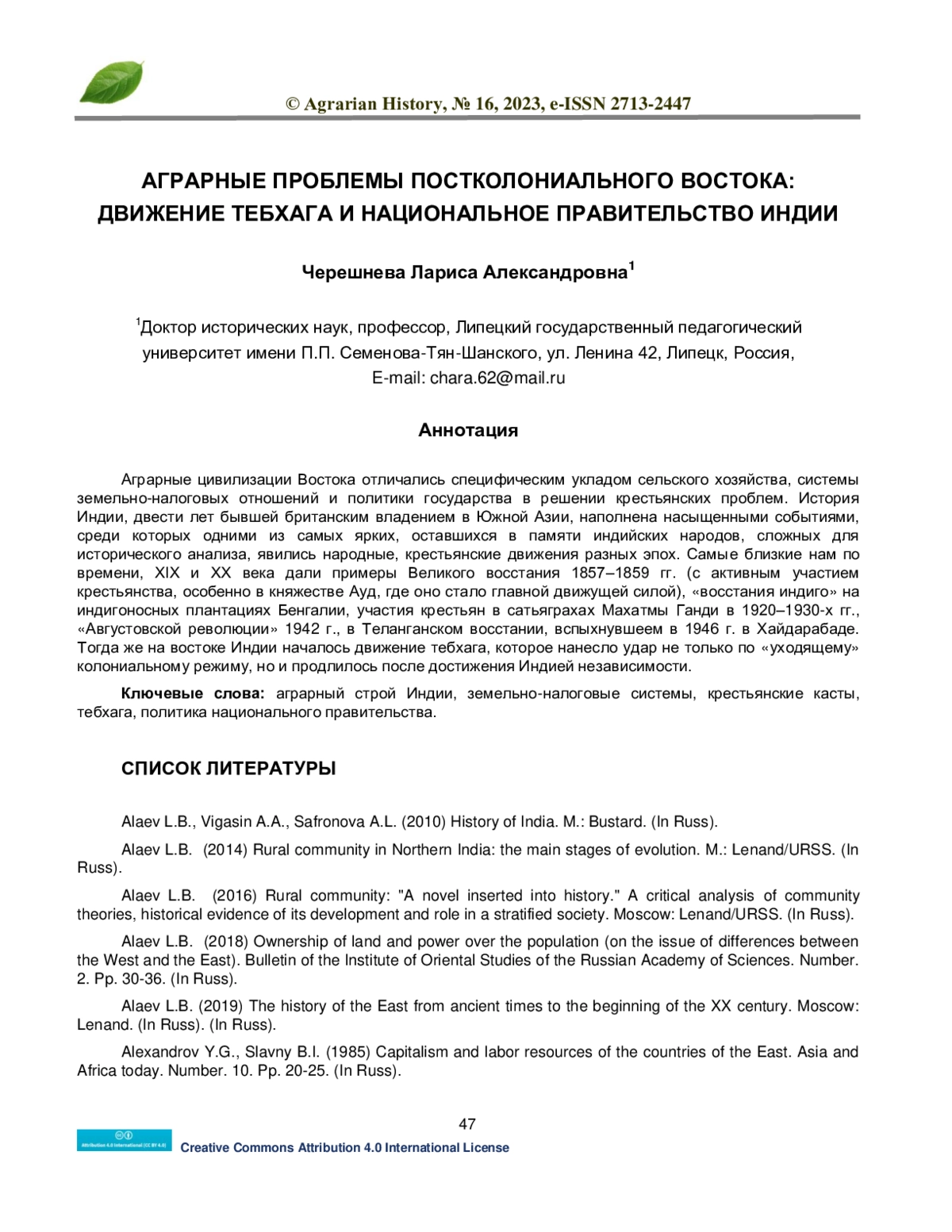
Аграрные цивилизации Востока отличались специфическим укладом сельского хозяйства, системы земельно-налоговых отношений и политики государства в решении крестьянских проблем. История Индии, двести лет бывшей британским владением в Южной Азии, наполнена насыщенными событиями, среди которых одними из самых ярких, оставшихся в памяти индийских народов, сложных для исторического анализа, явились народные, крестьянские движения разных эпох. Самые близкие нам по времени, XIX и XX века дали примеры Великого восстания 1857–1859 гг. (с активным участием крестьянства, особенно в княжестве Ауд, где оно стало главной движущей силой), «восстания индиго» на индигоносных плантациях Бенгалии, участия крестьян в сатьяграхах Махатмы Ганди в 1920–1930-х гг., «Августовской революции» 1942 г., в Теланганском восстании, вспыхнувшеем в 1946 г. в Хайдарабаде. Тогда же на востоке Индии началось движение тебхага, которое нанесло удар не только по «уходящему» колониальному режиму, но и продлилось после достижения Индией независимости.
The agrarian civilizations of the East were distinguished by a specific way of agriculture, a system of landtax relations and state policy in solving peasant problems. The history of India, which was a British possession in South Asia for two hundred years, is filled with eventful events, among which some of the most striking, remaining in the memory of the Indian peoples, difficult for historical analysis, were the popular and peasant movements of different eras. The XIX-th and XX-th centuries, closest to us in time, provided examples of the Great Uprising of 1857–1859 (with the active participation of the peasantry, especially in the Principality of Oudh, where it became the main driving force), the “indigo uprising” on the indigo-bearing plantations of Bengal, the participation of peasants in the satyagrahas of Mahatma Gandhi in the 1920–1930s, the “August Revolution” of 1942, Telangana uprising that broke out in 1946 in Hyderabad. At the same time, the Tebhaga movement began in the east of India, which dealt a blow not only to the “outgoing” colonial regime, but also continued after India achieved independence.
Предпросмотр статьи
Идентификаторы и классификаторы
- SCI
- История
- УДК
- 93/94. История
Если у вас возникли вопросы или появились предложения по содержанию статьи, пожалуйста, направляйте их в рамках данной темы.