
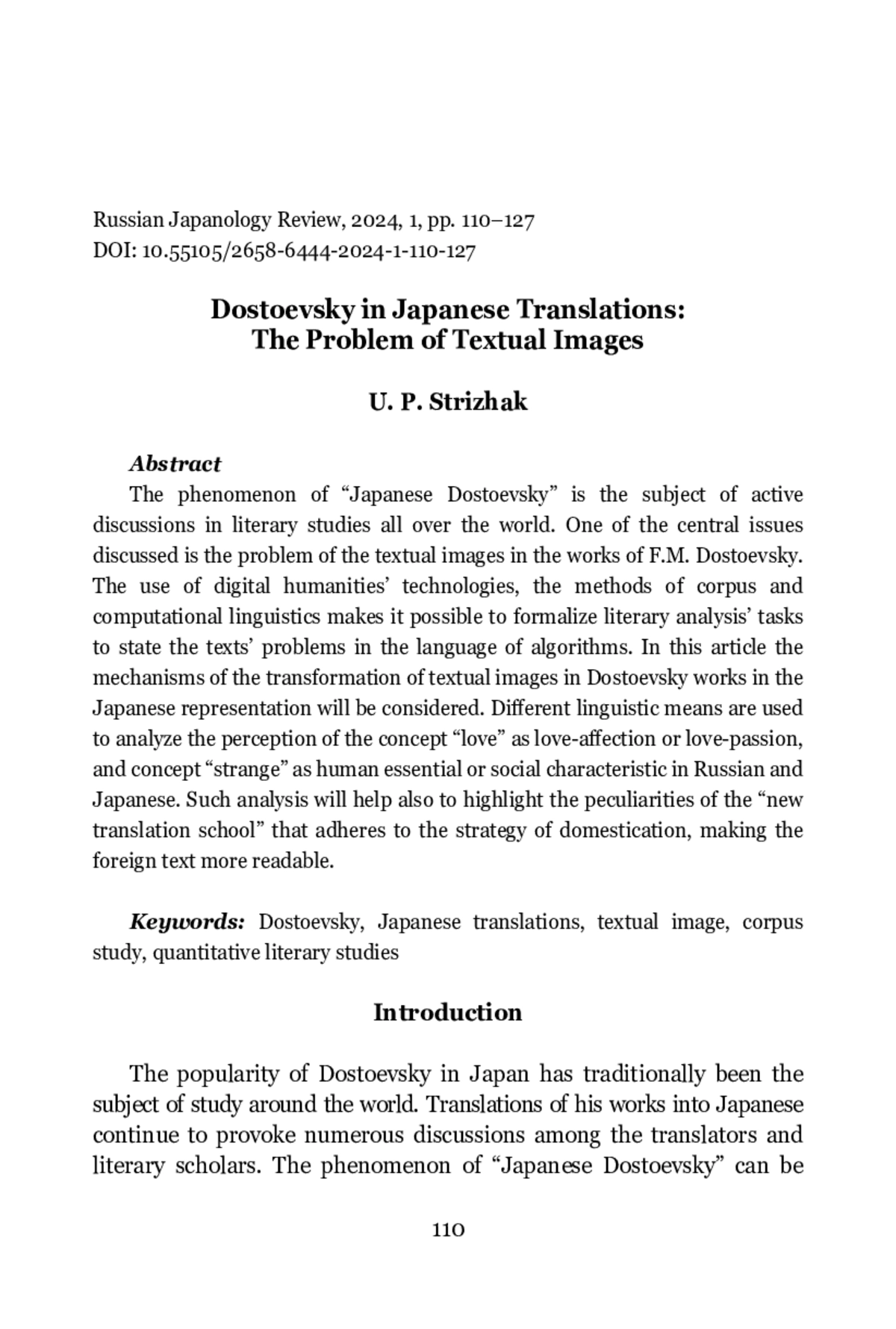
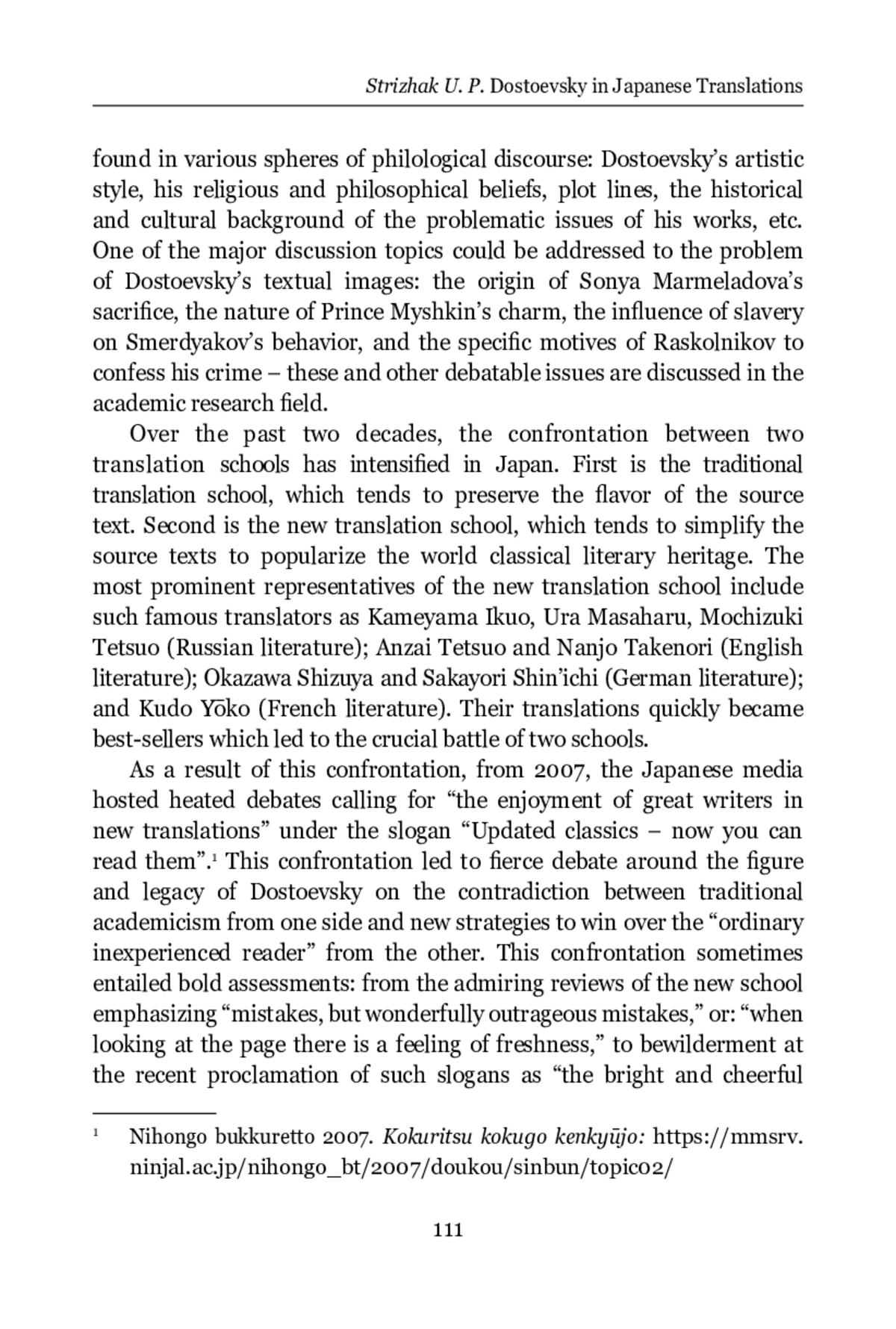
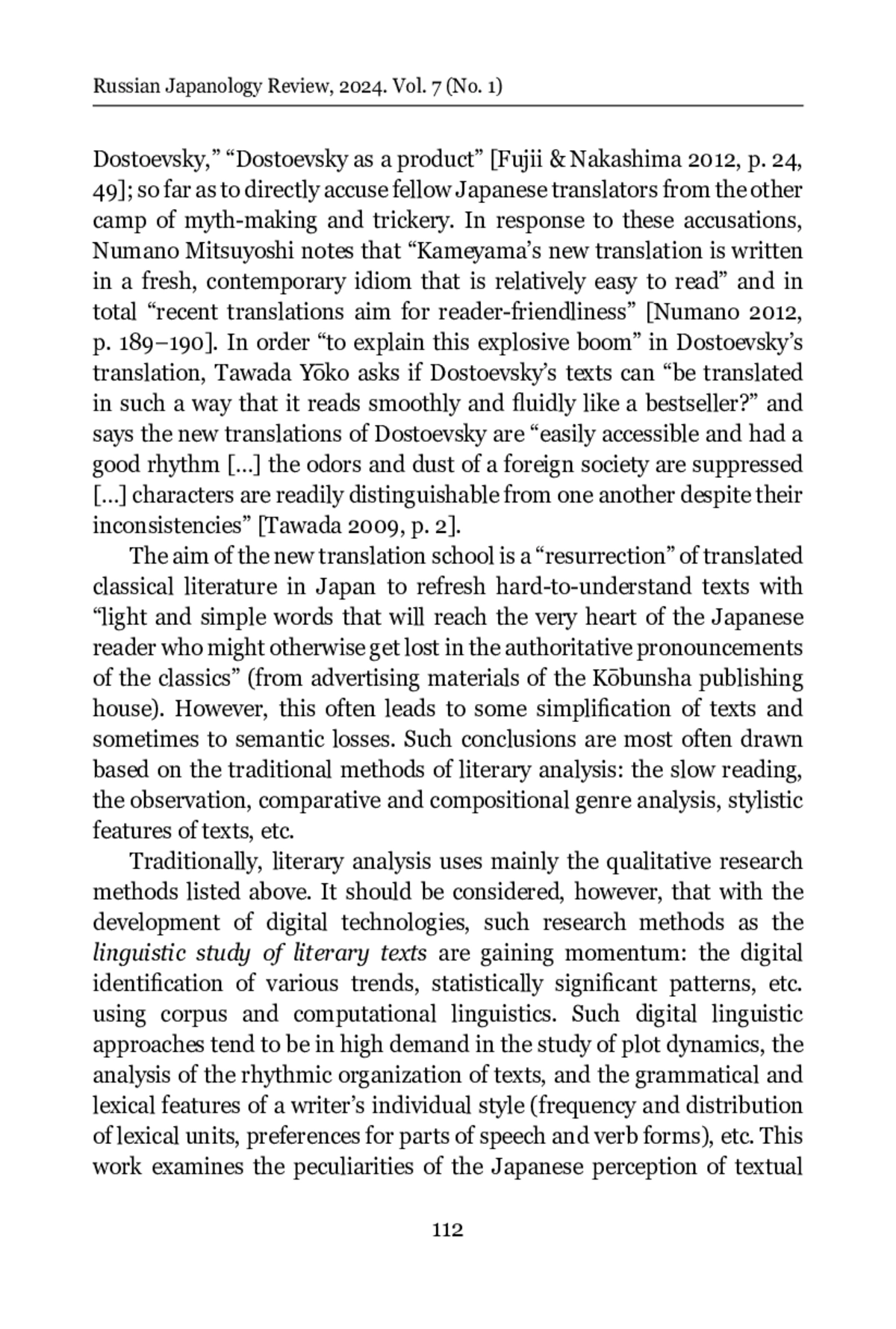
The phenomenon of “Japanese Dostoevsky” is the subject of active discussions in literary studies all over the world. One of the central issues discussed is the problem of the textual images in the works of F. M. Dostoevsky. The use of digital humanities’ technologies, the methods of corpus and computational linguistics makes it possible to formalize literary analysis’ tasks to state the texts’ problems in the language of algorithms. In this article the mechanisms of the transformation of textual images in Dostoevsky works in the Japanese representation will be considered. Different linguistic means are used to analyze the perception of the concept “love” as love-affection or love-passion, and concept “strange” as human essential or social characteristic in Russian and Japanese. Such analysis will help also to highlight the peculiarities of the “new translation school” that adheres to the strategy of domestication, making the foreign text more readable
Предпросмотр статьи
Идентификаторы и классификаторы
- SCI
- Политология
- УДК
- 32. Политика
Если у вас возникли вопросы или появились предложения по содержанию статьи, пожалуйста, направляйте их в рамках данной темы.